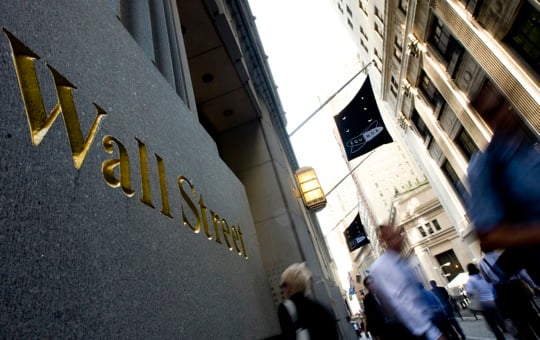
To understand why individual investors abandon the stock market, you only have to look at the indignities suffered last week by Amazon.com Inc., McDonald's Corp. and
T. Rowe Price Group Inc.
All three reported second-quarter profit that looked solid, especially considering the tepid growth of world economies. All three watched their stocks get whacked late last week because the results didn't measure up to Wall Street's narrow vision.
Amazon, which sells everything from books to electric shavers on the Internet, was punished by the market for investing in its future. The company spent $196 million in the quarter to build warehouses and centers that offer computer services to other businesses.
This was the second quarter in a row that the Seattle-based retailer had doubled its capital spending. If more companies would take advantage of the current economic lull to expand, the business outlook would pick up immediately -- and the companies would be better prepared when growth accelerates.
But, moan Wall Street securities analysts, heavy spending hurts profits. While Amazon.com's second-quarter profit rose to 45 cents a share from 32 cents in the year-earlier period, it missed the average analyst estimate of 54 cents.
Like Razor Blades
Analysts also said price cuts on Amazon's Kindle electronic reading device were bad news. Sorry. The real profit from Kindle won't be in its price but in the downloaded books device that owners will buy in the future.
Wall Street's shortsightedness prevailed on July 23 when Amazon shares fell as much as 12 percent before closing down 1 percent at $118.87.
Folks who see McDonald's as a reasonable investment were no smarter, according to Wall Street wisdom. The biggest restaurant chain said its second-quarter profit rose 12 percent to $1.23 billion, or $1.13 a share, as it continued to expand its menu away from hamburgers and french fries.
McDonald's frozen smoothies and frappes tempted customers during the recent heat wave that engulfed the U.S., helping the company to increase sales in stores open 13 months or more by 4.8 percent.
The chain may introduce other new products, such as frozen lemonade and hot oatmeal in the next year, says Mark Kalinowski, an analyst at Janney Montgomery Scott LLC in New York. McDonald's also benefits from lack of competition, he says.
In the long run, that may be bad for Oak Brook, Illinois- based McDonald's because companies need competition to stay sharp. For now, though, lack of it helps McDonald's earnings.
No Surprise
Why then did the company's shares drop 2.1 percent to $69.90 on July 23? Because the results were pretty much what analysts expected. No big upside. No momentum. No demand on Wall Street. No brains there, either.
Mutual-fund manager
T. Rowe Price managed to take in $5.1 billion in new money in the quarter when rivals
BlackRock Inc. and Janus
Capital Group Inc. had net outflows.
What's more, Baltimore-based Price's profit in the period rose to 59 cents a share from 38 cents in the year-earlier quarter and revenue surged 31 percent to $577 million.
The market put more emphasis on Price's failure to match the average analyst earnings estimate of 61 cents and Chief Executive Officer James Kennedy's comment that investor inflows slowed after stock prices plummeted in May.
Price's stock dropped as much as 5.2 percent on July 23 and closed down 3.2 percent at $47.85.
The share prices of all three companies may have fared even worse if the market hadn't launched a late rally at the end of the day.
The wild swings in stock prices no doubt are exacerbated by the computer-driven programs that account for so much of today's trading.
The poor computers don't understand that today's spending will increase earnings in many quarters to come. But then, the machines are no smarter than the people who program them.
(David Pauly is a Bloomberg News columnist. The opinions expressed are his own.)