
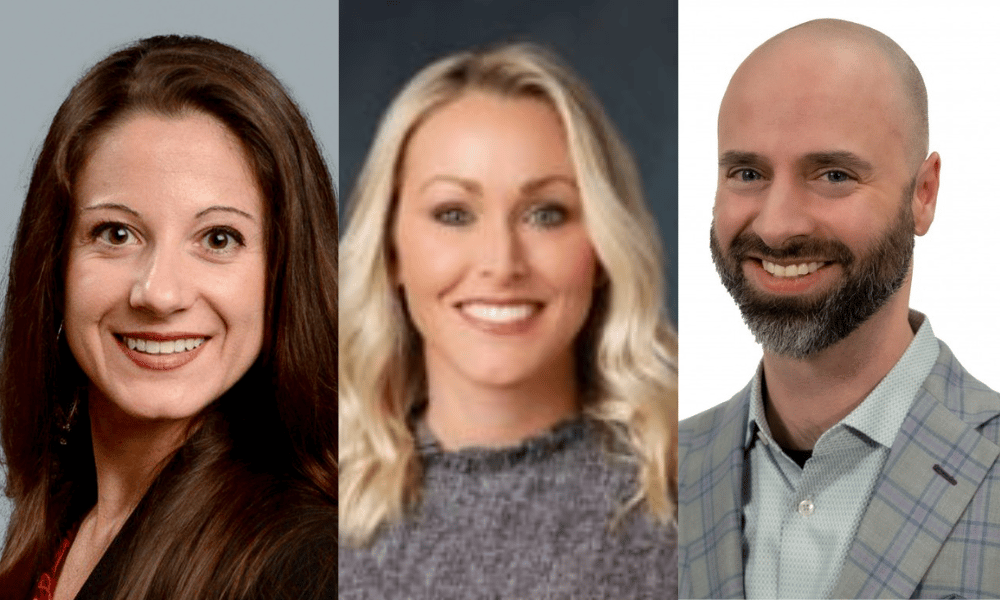
Dealmakers from some of the industry’s most acquisitive RIAs gathered at last week’s DeVoe M&A+ Succession Summit in Chicago to share their strategies around deal structure amid this year’s record-breaking transaction landscape.
Investment bank Echelon Partners has tracked 345 transactions in the RIA M&A market through September 30, which passes the full-year record of 341 deals previously set in 2022. Among the most-active acquires of RIAs has been Carson Group, whose mergers and acquisitions head Michael Belluomini explained typical deal structure conditions at DeVoe’s conference.
“About 70% of the consideration is paid up front. The remaining 30% is usually split in some fashion between a retention payment and a growth earnout that's in three-year stints,” Belluomini said. “That risk in giving somebody 70% up front so far has been well worth it for us. We've never had a deal that has signed an LOI that hasn't closed. We've never had a closed deal that has not hit their retention.”
Growth earnouts refer to payments tied to the acquired firm’s future performance, while retention payouts are given based on the acquired RIA’s ability to transition client assets, post-sale. Belluomini spoke at DeVoe on a panel alongside Beacon Pointe Advisors’ COO Karisa Diephouse and Edelman Financial Engines executive Denitsa Balunis, who stressed how the presence of second-generation advisor leadership impacts deal structure.
“It's so important to understand as a seller what's important to you and why you're selling, so that we can then figure out what is the best structure that is going to meet your needs. How strong is your G2? What is their future? What's your future?” Balunis, SVP of Corporate Strategy and Development at Edelman, said in reference to second-generation successors.
Equity has been a key benefit in negotiations for second-generation advisors whose firms are being sold to Carson and Beacon Pointe, explained both Belluomini and Diephouse. Beacon Pointe, which has bought 10 RIAs so far this year to reach $49 billion in advised assets, managed roughly $20 billion in 2021 when it sold a minority stake to private equity giant KKR.
“We are seeing a lot of teams equitize G2 during the transaction. We just had an office join where the founding partners came in as wealth advisors and the G2 as the managing directors of the office. We have a general equity pool, so every employee is a partner in a sense,” said Diephouse. “KKR is a big proponent of that. So whatever next event happens, everybody can participate.”
Carson Group, which makes both minority investments and full acquisitions of RIAs, has been backed by Bain Capital since 2021. The inclusion of stock appreciation rights — compensation tied to Carson’s stock value over a period of time — were described by Belluomini as a tax-efficient benefit that has been resonating with selling firms.
“We started putting together appreciation rights pools for G2 advisors as well as operations professionals and front of the house [employees]. Advisors have liked using that as part of the retention earnings. It's a way to incentivize folks to stay on board, help get the clients moved over, start learning the new systems and implement new processes,” Belluomini said.
“As the firm grows and Carson continues to grow, they can participate in that upside and they can do it without a K1 form,” he said.

CFP, CFA and CPA holders could gain accredited investor status as regulators weigh wider private market access for advisory clients

DeepVest, Vanilla and Libretto roll out tools to help financial advisors launch firms, close estate plans and sharpen planning skills

“People aren't effectively using their wealth in retirement,” said David Blanchett of Prudential.

Second-generation NFL ref Shawn Hochuli co-founded IWM Partners in Irvine, California, a wealth management practice with more than $500M in client assets

U.S. seniors lose $28.3 billion annually as a result of financial exploitation, according to a 2023 AARP study.
As AI makes financial information more accessible than ever, Lana Hock explains why human judgment, trust, and empathy remain the qualities clients value most in a financial advisor
Northern Trust’s Ken Lassner shows advisors how to convert volatility into after-tax portfolio gains

