

The tumultuous start to 2020 saw exchange-traded funds shutter at the fastest pace in almost three years.
A total of 72 ETFs with $1.4 billion in assets shut down and returned their money to investors in the first quarter as the coronavirus outbreak roiled markets, according to data compiled by Bloomberg. That’s the most since the third quarter of 2017, when 73 funds closed.
The liquidations came as the economic fallout from the virus unleashed volatility across asset classes, sending the S&P 500 Index into a bear market at the fastest pace on record.
That degree of turbulence sparked a reckoning for the myriad niche funds populating the nearly $4 trillion ETF market, according to WallachBeth Capital.
“With huge market movements, investors are going to flock to broad-based funds to hedge out risk, rather than smaller niche products,” said Mohit Bajaj, WallachBeth’s director of ETFs. “It was hard enough when the market was at its peak to get market share, even harder when the S&P is down over 20%.”
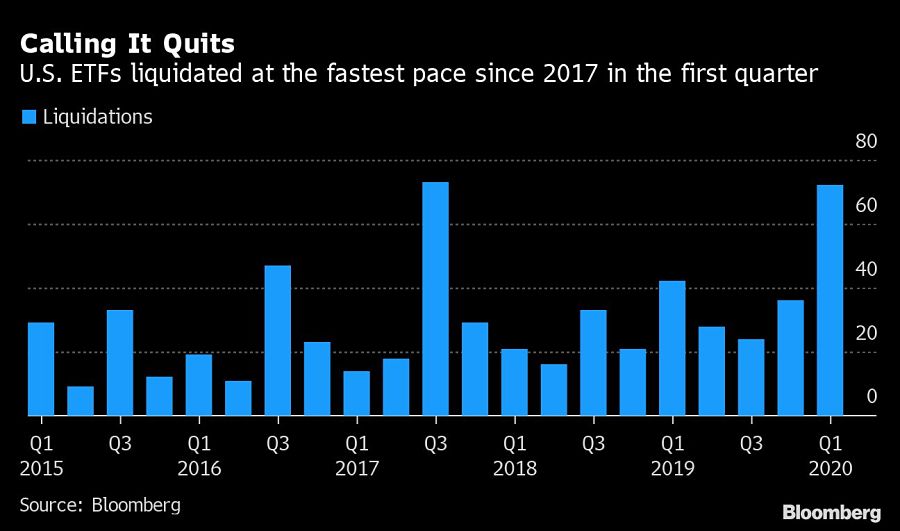
Invesco led the liquidations, shutting a total of 42 ETFs as part of plans to consolidate the company’s offerings after it bought OppenheimerFunds Inc. in 2019. ProShares and Direxion closed several leveraged ETFs, which use derivatives to amplify returns of the securities they track.
The still-elevated level of volatility has slowed the pace of ETF debuts as well. Just four funds started trading in March, the lowest monthly total since August and a steep drop from the 29 ETFs that came online in February.

Arch claims 40% operating cost savings for Mercer as Nitrogen unlocks its agentic AI and tech suite to 10,000 Osaic advisors

A happy coincidence: one of LPL Financial’s corporate campuses happens to be based in Rep.-elect Wes Climer’s new district.

Wells Fargo and UBS also add advisors from Morgan Stanley, Edward Jones, Merrill and Fidelity in a fresh round of wirehouse recruiting

How we got here – and what to do about it

AI trust gap: Americans want protection, not autonomy, in their finances
Knighthead Life entered the market with a competitive MYGA. A strong launch earned advisor confidence and paved the way for FIAs.
As AI makes financial information more accessible than ever, Lana Hock explains why human judgment, trust, and empathy remain the qualities clients value most in a financial advisor

