
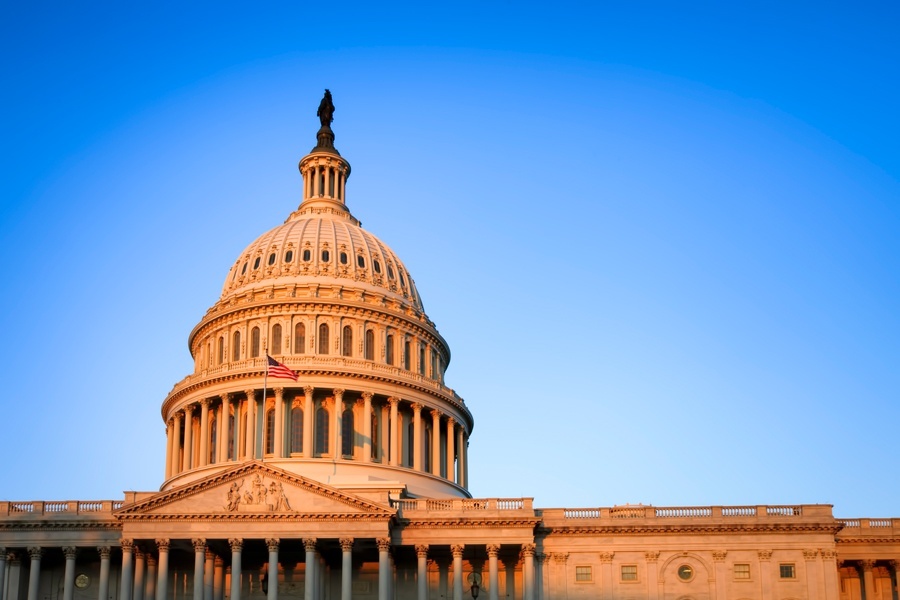
House Republicans are about to start an anti-ESG blitz that has been given its own month — a campaign that will test the party’s resolve and patience on the subject.
The recently dubbed “ESG month” is attributed to Rep. Andy Barr, R-Ky., who coined the term in light of at least six hearings, as well as additional bill markups, that are slated for the coming weeks.
It certainly lacks the entertainment value of Shark Week, which is running concurrently. But it represents a culmination of conservative fervor about the roles that environmental, social and governance data should — or more likely shouldn’t — play in investing. The GOP will, if nothing else, be sinking its teeth into the issue.
And serendipitously or not, the spate of hearings is kicking off after a week that included four straight days that on average were the hottest ones recorded on Earth, a result that climate scientists have linked to global warming caused by greenhouse gas emissions.
The hearings are coming just after several members of Congress again bombarded the usual suspects list of asset managers about ESG. This week, Judiciary Committee chair Jim Jordan, along with Reps. Thomas Massie, R-Ky., and Dan Bishop, R-N.C., sent letters to the firms, asserting that net-zero climate emissions goals could lead to anti-trust claims, according to Bloomberg.
Three events slated for next week by the House Financial Services Committee include a hearing examining ESG broadly, as well as two subcommittee hearings about proxy voting and proxy advisors. There's an additional hearing next Thursday and two on the July 18 that involve the Housing and Insurance, Capital Markets and Financial Institutions and Monetary Policy subcommittees. A markup of at least four bills would follow on July 26.
“It will be interesting to see by the end of the third week how much energy is left on these issues,” said Bryan McGannon, managing director of US SIF: The Forum for Sustainable and Responsible Investing, in an online discussion about the hearings. “This is a really unusual schedule for a committee to take on.”
The focus on ESG this month is notable after two hearings House Republicans have already held on ESG this year. Although the first was widely attended, few Republicans showed up at the second one, leading their Democratic colleagues to ridicule the low turnout.
But the topic is a core piece of the campaigns of at least two Republican presidential contenders, and it's gotten a lot of attention in numerous Republican-led states that have either considered or passed bills tamping down on ESG factors used in managing public assets.
Additionally, the House reps had not yet identified witnesses for the forthcoming hearings, something that is usually done at least a week ahead of time, McGannon noted.
“I’m not sure what’s going on. I thought they would be more prepared,” he said.
The four bills likely to be marked up and passed to the Senate include one that would limit retirement plan fiduciaries to consider only “pecuniary” factors when selecting investments; another that would set new guidelines for proxy voting of index-fund shares; one that would add restrictions and registration requirements for proxy advisory firms; and another that would limit the material disclosures that could be mandated by the SEC. There are other bills out there that stand lower odds, including one that would rid the Federal Thrift Savings Plan of sustainable investments in its fund window, and perhaps inadvertently, religious-themed funds as well.
“You will hear that the costs to a company to have a proposal on a ballot is excessive,” McGannon said, noting that a $150,000-per-issue figure cited by opponents has not been substantiated. “That’s an actual nonissue.”
And although the number of shareholder proposals on ESG has increased over the past few years, so too have a handful of anti-ESG proposals, he noted. However, about 13% of companies in the Russell 3000 Index face shareholder proposals in a given year, on average, he said.
Sam Adams, CEO of Vert Asset Management, said that he has been fielding questions from financial advisors about how the anti-ESG push will affect them or whether the proposals have any teeth.
“They’re wondering where the policy and legal lines would be drawn,” he said. However, “none of these advisors are getting these questions from their clients.”
Much of the political push against ESG is also misguided, and the proposals that have resulted might not have much effect on the use of ESG factors, indicating that “there is a lot of posturing going on,” he said.
“The conflation of [socially responsible investing] with ESG is how I like to describe it,” he said. “ESG is supposed to be about material issues that affect companies.”

Meanwhile, DPL Financial Partners adds two annuity executives and Prime Capital Financial hires a Mid-Atlantic retirement plan consultant

Andrew Komarow pleaded guilty Thursday in federal court in Hartford to defrauding three financial services companies of close to $3.3 million.

Elsewhere, Cetera picks up a $210 million Connecticut team from MML, while Wells Fargo FiNet adds a San Diego family practice from LPL

Celebrity endorsements, $500M in claimed assets, and a state regulator stepping in.

“We needed to become a more agile and efficient organization,” said American Express CEO Stephen Squeri.
Knighthead Life entered the market with a competitive MYGA. A strong launch earned advisor confidence and paved the way for FIAs.
As AI makes financial information more accessible than ever, Lana Hock explains why human judgment, trust, and empathy remain the qualities clients value most in a financial advisor

