
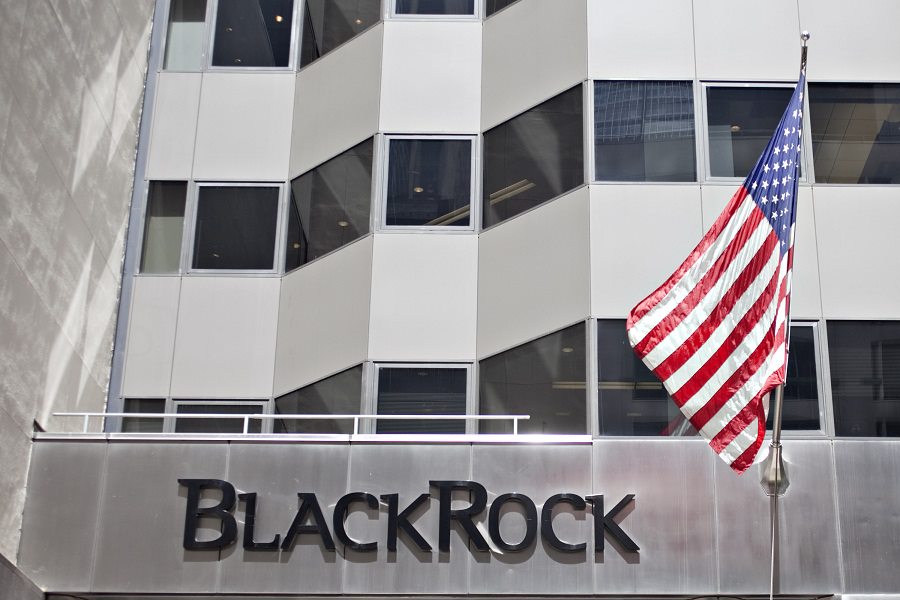
BlackRock Inc. has just cut costs across a handful of ETFs — including the biggest bond fund in the industry — as big issuers ramp up the famous fee war across the $7 trillion U.S. marketplace.
In Securities and Exchange Commission filings Thursday after the market close, the world’s largest issuer of exchange-traded funds reduced the expense ratio on the $85 billion iShares Core U.S. Aggregate Bond ETF (AGG) to 0.03% from 0.04%.
It also took an ax to expenses on two stock ETFs, previously known as the $1.26 billion iShares MSCI USA Multifactor ETF (LRGF) and the $911 million iShares MSCI International Multifactor ETF (INTF). It cut fees on the former to 0.08% from 0.2%, and to 0.15% for INTF, from 0.3%.
In a separate fund filing, BlackRock said it will be changing the current fund names and the current underlying indexes for both. LRGF will be known as the iShares U.S. Equity Factor ETF, and INTF will be renamed the iShares International Equity Factor ETF. The funds will track indices from STOXX instead of MSCI.
“Fees continue to move lower,” said Todd Rosenbluth, head of research at ETF Trends. “Advisers and retail investors are fee-conscious when using building block, data-oriented or broad-market products — and lower fee products tend to garner more attention.”
BlackRock reduced charges on two of its fixed-income ETFs in January, following fresh fee-cutting moves from State Street Corp. and Vanguard Group Inc. late last year.
“BlackRock makes enhancements to iShares ETFs as part of an ongoing review of its product lineup to both meet and anticipate the needs of our clients,” said a spokesperson for BlackRock.
BlackRock also cut expense ratios for several other funds.

Iowa's Greenwood Wealth Partners exits D.M. Kelly as UBS and Ameriprise win Merrill Lynch recruits in California and Florida

Less than 1% of pool funds went to actual trading, CFTC says

Plus, SEIA builds a governed data foundation for its in-house AI and Snappy Kraken debuts a read-only marketing coworker for advisors.

He owes $364 million but pays $100 a month

Broadridge, Wedbush and Alaris Acquisitions have also filled senior wealth management roles with hires from J.P. Morgan, Osaic and SageView.
As AI makes financial information more accessible than ever, Lana Hock explains why human judgment, trust, and empathy remain the qualities clients value most in a financial advisor
Northern Trust’s Ken Lassner shows advisors how to convert volatility into after-tax portfolio gains

