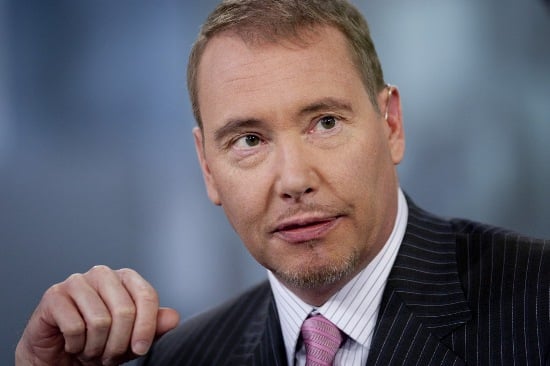
Bank loans are enjoying a resurgence, and Jeffrey Gundlach's DoubleLine Capital LP plans to join the party next year.
After being largely ignored by investors for the better part of the year, bank-loan mutual funds have become hot over the past few months. Since August, the funds have taken in more than $5 billion, nearly three-quarters of their $7 billion of net inflows this year through Oct. 31, according to Morningstar Inc.
DoubleLine, no stranger to popular funds, will launch the DoubleLine Floating Rate Fund in 2013. It will be managed by Bonnie Baha and Robert Cohen.
The fund won't be limited to bank loans, though. It can also invest in inflation indexed securities and mortgage- and asset-backed securities, according to the preliminary prospectus filed with the Securities and Exchange Commission.
Advisers looking for pure exposure to bank loans may want to keep a close eye on the fund's portfolio.
Investors have begun clamoring for exposure to the loans for a couple of reasons.
For one, the loans are rated below investment grade. Thus, they're offering income-crazed investors a 4% to 5% yield to compensate for the default risk. The yield is also tied to a benchmark, typically the London Interbank Offered Rate, so the yield on the notes will rise if interest rates do.
In addition, bank loans have received less attention this year than other high-yielding fixed-income investments such as junk bonds and emerging markets debt. Indeed, some
fund managers find them relatively undervalued.
Certainly, bank-loan funds have performed reasonably well.
The bank-loan category at Morningstar shows a return of over 9% through Nov. 30, less than the 15% return of emerging market debt and the 13% of high-yield bonds, but higher than the average intermediate-term bond fund.
The DoubleLine Floating Rate Fund will be the sixth DoubleLine mutual fund. Its flagship total Total Return Fund ticker:(DLTNX) has been the most popular mutual fund this year, with $17.9 billion of net inflows through the end of October, according to Morningstar.
The firm has had almost $20 billion of net inflows into its family of five mutual funds, good for fourth-best in the industry, behind Vanguard Group, Pacific Investment Management Co. Inc. and JPMorgan Chase & Co.