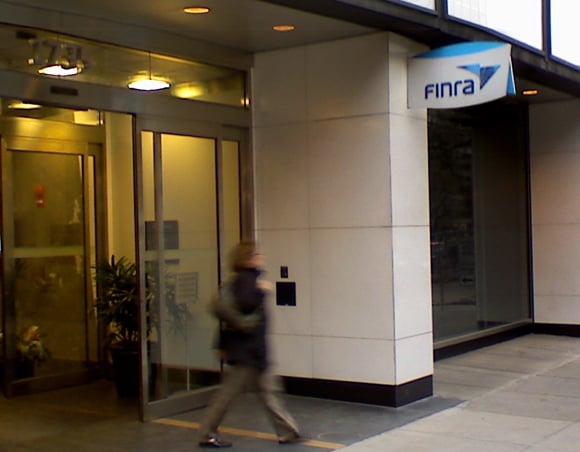
Finra wants broker-dealers to disclose the revenue-sharing deals they have with mutual funds.
General information on these "shelf space" payments is already disclosed in funds' prospectuses and related documents, but the
Financial Industry Regulatory Authority Inc. wants broker-dealers themselves to offer customers a toll-free number or website for similar disclosures.
Finra this month filed a rule change with the Securities and Exchange Commission that would make this type of disclosure mandatory for brokerage firms.
The rule proposal, which includes other provisions as well, was published in the Federal Register on Monday. It would amend and adopt the old NASD Rule 2830, which covers mutual funds, as Finra Rule 2341.
Comments are due by May 31.
Some broker-dealers already disclose which funds they have deals with and the maximum amount any one fund company would pay.
Under the Finra proposal, member firms "would have to prominently disclose that this additional cash compensation may influence the selection of investment company securities that the member and its associated persons offer or recommend to investors," Finra said in its SEC filing.
Brokerage firms would have to "provide a prominent reference … to a web page or toll-free telephone number where the investor could obtain additional information concerning these arrangements," Finra said.
The proposal stems from a controversial notice Finra published in 2009. Industry interests told Finra then that the increased disclosures would conflict with other pending rules and would be confusing for investors.
Finra disagreed. Requiring revenue-sharing disclosures by firms would "further inform investors of the potential conflicts that can arise from the sale of" mutual funds, the regulator said in its filing.
"The Finra proposal appears to be a stopgap measure until the SEC addresses the broader issue of whether advisers must act in their clients' best interests," said Lou Harvey, president of Dalbar Inc., a fund research firm.
Under the Dodd-Frank law, the SEC is working on rulemaking to expand a fiduciary duty to brokers. That standard of care likely would include increased disclosures about a variety of conflicts and products.
Mr. Harvey worries that singling out mutual funds now for heightened disclosure of revenue sharing might prejudice investors against buying funds.
Under a broader fiduciary duty, "this and every other potential conflict of interest must be disclosed [and] puts all investments on a level playing field," Mr. Harvey said.
Revenue-sharing deals vary by firm and fund. Specific amounts that a fund pays a broker-dealer are not usually disclosed.
Finra's proposal would not require specific disclosure.
Critics of the payments have complained that the actual amounts paid are material and should be transparent.
Edward Jones is one of the few, if only, firms to disclose the percentage of assets paid by individual fund companies.
Jones gets from 2.9 basis points on assets from the American Funds, up to 13 basis points from other fund companies, all of which do less volume than American Funds.
Edward Jones' detailed disclosures were mandated under a settlement with the SEC in 2004.