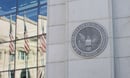
In 2,300 pages of legislation overhauling the U.S. financial regulatory system, there is no section or subsection entitled “mutual funds,” an indication that they were not seen as a primary culprit in the market crisis that shook the economy three years ago.
“There is nothing aimed at mutual funds in Dodd-Frank, per se,” said William Tartikoff, senior vice president and general counsel at Calvert Group Ltd.
But it is too soon for the industry to breathe a sigh of relief. As federal financial regulators promulgate the 243 rules and conduct the 59 studies called for by Dodd-Frank, there's plenty of opportunity for collateral impact.
“So many of them might have a secondary or tertiary effect on the mutual fund industry,” Mr. Tartikoff said. “It's hard to predict.”
A prominent wild card is the work of the Financial Stability Oversight Council, a group of financial regulators created by Dodd-Frank to identify institutions that potentially could destabilize markets. Sometime this year, the panel is expected to designate systemically important financial institutions — both banks and non-bank companies — that could create a substantial risk to the system.
Mutual funds want to avoid the SIFI label, which likely would bring with it oversight by the
Federal Reserve and substantial capital requirements.
“It would cause a major change to the mutual fund business to be designated as a SIFI,” said Karrie McMillan, general counsel at the Investment Company Institute. “To put aside the amount of money that the Fed requires of banks would put a lot of mutual fund advisers out of business.”
The prevailing sentiment among experts is that mutual funds will not be targeted by the financial stability council. The group has outlined six criteria it will use in evaluating whether an institution poses a systemic risk — size, lack of substitutes for the services and products it provides, degree of connection to other financial firms, leverage, liquidity risk and maturity mismatch, and existing level of regulatory oversight.
On most of those measures, mutual funds don't raise a red flag, according to people in the industry. They said that funds already are heavily regulated by the Securities and Exchange Commission and that they are not positioned to cause a domino effect if one of them topples.
Calvert sponsors 50 mutual funds that are separate legal entities, according to Mr. Tartikoff.
“If something goes wrong with one, it won't affect the others,” he said.
FUNDS WEREN'T RECKLESS
Perhaps most important, mutual funds are not highly leveraged and don't have a reputation for engaging in the breathtaking risk that can send tremors down Wall Street.
“No one can say they were out there throwing the dice with investors' money,” said Jack Murphy, a partner at Dechert LLP.
Standing alone, mutual funds may escape the systemic imprimatur. But there is a possibility that they will get ensnared if mutual fund families are designated systemically important financial institutions.
“The question is: Is it the mutual fund itself or the complex that gets that designation?” said John Schneider, a partner at KPMG LLP.
While the systemic designation would have a direct impact on the operation of a mutual fund, other dimensions of Dodd-Frank could influence where it put its money. For instance, provisions in Dodd-Frank would make interest rate swaps more transparent.
“We're viewing that as likely to be positive from our perspective as investors,” Ms. McMillan said.
A recent rule proposed by the SEC would affect the investments eligible for inclusion in mutual funds. Under the rule, a credit rating would not be used to determine whether a security met minimum credit risks. That decision would be made by the fund's board.
The drawback is that there would be no hard and fast way to determine creditworthiness, according to Mr. Tartikoff.
A Dodd-Frank provision requiring
hedge fund advisers to register with the SEC inadvertently may increase the number of mutual fund offerings. Some
hedge fund managers have steered clear of the mutual fund market because they didn't want to deal with the SEC, according to Mr. Murphy. Now they can't avoid a relationship with the SEC.
“They're going to say, "Why don't we roll out a mutual fund?'” Mr. Murphy said. “It creates increased competition. You would have a number of new players coming in.”
Although most mutual funds escaped the financial crisis relatively untarnished, money market funds did suffer a setback when the shares of one of them fell below $1 in net asset value.
That “breaking the buck” has led to a review of money market regulation by the President's Working Group on Financial Markets.
LIQUIDITY BACKSTOP
In January, the ICI backed one of the options outlined in the October report of the working group — establishing a bank that would buy securities from funds so that they could meet redemptions even during times of market freeze.
“The very existence of such a liquidity backstop could provide reassurance to investors and thereby limit the risk that liquidity concerns in a single fund might spur in-creased redemptions in all prime money market funds,” the ICI wrote in a comment letter.
The biggest regulatory headache of all for mutual funds — a proposed SEC rule on 12(b)-1 fees issued last summer to howls of protest from the industry — effectively may have been put on ice because the SEC is too busy meeting Dodd-Frank mandates.
“My sense is that we're not going to see [a final rule] within 2011,” Mr. Barbash said. “The year is going to end before the SEC can turn to the 12(b)-1 rule or a successor to it.”
E-mail Mark Schoeff Jr. at [email protected].