

The selloff in Chinese stocks has been so intense that it’s erased all the gains in the largest China tech ETF in the U.S. since the debut in 2013.
KraneShares CSI China Internet Fund (KWEB), a $4.9 billion exchange-traded fund that invests in Chinese tech companies, slumped more than 11% Monday, bringing its decline over the past three days to 28%. Its loss this year has surpassed 42%, wiping out all the gains, including dividend payouts, since it started trading nine years ago.
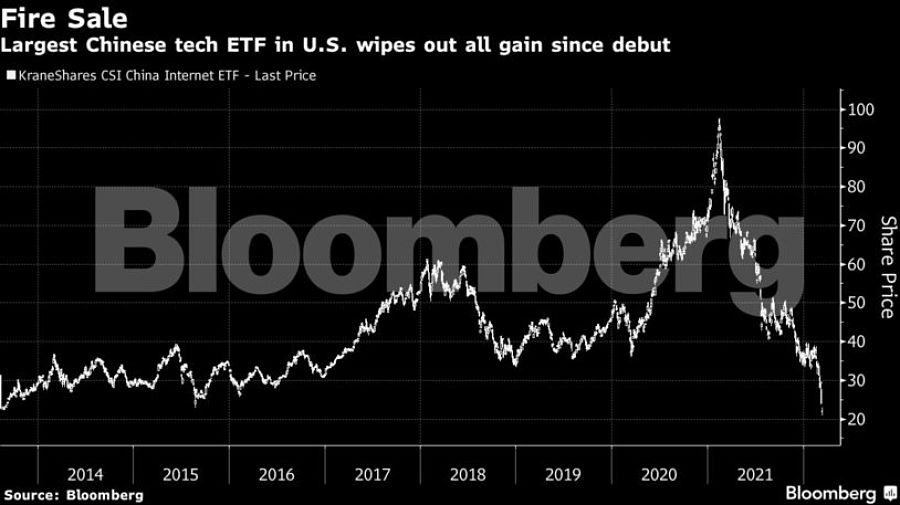
Even as the stock tumbled, the ETF posted consistent inflows in January and February before those flows reversed course this month. The buy-the-dip strategy proved no match for a broader selloff as a confluence of factors, including renewed concerns about the delisting of American Depositary Receipts from U.S. exchanges, Covid outbreaks in China and the geopolitical tension stemming from Beijing’s position in the Russia-Ukraine war weighed on sentiment. JPMorgan Chase & Co. downgraded 28 Chinese stocks trading in the U.S. and Hong Kong Monday, saying the companies are “uninvestable” on a six- to 12-month horizon.
“The China internet space needs catalysts, which are currently few and far between, for buyers to come back in,” wrote Brendan Ahern, chief investment officer at Krane Funds Advisors LLC, which manages the ETF, wrote in a blog post titled “Sum of All Fears” on Monday. ”Positive news on the Russia/Ukraine conflict, better vaccines in China, buybacks, go private deals, and spinoffs are all potential candidates to revive the sector.”
The KWEB’s assets has almost halved since peaking at nearly $10 billion in November, despite persistent inflows to the fund. It still ranks as the second-largest China-focused ETF in the U.S., trailing only the $5.5 billion iShares MSCI China ETF. Its shares outstanding jumped more than 200% between mid-July and February as investors piled on.
Five companies, including Tencent Holdings Ltd., Alibaba Group Holding Ltd., JD.com Inc., Baidu Inc. and Meituan, accounted for 46% of KWEB’s holdings. The decline of these companies this year ranges from 25% to 50%.
On Friday, Krane Funds Advisors said that it plans to convert all of its holdings of Chinese ADRs to shares trading in Hong Kong by the end of the year to minimize the delisting risk. The U.S. passed a law in December 2020 that threatens to expel Chinese companies from American exchanges if they fail to comply with its auditing requirement.

Elsewhere, Wells Fargo Advisors adds a $400 million Morgan Stanley veteran in Naples as an ex-Cetera advisor goes independent with LPL

According to a federal charges Bradley Heppner, 60, received more than $150 million in payments through funneling money from GWG Holdings to a shell company.

A $1B fund allegedly skimmed 30% off the top, then swapped cash for locked-up stock.

Insiders allegedly rewrote projections three times in four days.

TCI Wealth Advisors also has also tapped JIFFYAI to unify onboarding and servicing, while TradePMR adds ICE market data to its Fusion advisor platform
Knighthead Life entered the market with a competitive MYGA. A strong launch earned advisor confidence and paved the way for FIAs.
As AI makes financial information more accessible than ever, Lana Hock explains why human judgment, trust, and empathy remain the qualities clients value most in a financial advisor

