

As the coronavirus pandemic rattles the globe, companies that focus on protection or recovery from biological threats could become part of an exchange-traded fund.
Pacer ETFs is planning to launch a fund that tracks an index of companies offering products, technologies and services that are currently in high demand. Those stocks range from businesses that could identify or combat diseases to those enabling social distancing and working from home, according to a filing to the Securities and Exchange Commission.
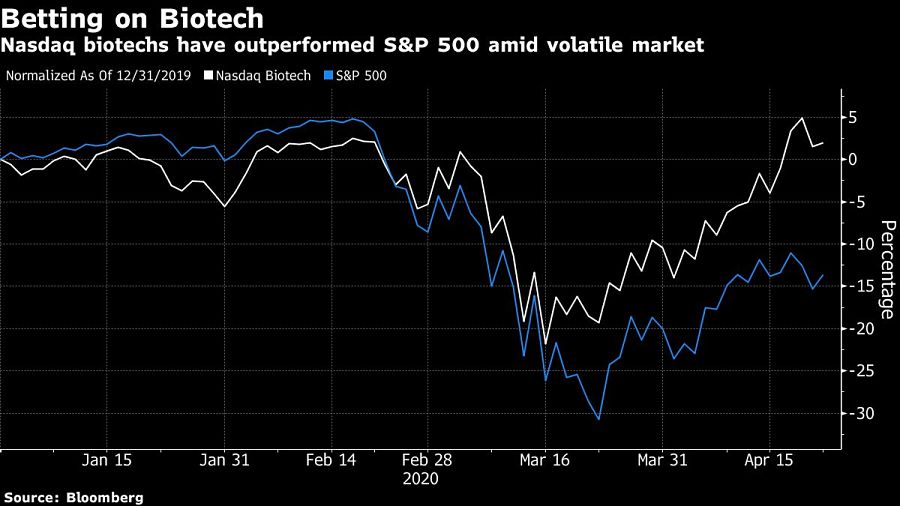
With millions of people around the world stuck in their home offices to help contain the coronavirus outbreak, companies that specialize in remote-working products are becoming a hot spot. And while biotechnology shares haven’t been immune to the huge volatility, they’ve been withstanding it better than the broader market. Developing new drugs isn’t easy, and making bets in biotech comes with the risk of failure. Yet the potential payoff for investors can also be enormous when a new medicine succeeds.
“There is likely to be demand for a thematic diversified strategy seeking to combat biotechnology threats as COVID-19 has reshaped global economies,“ said Todd Rosenbluth, head of ETF and mutual fund research at CFRA. “However, many of these likely constituents will be in early stages of growth and profitability, while perhaps also trading at a premium due to investor optimism.”
Pacer plans to track the performance of the BioShares BioThreat Index. It seeks to include companies with at least $1 billion in market capitalization and a minimum average daily value traded of at least $2 million for the last six months.

Retiring RIA seller David Laidlaw alleges the Carnegie valued his stake on $11.7 million EBITA while pitching potential buyers on $21.3 million.

New tool gives RIAs and family offices AI help vetting private market deals, with some users reportedly halving review time.

Investors got projected returns dressed up as real ones, SEC says

Parents must still act to get the $1,000 federal seed and employer contributions, giving financial advisors a role in the rollout.

FINRA booted Rudy Anguiano from the industry for “conversion - the intentional and unauthorized taking of another person’s property.”
As AI makes financial information more accessible than ever, Lana Hock explains why human judgment, trust, and empathy remain the qualities clients value most in a financial advisor
Northern Trust’s Ken Lassner shows advisors how to convert volatility into after-tax portfolio gains

