

Junk-bond bears have had a tough run lately, but that’s not stopping industry players from touting new and cheap ways for credit naysayers to ramp up their short bets.
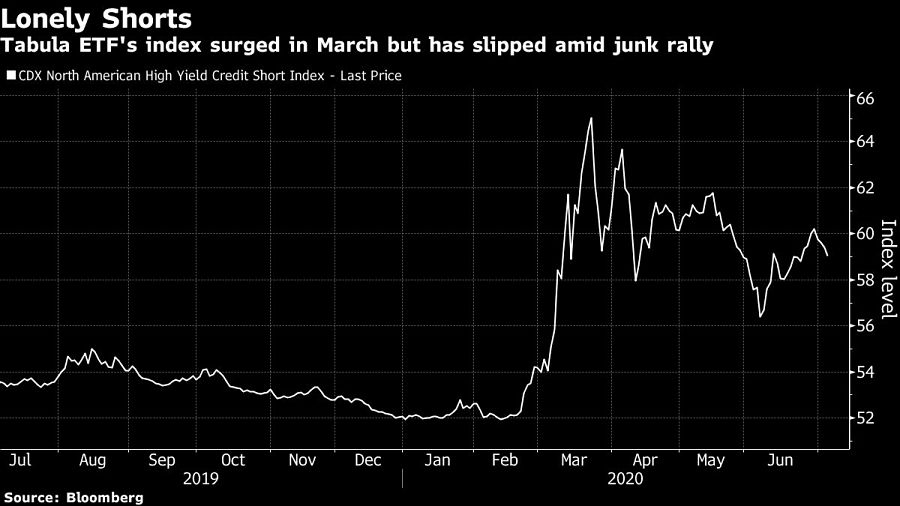
London-based Tabula Investment Management launched an exchange-traded fund Tuesday that lets investors wager against a basket of high-yield debt from around 100 companies across North America.
The Europe-listed fund (TABS) uses credit derivatives to track the performance of the CDX North American High Yield Credit Short Index, which is dominated by BB-rated names and heavily weighted in the consumer and industrials sectors.
At a net asset value of around $100 per share and a cost of 50 basis points a year, the ETF aims to provide an easy way to hedge a high-yield portfolio -- or bet that a wave of defaults stops the recent sub-investment-grade rally in its tracks.
“Financial market indicators are optimistic relative to both credit and economic indicators,” said Jason Smith, Tabula’s chief investment officer. “Investors need to review their exposure to high-yield U.S. debt and consider strategies for protecting against any rise in defaults.”
Bolstered by Federal Reserve buying and rebounding from a brutal first quarter, junk bonds just capped their best three months in a decade while new issuance surged to a record of more than $58 billion in June. Companies rated high yield that have been walloped by the coronavirus are tapping lenders who are betting that the pain will be temporary.
Bears point to fresh outbreaks of the pandemic, while the speculative-grade corporate default rate could triple by next March, according to S&P Global Ratings.
Investors bearish on junk typically resort to trading derivatives on CDS indexes directly or borrowing shares of U.S.-listed high-yield ETFs, or shorting individual bonds.
Tabula is no stranger to exotic credit funds, having rolled out a short-volatility product last year. That fund held as much as 153 million euros ($173 million) in assets last year, though it holds just 12 million euros now.

Retiring RIA seller David Laidlaw alleges the Carnegie valued his stake on $11.7 million EBITA while pitching potential buyers on $21.3 million.

New tool gives RIAs and family offices AI help vetting private market deals, with some users reportedly halving review time.

Investors got projected returns dressed up as real ones, SEC says

Parents must still act to get the $1,000 federal seed and employer contributions, giving financial advisors a role in the rollout.

FINRA booted Rudy Anguiano from the industry for “conversion - the intentional and unauthorized taking of another person’s property.”
As AI makes financial information more accessible than ever, Lana Hock explains why human judgment, trust, and empathy remain the qualities clients value most in a financial advisor
Northern Trust’s Ken Lassner shows advisors how to convert volatility into after-tax portfolio gains

