
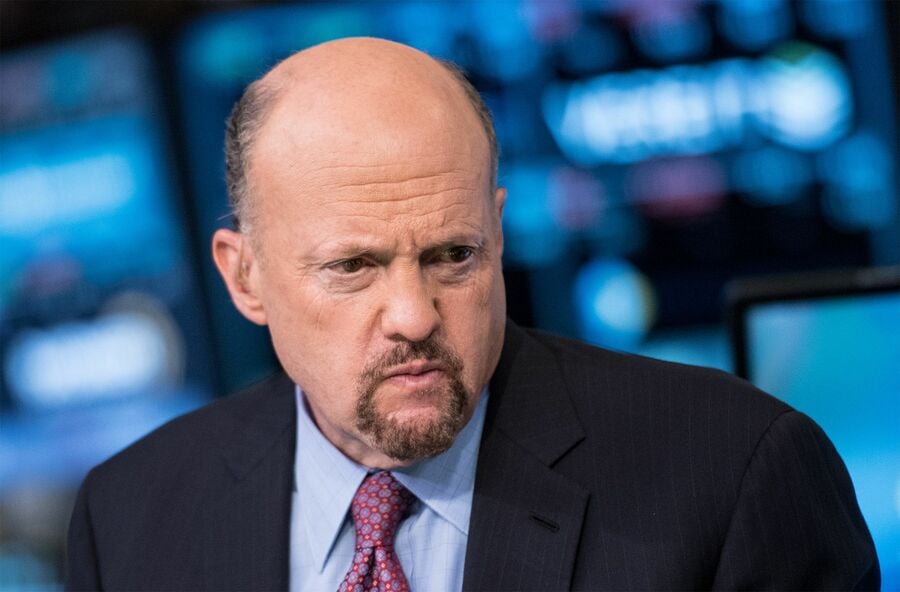
Whether you’re a lover or loather of Jim Cramer — and on both Wall Street and Main Street, there are plenty of each — you’re now able to express that view via the magic of ETFs.
A pair of new exchange-traded funds is launching Thursday that will help U.S. investors bet either on or against the stock picks of the host of CNBC’s "Mad Money" show, arguably the world’s most famous financial pundit.
The Inverse Cramer Tracker ETF (ticker SJIM) seeks to deliver returns that correspond to “the inverse of securities mentioned by Cramer” by either short-selling his equity picks or buying companies he recommends against, according to its prospectus.
Meanwhile, the Long Cramer Tracker ETF (LJIM) will back shares the CNBC anchor likes and ditch the ones he doesn’t.
The funds are the latest brainchild of the manager behind the anti-ARK product, the $551 million AXS Short Innovation Daily ETF (SARK), which achieved rapid notoriety by creating an easy way to wager against Cathie Wood’s flagship strategy. Now Matthew Tuttle, CEO of Tuttle Capital Management, has turned his attention to Cramer, fulfilling a long-running finance joke that the CNBC anchor should get his own inverse fund.
“If he specifically says either buy, buy, buy a stock, then we’re gonna go short that stock at the next practical moment,” Tuttle told Bloomberg’s "Trillions" podcast, referring to the inverse strategy. “If he tells you he hates a stock or sell, sell, sell or something like that, then we’re gonna go long that name again at the next kind of practical entry point.”
The merits of tracking a TV show for specific investment trades are unclear, and Cramer doesn’t claim to be advocating a long-term portfolio in his appearances.
Meanwhile, the methodology behind the ETFs is decidedly low-tech. To design the portfolios, which are equal weight, Tuttle and two colleagues watch Cramer’s television appearances throughout the day and monitor his Twitter account. The result is two actively managed portfolios that hold between 20 to 50 names with a high turnover rate, Tuttle said. Both products carry an expense ratio of 1.2%.
Cramer is one of the most famous names on Wall Street and an industry veteran. He’s a polarizing figure thanks to his brash, outspoken style and mixed history of recommendations. He recently made waves when he issued an apology for recommending Meta Platforms Inc.’s stock after it plunged, saying he was wrong to trust the firm’s management.
After news of the planned ETFs broke in October, with the focus mainly on the inverse fund, Cramer tweeted that he welcomed people betting against him, pointing out they would have been wagering against some of the most successful companies in US history.
As always i welcome people betting against me. I have done this for 42 years. Those who know me know that you would have been betting against Apple at 5, Google since inception, Meta at $18, Amazon at ten, Nvidia at $25 and AMD at $5. i welcome all comers..— Jim Cramer (@jimcramer) October 7, 2022
“Jim’s mission has always been to encourage long-term investing and a balanced portfolio that includes index funds and individual stocks,” a spokesperson for CNBC said by email. “He regards 'Mad Money' as his classroom and believes educating those who want to pick individual stocks through insight and experience is the best way to help them take control of their finances.”
Tuttle’s launches have also proved polarizing. SARK was inspired by a tweet, and when it arrived was lining up against what had not long before been one of the most successful funds on Wall Street. While it has attracted cash — assets peaked at about $631 million — and has outperformed the ARK Innovation ETF (ARKK) since its debut, SARK has enjoyed nothing like the popularity seen by Wood’s $7.3 billion fund.
AXS Investments acquired the ETF along with the rest of Tuttle’s fund lineup last April, though Tuttle has since parted ways with the firm.
In the case of SJIM and LJIM, the most contentious point was the names of the funds, Tuttle said. The initial applications listed them as the Inverse Cramer ETF and Long Cramer ETF, but the word “Tracker” was added at the request of the Securities and Exchange Commission.
“If you’ve got someone’s name in an ETF, but they’re not actually involved in the running of it — which I would argue he kind of is, but you know, not by choice — then that’s kind of an issue,” Tuttle said. “I like ‘Tracker’ better.”

Chicago-based Mesirow Fiduciary Solutions adds flexPATH's plan-level outsourced fiduciary book, boosting its retirement market reach to $164 billion.

Also, Raymond James's employee advisor channel adds breakaways from Wells Fargo and Stifel, while UBS welcomes an ex-Morgan Stanley duo in Indiana.

It promised guaranteed principal and 10% monthly returns. The SEC says it invested nothing.

Ten years after entering the fee-based annuity market, MassMutual Ascend says nearly half its lifetime sales came in the past two years alone – but barriers remain among fee-only advisors.

Amplify, WealthReach, Zeplyn and Zocks have unveiled partnerships aimed at automating portfolio management, content creation, account opening, and client communication.
Northern Trust’s Ken Lassner shows advisors how to convert volatility into after-tax portfolio gains
Dan Biagini of American Equity says the steady decline of pensions, longer lifespans and a reset in interest rates are rewriting how advisors build retirement income

