
A leading state securities regulator wants to make sure the broker conduct standard is protecting investors from conflicts of interest that erode their returns, but preliminary results from a survey by his organization suggest there’s still a long way to go.
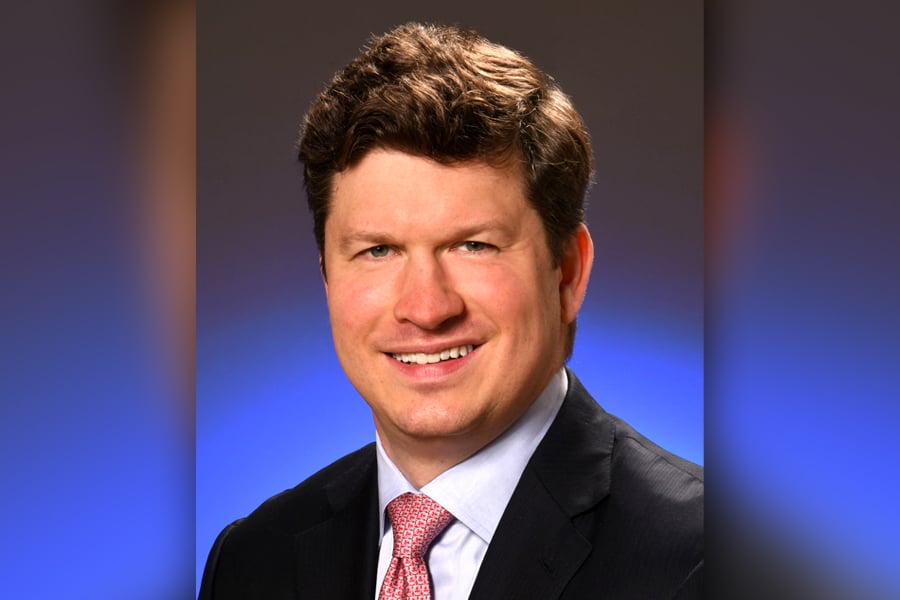
When Andrew Hartnett became president of the North American Securities Administrators Association earlier this week, he put assessing how Regulation Best Interest is playing out in customer interactions with brokers at the top of his priority list.
“We think about this as a pocketbook issue for Main Street investors,” Hartnett, deputy administrator for securities in Iowa's Insurance Division, said Tuesday at the NASAA annual conference in Nashville, Tennessee. “This is about whether or not they’re getting the most bang for their buck, if you will.”
Even before Reg BI went into force in June 2020, state regulators had begun a multiyear survey of brokerages. The first phase of the study focused on firms' pre-Reg BI practices. The first part of the second phase, which examined firm-level approaches to sales of complex products, was released last November and generated a barrage of criticism from the brokerage industry, which questioned its methodology.
The second phase of the study, which is now underway, involves on-site and remote examinations of brokerage branch offices to assess how registered representatives are adhering to Reg BI when making recommendations about potentially high-risk and costly products, such as private placements, variable annuities, nontraded real estate investment trusts, and leveraged and inverse exchange-traded funds.
State regulators are probing whether brokers are increasing their due diligence to make sure the products they’re pitching fit customers’ risk appetite, whether they disclose their financial incentives for selling the products and whether they present reasonably available lower-cost and lower-risk alternatives.
“We’re undertaking exam efforts to ensure that Reg BI is being implemented in a way that protects Main Street investors and their hard-earned dollars,” Hartnett said in an interview on the sidelines of the NASAA conference. “We’re not finished with our initiatives. We don’t know yet what that shows.”
But earlier at the NASAA conference, Ohio securities commissioner Andrea Seidt revealed some preliminary results of the current phase of the NASAA study.
Seidt said 35% of firms reported that they do not require their brokers to discuss with their customers lower-cost options available on the firm platform. More than 28% of them said they do not require brokers to discuss lower-risk options either.
“States would like to see greater progress in the area of point-of-sale disclosure,” Seidt said. Firms are relying on “boilerplate disclosures … rather than face-to-face disclosure when it comes to disclosing financial incentive conflicts.”
There are signs of progress by brokerages on due diligence, Seidt said. For instance, almost 70% of the firms examined so far have updated their customer profile forms, more than 40% have created or updated product-specific disclosure forms, and more than 34% have modified worksheets for alternative products.
The preliminary results are based on responses from 165 exam modules. The study will conclude at the end of the year, and final results will be released next year.
“We’re trying to move the needle toward the best interest of retail investors,” Seidt said.
Another way NASAA is trying to ensure investors get the most for of the money they spend for investment advice is through a review of various fee models.
The traditional way advisers make money is by charging a percentage of investors’ assets under management. Over the last few years, there has been a proliferation of fee models, such as hourly and subscription fees.
State regulators are trying to get their arms around whether investors are getting the advice they pay for.
“The touchstone here is reasonableness,” Hartnett said during a Q&A in Nashville with his predecessor, Maryland Securities Commissioner Melanie Senter Lubin. “Are the fees reasonable in relation to the services being provided?”
Hartnett will serve as NASAA president for the next year. Before he became the top securities administrator in Iowa, he spent more than a decade in Missouri government. He is the Show-Me State’s former chief securities regulator. In between, he was in a private law practice.
Hartnett moved to Iowa, outside of Des Moines, to follow his wife’s job. The father of three children between the ages of 1 and 7, he was appointed to his current position in 2019. Hartnett, 41, had worked with Doug Ommen, the head of the Iowa Insurance Division, when Ommen lived in Missouri.
Hartnett just can’t resist the call of securities regulation.
“I love the mission,” he said in an interview. “I love working to protect investors, trying to keep bad actors out of the industry. It’s a lot of fun to go to work when you’re focused on justice.”

Yari Capital's move to Carson continues a run of additions for the $62 billion firm, days after it hired a veteran recruiter from Osaic.

Servo Wealth Management's $210 million book brings the Minneapolis consolidator's total client assets further past $160 billion.

The deal to acquire a 300-client tax firm sets up much-needed succession for its 80-year-old founder, while joining a widening trend of tax service integration among RIAs.

New Nationwide Retirement Institute survey reveals eight in ten Americans agree Social Security needs fixing and how.

Advisor-led adoption has been rapid for tasks from translating annuity contracts into plain English to speedy webinar prep.
Northern Trust’s Ken Lassner shows advisors how to convert volatility into after-tax portfolio gains
Dan Biagini of American Equity says the steady decline of pensions, longer lifespans and a reset in interest rates are rewriting how advisors build retirement income

