
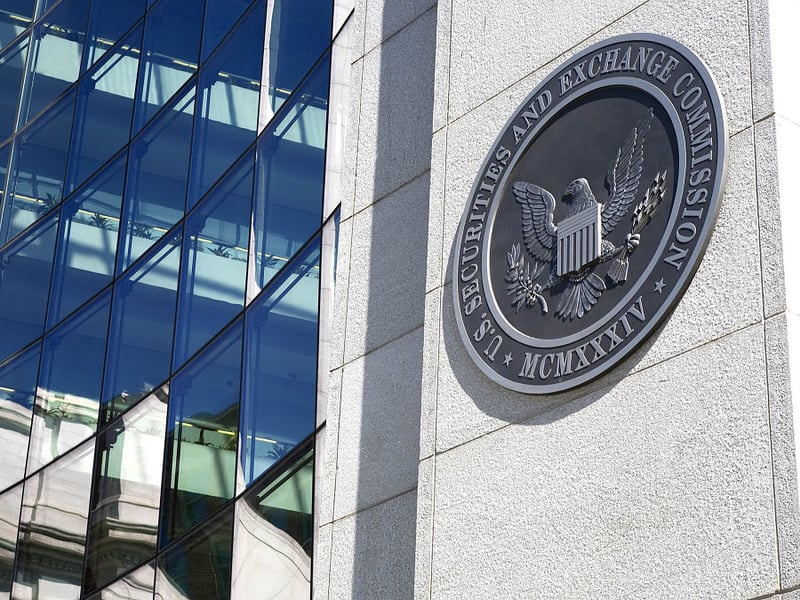
When the SEC launched its Share Class Selection Disclosure Initiative in early 2018, it sent a shudder across the entire financial services industry.
In one motion, the commission announced to every firm and adviser in the country that it would be reviewing their recommendations to investors regarding mutual fund share classes against a standard that had not existed at the time those recommendations were made — and that had not been established through the lawful rulemaking process.
The SEC was changing the rules in the middle of the game.
Worse, it was resorting to strong-arm tactics to do so. The commission would use its enforcement power to penalize firms whose practices ran afoul of staff "guidance" — even though those practices did not violate any actual rules or regulations and had been understood to comply with SEC regulations for decades.
Firms that did not come forward and volunteer to be penalized were told they would face more severe repercussions down the road. The initiative has resulted in penalties of more than $125 million across 79 investment firms.
This is no way to regulate an industry. More importantly, it’s no way to adhere to the rule of law.
With this in mind, the Financial Services Institute and a coalition of concerned industry groups and public interest organizations recently came together to file a petition for rulemaking with the SEC. The petition forms another vital element — alongside our continuing dialogue with regulators and members of Congress — in our effort to protect advisers, firms and investors from the practice of "rulemaking by enforcement."
Our petition makes a commonsense request that the SEC enact a fair and transparent rulemaking that brings its staff "guidance" in line with existing regulations regarding disclosures of adviser compensation (through 12b-1 fees) for recommending certain mutual fund share classes.
This rulemaking would provide clarity for all firms and advisers by providing affected parties with the proper opportunity to review the proposed rule and recommend helpful changes during a reasonable comment period.
Just as importantly, our petition explains clearly why it is so urgent for the SEC to turn back immediately from its increasing reliance on "rulemaking by enforcement."
As we and our coalition allies state in our petition, “Agencies like the Commission wield massive power. They promulgate binding regulations. And they bring enforcement actions against private citizens. But their leaders are not elected, nor are they fully accountable to anyone who is. So we at least demand that these agencies act in the open and in accordance with the law.”
By using its enforcement power to change the rules in the middle of the game, the SEC is not only violating the requirements of the rulemaking process as established by Congress — it is undermining the very concept and purpose of enacted regulation.
If the commission can unilaterally and retroactively impose standards it has created completely outside the lawful rulemaking process, what is to prevent it from altering any other regulation it chooses, at any time, without allowing notice or comment for members of our industry?
As industries grapple with the current challenging economic conditions, regulatory certainty is more important than ever. So much so that last month, President Trump signed an executive order providing regulatory relief by instructing agencies to “decline enforcement against persons or entities that have attempted in reasonable good faith to comply with applicable statutory and regulatory standards.”
We call on the SEC — and on our leaders in Congress — to carefully consider the important points we and our coalition partners have raised in our petition, and to end the reckless and destructive practice of "rulemaking by enforcement."
Dale Brown is president and CEO of the Financial Services Institute.

“Today’s actions send a clear message that even the biggest financial institutions are not above the law,” said Treasury Secretary Scott Bessent.

To build a truly self-sustaining practice, enterprising advisors have to start with a vision of what they want to be – and accept the realities that come with building toward it.

Serial acquirers add a 35-year-old Oregon wealth manager and a New York practice focused on women navigating life transitions.

Mara Glassel and Julie Fox will co-lead the fast-growing hybrid RIA’s ultra-high-net-worth and private wealth businesses.

The banking giant's wealth arm extends its revenue streak as it pushes to exit consent orders weighing on growth since 2020.
Knighthead Life entered the market with a competitive MYGA. A strong launch earned advisor confidence and paved the way for FIAs.
As AI makes financial information more accessible than ever, Lana Hock explains why human judgment, trust, and empathy remain the qualities clients value most in a financial advisor

