When it comes to technology, we all want it all. But we all can't agree on size
In the Apple world, does one size fit all or does one need all sizes? It seems that every time I turn around, there is another version of Apple technology. Yet, it's not so much about features, it's all about size.
When mobile phones were first introduced, they were about the size and weight of a quart of milk. Sure, they were mobile, but not really convenient. Over time, the goal was smaller and lighter. Cell phones morphed from awkward encumbrances to thin, convenient devices such as tiny flip phones or Razrs. As technology mastered the smallest phones, users came to expect more. Simply making calls was no longer enough. Phones needed internet connectivity, calendars and an address book. But as smart phone functionality has blossomed, phones have gotten larger again.
Consider the ever popular desktop computer. It was revolutionary when first introduced. Prior to that time, mainframes were available only to large, wealthy institutions. As personal computers became more widespread, the desire for greater portability grew. Laptop computers provided a nice alternative. Now we also have the options of notebook computers and tablets. Yet, tablets don't have built-in DVD or other drives, and it isn't convenient to lug around dual screens.
When it comes to technology, we all want it all: convenience, high resolution, fast speed, voice commands, instant communication, apps at our fingertips and entertainment. But we all can't agree on size. iPhones range from 4-inch screens like the 5s or the new SE to the 4.7-inch iPhone 6 to the largest 5.5-inch screen of the 6 Plus. Some people like the one-hand ease of the smaller phones while others prefer the more readable screens of larger phones.
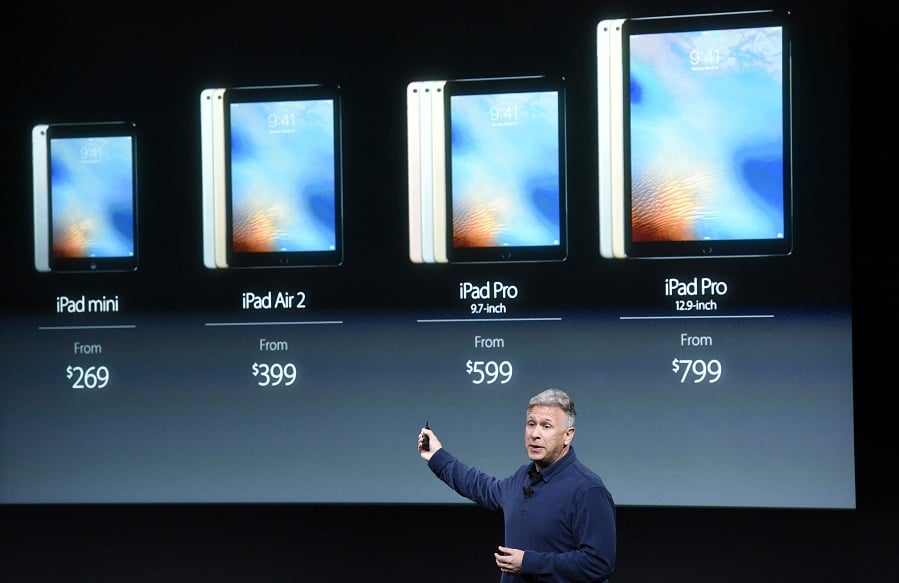
iPads also are available in small, medium, and large, with models ranging from the Mini to the new larger Pro, offering screen size options of 7.9 inches, 9.7 inches and 12.9 inches.
Is it better to have more functionality or smaller size? Is more functionality truly better? Is smaller size more desirable? Is it a personal preference or dependent on the situation? If you use an iPhone 6 Plus, would you still need an iPad mini? Are there occasions when you might want the huge iPad and others when you'd choose the regular one? As in life, I tend to go with moderation. When on the move, I use my iPhone 6s and an iPad Air with a modest 9.7-inch screen.
Sheryl Rowling is head of rebalancing solutions at Morningstar Inc. and principal at Rowling & Associates. She considers herself a non-techie user of technology.