
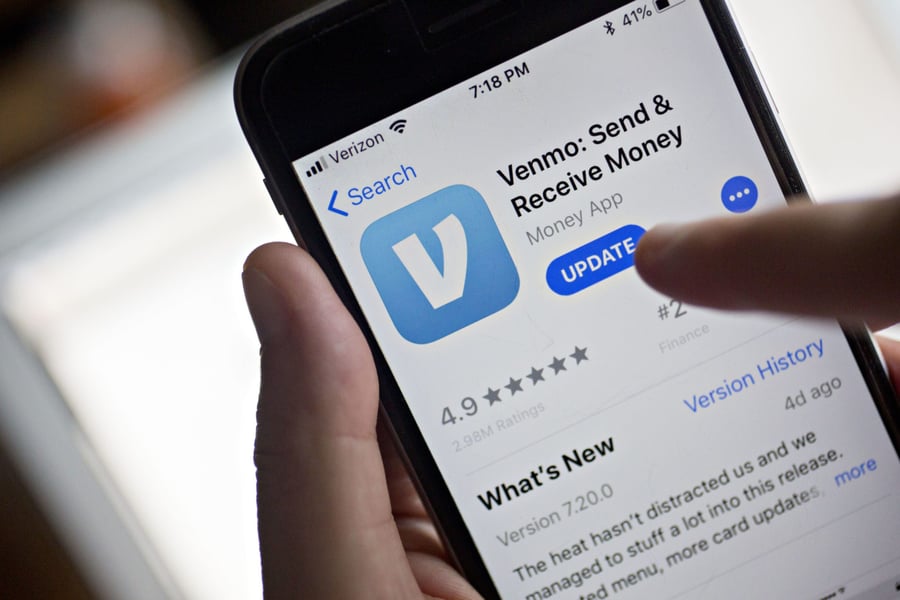
Payments giant PayPal Holdings Inc. is evolving its mobile app to enable millions of customers to trade individual stocks on its platform.
CEO and president Dan Schulman said during an investor day presentation in February that the firm is gearing up for more product offerings that align with its mission to democratize financial services, including “high yield savings accounts, direct deposit and check cashing, investment capabilities.” CNBC reported the news earlier this week.
The new venture, Invest at PayPal, will be headed by industry veteran Rich Hagen, according to an update on LinkedIn. Hagen was president of Ally Invest for nearly three years and the co-founder of online brokerage TradeKing, which was bought by Ally Invest.
PayPal may be looking to partner or buy an existing broker-dealer to offer the services, according to Schulman.
“There may be some of these financial services we do organically internally, but a lot of these will be done in partnerships,” he said during the presentation. “If somebody is going to be putting their money onto our platform, we want them to be able to grow that money, to invest that money in not just things like crypto, but in individual stocks and other assets that we can digitize and allow people to invest in.”
Details and a timeline for when customers can expect the new features were not disclosed.
Still, the firm is entering a competitive but flourishing market for online brokerages. More than 10 million new brokerage accounts opened in 2020 as a surge of new retail investors entering the markets via online platforms skyrocketed during the pandemic, according J.D. Power. Robinhood Markets Inc. claimed 27% of all new self-directed account openings, more than any other firm, according to the study.
While the direct-to-consumer space for trading is getting very crowded, PayPal may be looking to capitalize on its 400 million users, which gives it upside to cross-sell, said Will Horne, senior consultant, digital wealth management at Capco. PayPal can also do targeted marketing for its users who may have idle cash sitting on their PayPal accounts, he said.
PayPal has also taken a reverse approach versus some of the leading fintechs in this space like Robinhood, Stash, M1 Finance or Betterment that have started with wealth products and have recently introduced banking solutions too, Horne said.
“Traditionally, fintechs have offered basic wealth products like brokerage and then jumped into cryptos,” he said. “PayPal took a leap-frog approach to offer cryptos first, a hot trend among digital users, and may now be looking to further strengthen its offering by including brokerage products too.”
With millions of accounts, a second quarter revenue of $6.24 billion, and its recent launch of cryptocurrency trading, it is a logical step for PayPal to make the expansion into wealth building and stock trading, said William Trout, Javelin Strategy's head of wealth management.
“Self-directed investing is the logical extension of the payments business, in that money movement and the connectivity and automation that supports it presents opportunities to put consumer funds more actively to work,” Trout said. “PayPal in this case is harnessing the energy and excitement of its built-in consumer base.”
PayPal’s biggest rival will likely remain Square, a fellow payments platform that offers stock and cryptocurrency through its Cash App, said William Whitt, a senior analyst at Aite Group.
“The industry is intensely competitive. Long-term, I understand PayPal’s expansion into trading, but I don’t think we’ll see anything materialize any time soon,” Whitt said. “There are firms that have been around for decades that can tailor their offerings when needed, and PayPal has a lot to learn.”
As a newcomer to the trading game, it was a smart move for PayPal to have tapped Hagen, an industry veteran, to lead the investment business, Whitt said.
PayPal’s announcement to enter stock trading circulates on the heels of the Securities and Exchange Commission sending its strongest signal yet that it plans to toughen rules for online brokers by issuing a wide-ranging request for comment on how the firms use game-like features and other tools to attract investors, the regulator announced last Friday.

Daejon Love and Taylor Chan's $1.3 million romance fraud scheme exposes how AI search engines can be manipulated by fabricated online identities

“It was a third party scam,” said the attorney representing the claimants.

Meanwhile, &Partners draws another Commonwealth practice, and Wealthcare welcomes a $550 million planning practice in the Northeast.

Palo Alto AI platform recruits RIA and fintech leaders as industry data show AI adoption reshaping advisor staffing.

Meanwhile, Raymond James, Wedbush, and LPL recruited veteran advisors from across Texas, North Carolina, and California.
Northern Trust’s Ken Lassner shows advisors how to convert volatility into after-tax portfolio gains
Dan Biagini of American Equity says the steady decline of pensions, longer lifespans and a reset in interest rates are rewriting how advisors build retirement income

