
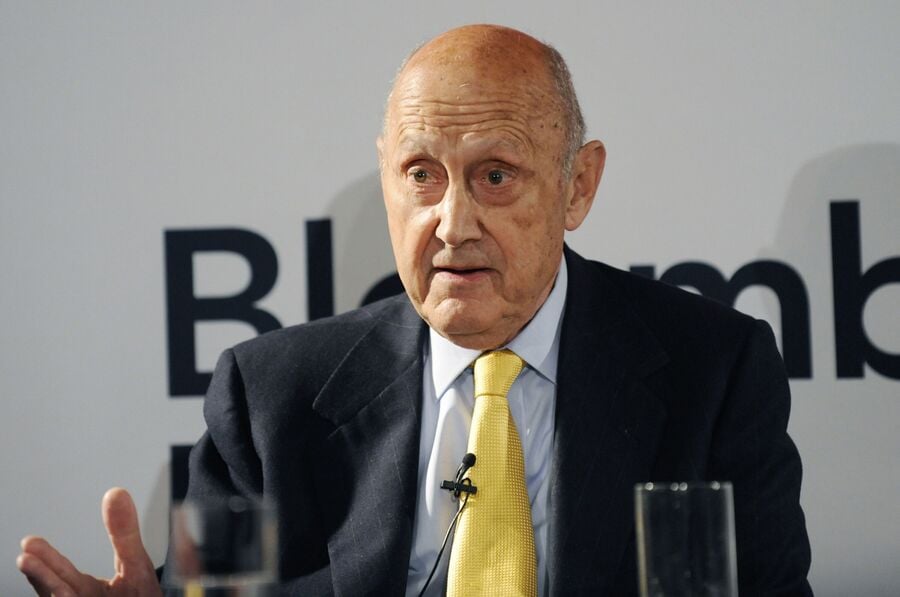
Burton Malkiel is known as an advocate of low-cost, passively managed portfolios. But when it comes to boosting after-tax returns, he favors an active approach.
Malkiel, author of the investing classic "A Random Walk Down Wall Street," is a believer in the power of tax-loss harvesting, and particularly the software developed by robo-adviser Wealthfront, where he's chief investment officer.
The program harvests losses from portfolios throughout the year to help offset capital gains in other investments, while maintaining a portfolio’s asset mix and risk level.
Many investors were shocked when they received big capital gains distributions from actively managed mutual funds that suffered double-digit losses in 2022. The tax bills came after a volatile market had active managers repositioning portfolios to meet redemptions. And after a long bull market, even stocks down sharply for the year can bring big gains when sold.
Many robo-advisers, including Schwab Intelligent Portfolios, Betterment and SigFig, offer automated tax-loss harvesting programs. Vanguard expanded its tax-harvesting service to clients of its digital-only product in March.
Malkiel, 90, described tax-loss harvesting in a recent blog post as “the only reliable way for investors to outperform the market,” because it allows them to do so on an after-tax basis. He spoke with Bloomberg about this and other investing topics. His comments have been condensed and edited for clarity.
Question: Many people don’t think of portfolio returns in after-tax terms. How does taking that into account make active funds more or less attractive?
Burton Malkiel: I start with saying that buying and holding passively managed funds is a strategy that’s performed better than 90% of active funds over the long run. Then you realize that not only does indexing beat most active managers, but active results are even worse after taxes.
We started out at Wealthfront doing tax-loss harvesting with ETFs. So if part of your portfolio was in emerging markets, you might, if emerging markets were down, sell an MSCI emerging markets ETF and buy one from Vanguard.
You’d maintain the exposure to emerging markets but switching between those ETFs isn’t considered a 'wash sale' by the IRS, because the funds track different indices. [Note: The IRS wash-sale rule doesn’t allow an investor to book a loss and then buy the same or a 'substantially similar' security 30 days before or after the sale.]
After that product, we asked ourselves, how much better could you do if you could have a software program to do tax-loss harvesting within markets like the S&P 500? Because it may be that the broad market was up, but some stocks were down.
With the S&P 500, you’d use an optimization program that holds a portfolio of about 250 of the S&P 500 stocks. You choose stocks so that you have the same size, industry, growth and value composition of the index to minimize tracking errors. Then you can look at industries that might be down and if it’s autos, sell GM and buy Ford, or if pharma was down, buy Merck and sell J&J. [Note: Wealthfront’s service is designed to mirror the holdings in the broader Vanguard Total Stock Market ETF.]
There’s a lot more bang for the buck in realizing capital losses when you do it this way, through direct indexing.
Q: Wouldn’t someone run out of losses to harvest, since as you sold and replaced securities the cost basis would be higher?
BM: The chances of getting losses diminishes over time, particularly on original investments, but they don’t disappear and are still substantial. Part of that is because of how volatile the market has been.
Another reason it seems to work well is that often people saving for retirement are putting in money periodically. So even if opportunities from original investments may be less, you’re putting in new money, and even if you don’t add new money, you’re reinvesting dividends.
Q: What broader tax considerations should investors consider?
BM: For most people, a Roth account is the best way to go. When young people ask me what kind of IRA they should have, boy, I’m 100% Roth. [Note: Roths are funded with after-tax dollars, which grow tax-free and aren’t taxed on withdrawal.]
Q: What are some overall lessons investors can benefit from?
BM: I recommend dollar-cost averaging when you’re in the accumulation phase, but people drawing down money later in life do not want to do that. If you dollar-cost-average when pulling out money, you’re selling more shares when the market is falling.
I’m in the position now of having to take required minimum distributions, and I’m having all my dividends sent into Treasury bills. I want the total amount of my RMD for 2023 in one-year T-bills, and the same for 2024. I want them in absolutely safe securities.
One of the most important lessons is that the lower the expense ratio paid to the purveyor of the investment service, the more there will be for you. As the late Jack Bogle said, 'In investing, you get what you don’t pay for.'

Chicago-based Mesirow Fiduciary Solutions adds flexPATH's plan-level outsourced fiduciary book, boosting its retirement market reach to $164 billion.

Also, Raymond James's employee advisor channel adds breakaways from Wells Fargo and Stifel, while UBS welcomes an ex-Morgan Stanley duo in Indiana.

It promised guaranteed principal and 10% monthly returns. The SEC says it invested nothing.

Ten years after entering the fee-based annuity market, MassMutual Ascend says nearly half its lifetime sales came in the past two years alone – but barriers remain among fee-only advisors.

Amplify, WealthReach, Zeplyn and Zocks have unveiled partnerships aimed at automating portfolio management, content creation, account opening, and client communication.
Northern Trust’s Ken Lassner shows advisors how to convert volatility into after-tax portfolio gains
Dan Biagini of American Equity says the steady decline of pensions, longer lifespans and a reset in interest rates are rewriting how advisors build retirement income
