
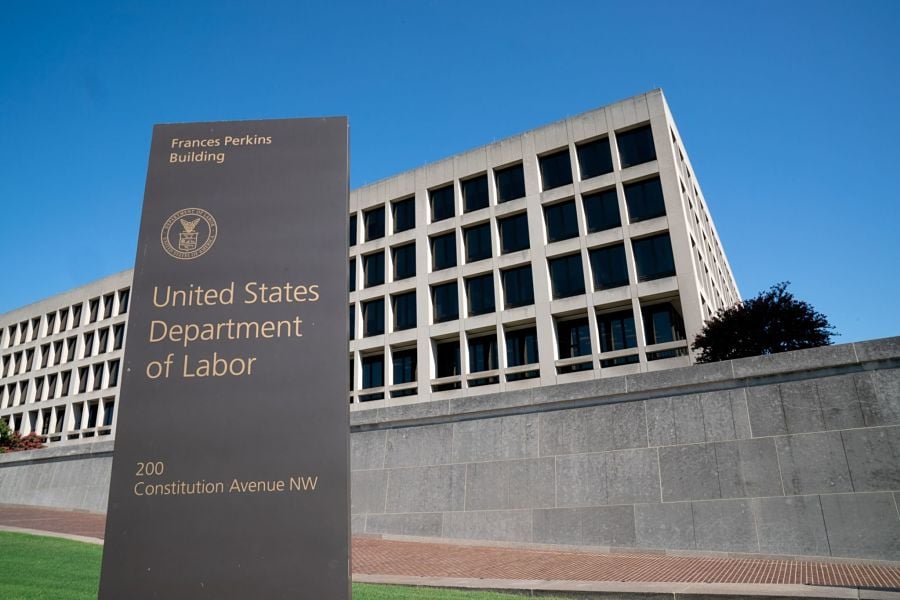
Now that the Department of Labor has issued a final rule on sustainable investing in retirement accounts, financial advisers are waiting for the agency to revisit its investment advice regulation.
The rule likely will expand the definition of who is a fiduciary to retirement savers, building on a Trump administration regulation that went into force earlier this year. The Trump rule replaced an Obama administration regulation that was vacated in federal court.
The Biden administration surprised some observers by leaving the Trump rule in place because it includes a five-part test for establishing fiduciary status. The original Obama rule did away with that rubric because investor advocates said it made it too easy for financial advisers to sidestep fiduciary obligations when working with retirement savers as they rolled savings from their company plan into individual retirement accounts.
Critics said the five-part test’s requirement that fiduciary status be linked to an ongoing relationship, rather than a single rollover recommendation, undermined investor protection. The next iteration of the rule likely will address that situation.
“On [the DOL’s] wish list would be a fiduciary regulation that says, at least in some situations, a single piece of advice is fiduciary advice,” Fred Reish, a partner at Faegre Drinker Biddle & Reath, said in a webcast earlier this month. “Rollovers would be an example.”
The current DOL regulatory agenda indicates a proposed rule will come out in December. But that deadline almost certainly will be pushed into next year when the agenda is updated. A revised agenda is expected soon.
Even the Trump version of the fiduciary rule is drawing strong criticism from some in the financial industry who say it is too expansive and would too easily establish fiduciary obligations. They argue the DOL exceeded its authority with its interpretation of the five-part test.
Two lawsuits have been brought against the Trump rule. One was filed by the Federation of Americans for Consumer Choice in the same Texas federal court system where the Obama rule was struck down in 2018. The other suit was filed in Florida by the American Securities Association.
Craig Watanabe, director of compliance at DFPG Investments, said at least one of the suits will be successful.
“I think [the Trump rule] is going to be vacated,” Watanabe said at the ComplyConnect conference in Austin, Texas, earlier this month. “I would be very surprised if we see any enforcement before this is clarified."
The uncertainty in court may also slow the rulemaking on the next iteration of the fiduciary rule. The DOL is seeking to dismiss the suits.
But the fiduciary rulemaking also might gain some momentum because a new head of the Employee Benefits Security Administration, DOL assistant secretary Lisa Gomez, was recently approved by the Senate after a long and circuitous confirmation process.
With the Biden administration entering its third year, whatever the DOL wants to accomplish in the next fiduciary rule will have to get underway in the first part of 2023 in order to be finalized before the end of the first term.

Chicago-based Mesirow Fiduciary Solutions adds flexPATH's plan-level outsourced fiduciary book, boosting its retirement market reach to $164 billion.

Also, Raymond James's employee advisor channel adds breakaways from Wells Fargo and Stifel, while UBS welcomes an ex-Morgan Stanley duo in Indiana.

It promised guaranteed principal and 10% monthly returns. The SEC says it invested nothing.

Ten years after entering the fee-based annuity market, MassMutual Ascend says nearly half its lifetime sales came in the past two years alone – but barriers remain among fee-only advisors.

Amplify, WealthReach, Zeplyn and Zocks have unveiled partnerships aimed at automating portfolio management, content creation, account opening, and client communication.
Northern Trust’s Ken Lassner shows advisors how to convert volatility into after-tax portfolio gains
Dan Biagini of American Equity says the steady decline of pensions, longer lifespans and a reset in interest rates are rewriting how advisors build retirement income

