
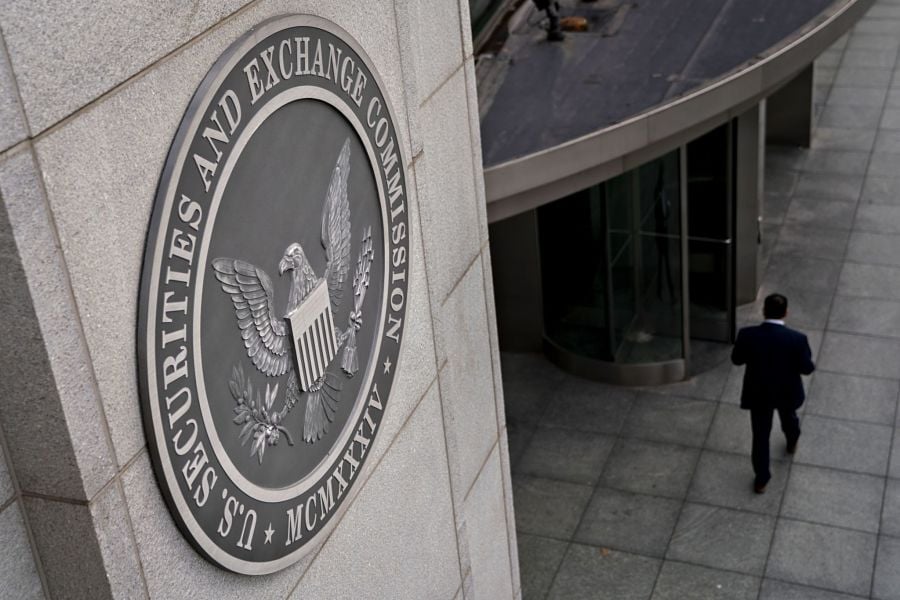
The Securities and Exchange Commission plans to propose rules by the end of the year that will require corporations to publicly disclose the risks they face from climate change, the agency’s chair said.
SEC chief Gary Gensler said the upcoming proposal will likely call for businesses to provide “qualitative” and “quantitative” information to investors. That could include particulars about how executives manage climate-related risks, as well as more granular details about greenhouse gas emissions and the financial impact of global warming. Gensler signaled the disclosures may appear in the mandatory filings public companies make to the SEC.
The new regulations will also seek to provide “truth in advertising” for investment funds that market themselves as “green,” he said. That would mean asset managers need to lay out the data they use to make so-called sustainable investments.
“We’ve seen a growing number of funds market themselves as green, sustainable, low-carbon and so on,” Gensler said in a speech before the Principles for Responsible Investment group. “What information stands behind those claims?”
Here are additional details from Gensler’s remarks:
• The SEC chair said disclosure should be mandatory for companies and not voluntary. He also said the reports should be “consistent and comparable” across firms.
• Gensler said he has asked the agency’s staff to consider requiring the information in year-end financial filings, known as 10-Ks.
• The SEC staff is also looking at whether companies should reveal emissions from other firms in their supply chains, known as “Scope 3.”
• Businesses may need to provide “scenario analyses” on how they “might adapt to the range of possible physical, legal, market, and economic changes,” Gensler said.

Chicago-based Mesirow Fiduciary Solutions adds flexPATH's plan-level outsourced fiduciary book, boosting its retirement market reach to $164 billion.

Also, Raymond James's employee advisor channel adds breakaways from Wells Fargo and Stifel, while UBS welcomes an ex-Morgan Stanley duo in Indiana.

It promised guaranteed principal and 10% monthly returns. The SEC says it invested nothing.

Ten years after entering the fee-based annuity market, MassMutual Ascend says nearly half its lifetime sales came in the past two years alone – but barriers remain among fee-only advisors.

Amplify, WealthReach, Zeplyn and Zocks have unveiled partnerships aimed at automating portfolio management, content creation, account opening, and client communication.
Northern Trust’s Ken Lassner shows advisors how to convert volatility into after-tax portfolio gains
Dan Biagini of American Equity says the steady decline of pensions, longer lifespans and a reset in interest rates are rewriting how advisors build retirement income

