
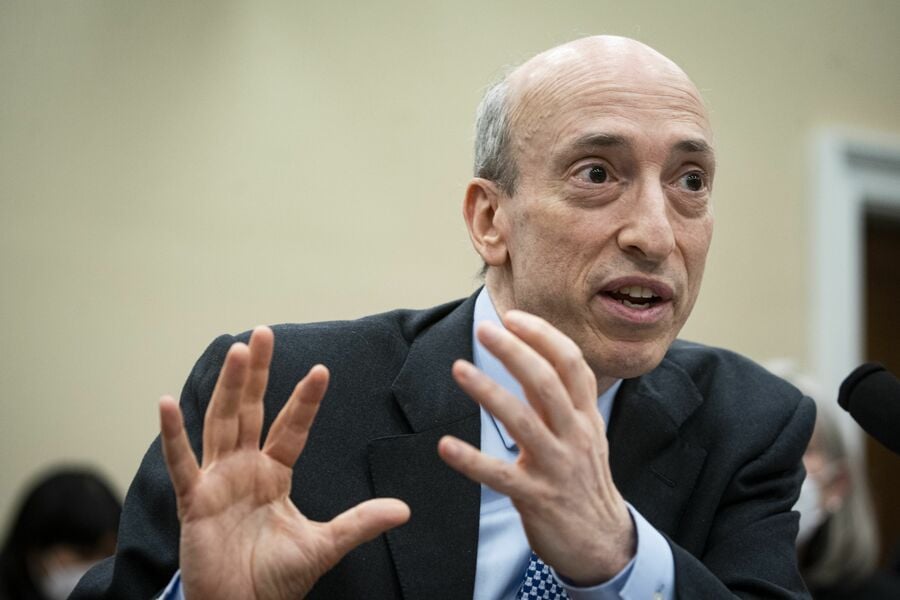
Although he was pressed by a Republican lawmaker to drop a climate disclosure proposal, SEC Chair Gary Gensler stood his ground on the rule Thursday in a Capitol Hill appearance.
Sen. Patrick Toomey, R-Pa. and the ranking Republican on the Senate Banking Committee, asked Gensler at a panel hearing if he would rescind the proposal given a recent Supreme Court decision that held that government agencies must have a clear directive from Congress before pursuing major rulemakings.
Toomey suggested the Securities and Exchange Commission lacks the authority to promulgate the climate rule, which would require public companies to disclose for the first time how climate change could impact their business performance and how they contribute to climate change.
Gensler responded that the agency is considering the proposal in light of the agency’s authorities and the law. He added that investors are demanding the disclosures, pointing to feedback the SEC has received in more than 14,000 comments.
“Most of the comments are supportive,” Gensler said. “Investors are using this information now and they want the information. And I think it does fit into our 80- or 90-year history of how we do disclosures. The disclosures are already being made. I think we have a role to ensure that … the actual disclosures are not misleading and the like.”
Toomey countered that the SEC is headed for legal trouble if it issues a final rule.
“As I’ve predicted, I think if you go ahead with something substantively similar to the proposed rule, you’re going to find a very unsympathetic court with regard to the authority you have,” Toomey said.
The exchange came at the end of a two-hour hearing focused on SEC oversight of the financial markets. Most of the questions Gensler received from lawmakers centered on climate disclosure.
Under the proposal, companies would have to report their so-called Scope 1 and 2 greenhouse gas emissions, or those that emanate from their operations and the energy source they use. They also would have to report Scope 3 emissions — those produced throughout their supply chain — if they are material to company performance or the company has made commitments to reducing them.
It wasn’t just Republicans who questioned Gensler on the climate proposal. Sen. Jon Tester, D-Mont., raised concerns about whether farmers would have to disclose their greenhouse gas emissions if they sold crops to public companies. Tester is a working farmer when he’s not in Washington on Senate business.
For the most part, Democrats posed questions about the climate proposal that allowed Gensler to defend it. For instance, Sen. Sherrod Brown, D-Ohio, invited him to explain why the proposal is not an attempt by the SEC to make environmental policy.
Hundreds of companies are making climate disclosures now and they’re influencing tens of trillions of assets under management, Gensler said.
“Investors get to decide,” he said. “We’re not a merit regulator. We’re a disclosure-based regulator. Investors truly want to know about climate risk because it matters to the future path of financial and other performance. We have a role to help bring consistency to those disclosures that are already happening.”
Gensler also addressed proposals that would require ESG disclosures by investment advisers and funds. He said the thrust was to prevent so-called greenwashing and ensure that ESG promises that are made to investors are kept.
Sen. Catherine Cortez Masto, D-Nev., raised a question about ESG integration into portfolios.
“To me, it’s about truth in advertising,” Gensler said.

New Nationwide Retirement Institute survey reveals eight in ten Americans agree Social Security needs fixing and how.

Advisor-led adoption has been rapid for tasks from translating annuity contracts into plain English to speedy webinar prep.

Austin, Texas headquartered firm taps former BlackRock managing director following an internal leadership shuffle.

InvestmentNews reported in 2017 that the IRS was scrutinizing the tax shelter land deals, called syndication conservation easements.

Advisors gain a second workflow for 401(k) guidance as the fintech expands beyond bulk rebalancing, backed by new policy research on advice access.
Northern Trust’s Ken Lassner shows advisors how to convert volatility into after-tax portfolio gains
Dan Biagini of American Equity says the steady decline of pensions, longer lifespans and a reset in interest rates are rewriting how advisors build retirement income

