
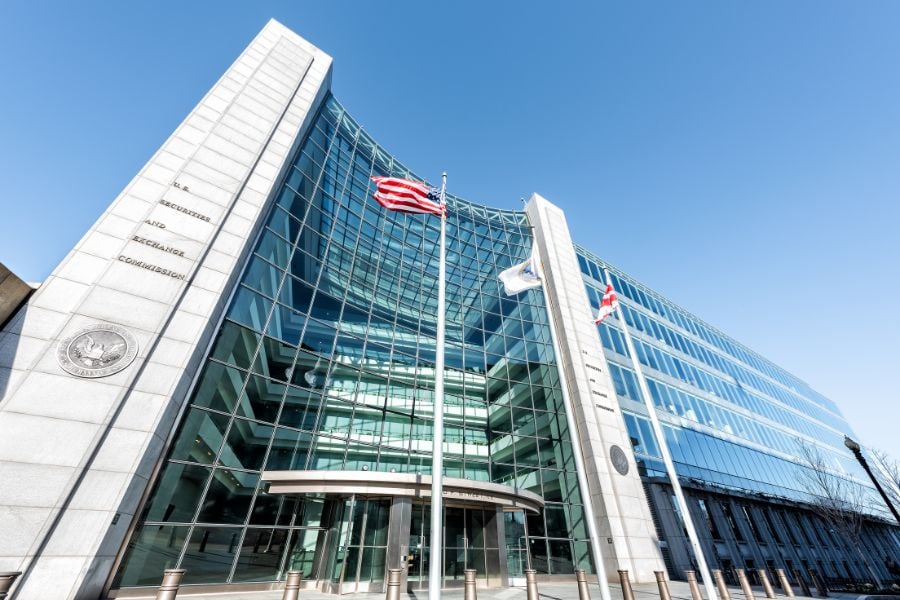
SEC Chair Gary Gensler has been able to forge ahead with an aggressive rulemaking agenda despite strong industry pushback and political pressure from Capitol Hill. But something looms this week that would stop him in his tracks — a government shutdown.
Federal funding is set to expire at the end of the day on Friday. Without a congressional agreement on a short- or long-term budget, the government would close its doors until funding is restored.
In the event of a shutdown, the Securities and Exchange Commission would have to furlough most of its 4,500 staff and cease almost all operations — including examinations, enforcement and registration approvals — except in emergency circumstances where life or property are threatened.
Congress averted a shutdown at the end of September with a so-called continuing resolution that kept federal agencies’ doors open through Nov. 17. But the fact that then-House Speaker Kevin McCarthy, R-Calif., had to rely on Democratic votes to get the measure through the chamber led to his ouster by hard-line members of the House GOP caucus.
It took House Republicans three weeks to select a new speaker, Rep. Mike Johnson, R-La. Although Johnson has said he wants to avoid another shutdown, Congress has little time to reach a consensus on federal spending — and pressure continues among House Republicans to resist a compromise with Democrats.
During a shutdown, the SEC can accept public comments on rule proposals but can’t work on them. The agency would also be prohibited from releasing final rules. That raises the possibility that if there’s a shutdown of substantial length, the SEC would not be able to promulgate final rules until after a date in 2024 that would allow a new Congress in 2025 to reach back and scuttle them.
Such a shutdown scenario could make vulnerable pending rules that affect advisors, such as measures related to custody of client funds, conflicts of interest involving the use of artificial intelligence and predictive analytics, cybersecurity protections and mutual fund reform.
Despite the uncertain atmosphere, Gensler said the agency is not speeding up the rulemaking process.
“We’re not doing this against a clock,” Gensler told reporters Oct. 25 on the sidelines of the Securities Enforcement Forum in Washington. “It’s not against Nov. 17. It’s not against Dec. 31. It’s just when it’s right.”
The SEC has issued 27 final rules and has about 30 more proposals pending on its regulatory agenda. Gensler said it normally takes 15 to 20 months from the time a proposal is released until a final rule is issued. He stressed rules can be modified, re-proposed or dropped based on public input. Any of those decisions can also stretch out the timeline.
“That’s the administrative process,” he said.
Gensler’s serenity belies the threat posed by the Congressional Review Act. Under that measure, Congress can vote to kill a regulation within 60 days of it being finalized. If the final rule is released within a certain number of legislative days before the end of a Congress, the clock resets for the new Congress.
If Republicans gain control of the House, Senate and White House in the 2024 election, they could have an opportunity to undo new SEC rules.
“The window is shutting,” said Alison Staloch, chief financial officer at Fundrise, an alternative assets platform. “If the shutdown went on for an extended period of time, it would put the accomplishment of [Gensler’s] full agenda in jeopardy.”
A shutdown, no matter how brief, will mean a respite from most exams and enforcement for advisors and brokers.
“You’d see [the effects of a shutdown] if you’re in the middle of enforcement or exams,” said Staloch, who was chief accountant in the SEC’s investment management division during a 35-day government shutdown in 2018-19. “It would give [advisors] some breathing room, but it doesn’t significantly change the outcome.”
During a shutdown, the SEC would not be able to review or approve new investment products, initial public offerings or advisory firm registrations, which could slow pending mergers and acquisitions.
“If you [submit] a new filing, it’s unlikely that anyone will be allowed to take a look at it,” Staloch said.
Despite the possible disruptions to their businesses, advisors have been sanguine in the face of a potential shutdown. They doubt it will last long, even if it does happen.
“There’s too much at stake for both parties to leave the government shut down for a long period of time,” said Steve Oniya, president of OM Investments.
Oniya doesn’t plan to adjust client portfolios in anticipation of a shutdown. In fact, he said, the market has gone up several times when the government ground to a halt.
“We can’t be too frightened of shutdowns when, historically speaking, markets tend to do well long-term,” Oniya said. “We don’t want to overreact to new events. People need to stick to their [investing] goals and time horizons.”
A shutdown’s impact on other federal agencies also could affect advisors. For instance, investment advisors to company retirement plans are eagerly waiting for the Internal Revenue Service to provide guidance on a couple of provisions of SECURE 2.0, major retirement savings legislation that Congress approved in late 2022.
Under SECURE 2.0, employees this year can begin to ask their employers to make matching contributions to their retirement plans as after-tax Roth — rather than tax-deferred — contributions. But legislative language in the bill leaves it unclear whether Social Security taxes would have to be taken out of the Roth contributions.
“We don’t think that was the congressional intent,” said Lance Schoening, director of policy at Principal Financial Group. While the situation “is sorted out by the IRS, we’re directing our plan sponsor clients to hold off on [Roth matches] … for now until we get that guidance.”
Similar questions surround a provision going into effect next year that would allow employers to match employees’ student loan payments with contributions to their retirement accounts. It’s not clear whether matches could be made on a cadence other than each time an employee is paid.
“It would be most feasible on an annual basis,” Schoening said.
How long Schoening and others will have to wait for the answers depends on whether Congress can find a way to keep the government open.
The SEC would mostly disappear during a government shutdown. The agency would have to furlough most of its nearly 4,500 staff, halt rulemaking and cease examinations and enforcement except in emergency situations. It also would not be able to review or approve advisory firm filings.
While the SEC would suspend most oversight of investment advisors, the Financial Industry Regulatory Authority Inc. would continue to regulate brokers because it is a self-regulatory organization. Finra exams, investigations and enforcement actions as well as arbitration cases would continue.

Chicago-based Mesirow Fiduciary Solutions adds flexPATH's plan-level outsourced fiduciary book, boosting its retirement market reach to $164 billion.

Also, Raymond James's employee advisor channel adds breakaways from Wells Fargo and Stifel, while UBS welcomes an ex-Morgan Stanley duo in Indiana.

It promised guaranteed principal and 10% monthly returns. The SEC says it invested nothing.

Ten years after entering the fee-based annuity market, MassMutual Ascend says nearly half its lifetime sales came in the past two years alone – but barriers remain among fee-only advisors.

Amplify, WealthReach, Zeplyn and Zocks have unveiled partnerships aimed at automating portfolio management, content creation, account opening, and client communication.
Northern Trust’s Ken Lassner shows advisors how to convert volatility into after-tax portfolio gains
Dan Biagini of American Equity says the steady decline of pensions, longer lifespans and a reset in interest rates are rewriting how advisors build retirement income

