
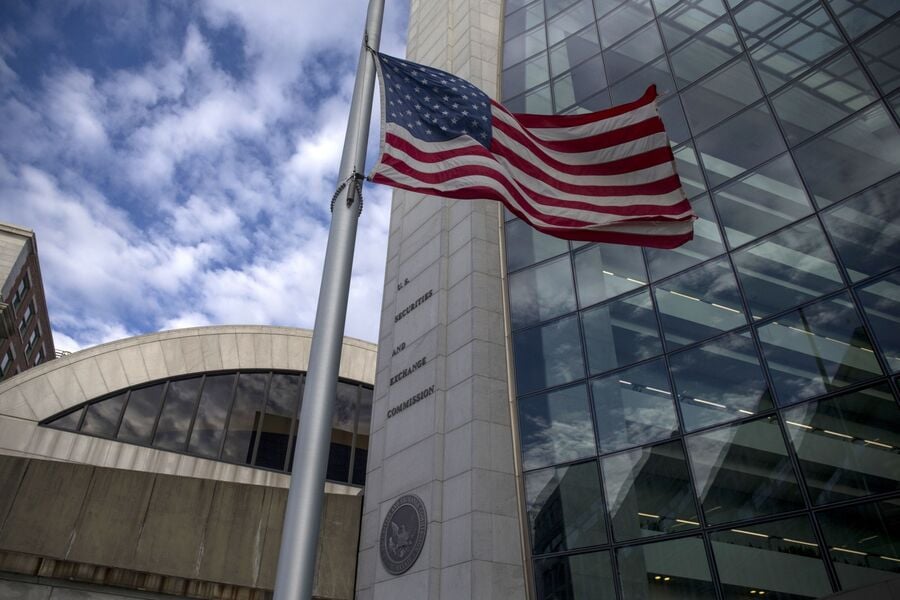
Wall Street’s main regulator is demanding more investor protections for deals involving special purpose acquisition companies, or SPACs, tightening rules on a once-popular pathway for taking firms public.
After surging during the Covid-19 pandemic as an alternative to traditional initial public offerings, blank-check companies have fallen out of favor. In a move that could further reduce interest, the Securities and Exchange Commission approved new rules Wednesday to make SPAC deals more like traditional IPOs — driving up legal risks and costs for those behind the transactions.
Blank-check companies, which list on public stock exchanges to raise money so they can buy other companies, were touted as a faster and potentially cheaper way to do a public listing. But critics have long warned that deals can be rife with conflicts of interest and amount to an end-run of the traditional IPO process.
“Just because a company uses an alternative method to go public does not mean that its investors are any less deserving of time-tested investor protections,” SEC Chair Gary Gensler said ahead of a vote on the plan.
The regulations, which were first proposed in March 2022, revoke legal protections that shielded sponsors of the deals from getting sued by investors over embellished statements. They require the later part of the transaction, the so-called de-SPAC, to include more disclosures around forward-looking projections.
Even without the new rules in place, the once white-hot market for SPACs fizzled as the SEC’s enforcement division stepped up scrutiny and interest-rate increases damped demand for risky investments. Just a few dozen blank-check companies went public last year after hundreds did so in the 2021 heyday, according to data from SPAC Research.
After the SEC proposed its rule changes, underwriters including Goldman Sachs Group Inc. and Bank of America Corp. pulled back on their services for the market within a matter of months.
The SEC is providing guidance on when it will consider firms to be underwriters, according to the agency. SPAC sponsors, frequently hedge funds, private equity firms and venture capital investors, also have to reveal more information about their identities, conflicts of interest, dilution and compensation under the new rules.
Mark Uyeda, one of the SEC’s two Republican commissioners, said the new rules were simply intended to quash the SPAC market for good. “In order to achieve this desired outcome, the commission seeks to impose crushingly burdensome disclosure regulation on SPACs as a form of merit regulation in guise,” he said in a statement for the meeting to vote on the plan.
A company that’s targeted by a SPAC will also be required to register with the SEC before merging, and be subject to additional disclosure obligations. The rules will go into effect more than four months from now.
The agency is also adding new financial reporting and accounting requirements for SPAC deals. Companies looking to go public by merging with a blank-check firm will now be jointly liable legally for information shared with investors about the pending combination.
Those target companies also will have to provide financial statements audited by an independent accounting firm that follows US audit board rules, as is the case for traditional IPOs. The SEC will treat the merger as a sale to the blank-check company’s public shareholders, clarifying who controls the newly created entity for accounting purposes.

Chicago-based Mesirow Fiduciary Solutions adds flexPATH's plan-level outsourced fiduciary book, boosting its retirement market reach to $164 billion.

Also, Raymond James's employee advisor channel adds breakaways from Wells Fargo and Stifel, while UBS welcomes an ex-Morgan Stanley duo in Indiana.

It promised guaranteed principal and 10% monthly returns. The SEC says it invested nothing.

Ten years after entering the fee-based annuity market, MassMutual Ascend says nearly half its lifetime sales came in the past two years alone – but barriers remain among fee-only advisors.

Amplify, WealthReach, Zeplyn and Zocks have unveiled partnerships aimed at automating portfolio management, content creation, account opening, and client communication.
Northern Trust’s Ken Lassner shows advisors how to convert volatility into after-tax portfolio gains
Dan Biagini of American Equity says the steady decline of pensions, longer lifespans and a reset in interest rates are rewriting how advisors build retirement income

