
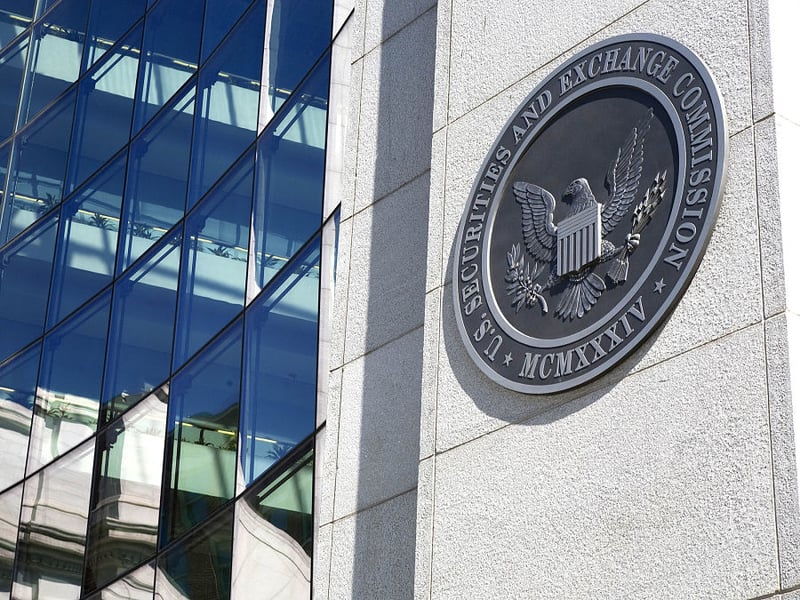
The Securities and Exchange Commission has launched a civil probe into Dream Exchange, a Chicago-based startup seeking to become a new stock exchange, following whistleblower allegations about its financial practices and connections to the Church of Scientology, according to reporting by the Wall Street Journal.
Former Dream Exchange employees told the Journal that SEC investigators from the agency’s Chicago office have questioned them in recent weeks. The inquiry reportedly centers on claims that the firm misappropriated investor funds and maintained undisclosed links to Scientology-affiliated organizations.
The probe remains in its early stages and may not result in formal allegations of wrongdoing.
Dream Exchange, led by founder and chief executive Joe Cecala, has positioned itself as a platform to help Black and minority business owners access capital markets. Its name is meant to be evocative of Martin Luther King Jr.'s landmark speech in 1963.
The company has applied for an SEC license to launch its trading platform, with a decision expected by November.
According to the Journal, financial records show that funds moved from Dream Exchange into an account at its parent company, which is owned by Cecala. That account made donations to organizations affiliated with Scientology.
Dream Exchange’s legal counsel, Dan Webb, has denied any impropriety, stating that any donations were purely part of Cecala's personal affairs of which the company had no knowledge. Webb also described the claims against Dream Exchange and its founder as “false and meritless.”
The Journal’s reporting indicates that several investors, including some who were unaware of the company’s religious connections, have requested their money back since the allegations surfaced.
One Virginia investor, Sherman Adkins, told the Journal, “I haven’t seen any affiliation with anything. If there’s something that’s commingled and taken in any other direction, I’m not aware of it.”
Adkins, who bought shares in the company around 2021, added that he would take appropriate action if it emerges that he'd been misled.
The whistleblower complaint, submitted to the SEC in February – the same month Dream Exchange applied to become a national securities bourse – alleged not only misappropriation of funds but also that some Dream Exchange employees were loaned out to volunteer for the church of Scientology during company time.
Webb has said the firm had no knowledge of the complaint and had not been contacted by the SEC about it.
Dream Exchange’s ties to Scientology extend to its leadership and workplace practices, according to an investigation by the Journal. Several top executives are Scientologists, and some employees were reportedly required to study the writings of Scientology founder L. Ron Hubbard during work hours.
Webb denied that any employees were forced to learn or practice Scientology principles, stating, “Any implication that Dream Exchange is forcing employees to learn or practice any religion, including Scientology, is false.”
The company’s application to the SEC did not detail its connections to Scientology, though the agency typically requires disclosure of ownership and controlling officers, not religious affiliations.
The Journal also reported that scripts used by Dream Exchange salespeople – who were encouraged to target Black investors – did not mention Scientology ties. They did purportedly reference major Wall Street firms as potential investors, which those firms have denied.
A representative for the Church of Scientology told the Journal that the church doesn’t engage in any business activities, accusing the publication of targeting its members.

Also, Orion has added BlackRock, Fidelity, and Vanguard to its custom portfolios suite, and RedBlack has set up a new headquarters after crossing a trillion-dollar milestone.

Also, New York-based Legacy Edge Advisors names its first-ever CEO, while Novare Capital Management hires a Vanguard veteran with a multigenerational planning focus.

Asset managers are racing to bring private market products to retirement plans, but cost and liquidity concerns linger.
Treasury's latest tax-exemption crackdown on private schools lands in the wake of a separate push to restrict refundable credits for some immigrant filers.

Workforce trust measures predicted which companies came out ahead during COVID-19. The same dynamic may now be playing out across the AI transition — and the data suggests the spread could be just as wide.
Northern Trust’s Ken Lassner shows advisors how to convert volatility into after-tax portfolio gains
Dan Biagini of American Equity says the steady decline of pensions, longer lifespans and a reset in interest rates are rewriting how advisors build retirement income

