
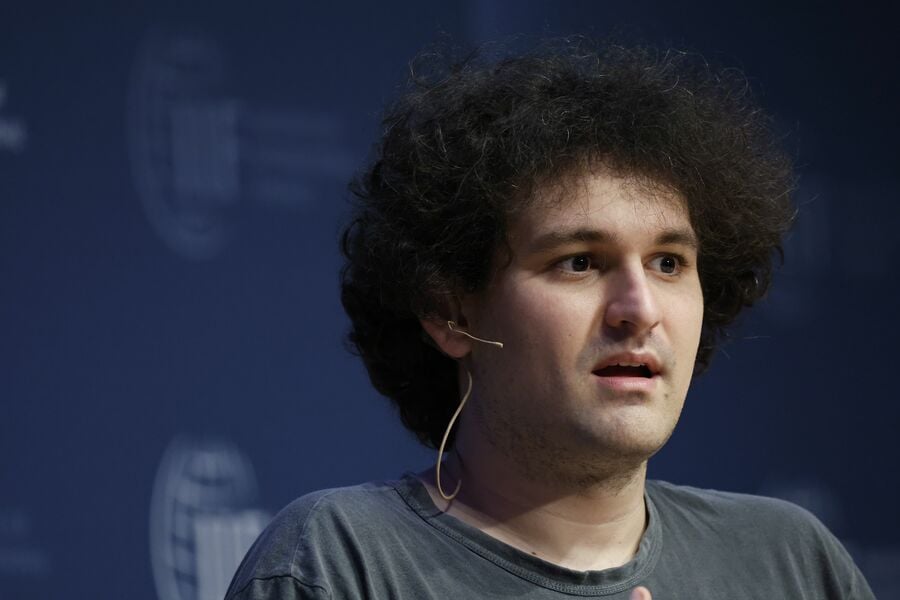
FTX co-founder Sam Bankman-Fried was sentenced to 25 years in prison for stealing billions of dollars from customers, marking the final chapter in a case that has both captivated and overshadowed the crypto industry.
US District Judge Lewis A. Kaplan delivered the sentence in federal court in Manhattan moments after Bankman-Fried said he was “sorry about what happened at every stage.” He faced as long as 110 years behind bars after being convicted last year of seven offenses, including fraud and conspiracy.
The one-time billionaire became a symbol of malfeasance and greed in the crypto world after his hugely popular FTX exchange collapsed, exposing a years-long fraud that swindled about $10 billion from customers. Bankman-Fried, 32, had denied knowingly committing fraud and claimed he and his crypto empire were victims of market downturns in 2022.
Kaplan dismissed Bankman-Fried’s 20-minute statement, saying he wasn’t truly remorseful, and focused instead on the severity of the crime.
“There is a risk that this man will be in a position to do something very bad in the future,” Kaplan said. “And it’s not a trivial risk. Not a trivial risk at all.”
In addition to the prison sentence, Kaplan said that Bankman-Fried should forfeit more than $11 billion.
At trial, prosecutors said Bankman-Fried siphoned billions of dollars from FTX to its sister hedge fund, Alameda Research, to spend on speculative investments, more than 300 political donations, and expensive real estate.
Faced with market volatility, lenders began asking for their money in 2022 and Bankman-Fried used FTX customer funds to pay them back. But a rush of customer withdrawals culminated in FTX filing for bankruptcy in November 2022, and Bankman-Fried stepping down as chief executive.

A Nationwide survey finds 47% of GLP-1 users have never discussed the drugs’ financial impact with an advisor, even as many dip into savings.

The hundreds of millions of dollars from a sale of Inspired Healthcare properties does not mean an immediate windfall for investors.

Its SEC filings said one thing - a congressional probe said another.

Sham agreements allegedly padded revenue by 345%.

"Most pre-retirees are uncomfortable making key retirement income decisions without an advisor's help," said Chris Bailey of Cerulli.
Knighthead Life entered the market with a competitive MYGA. A strong launch earned advisor confidence and paved the way for FIAs.
As AI makes financial information more accessible than ever, Lana Hock explains why human judgment, trust, and empathy remain the qualities clients value most in a financial advisor

