
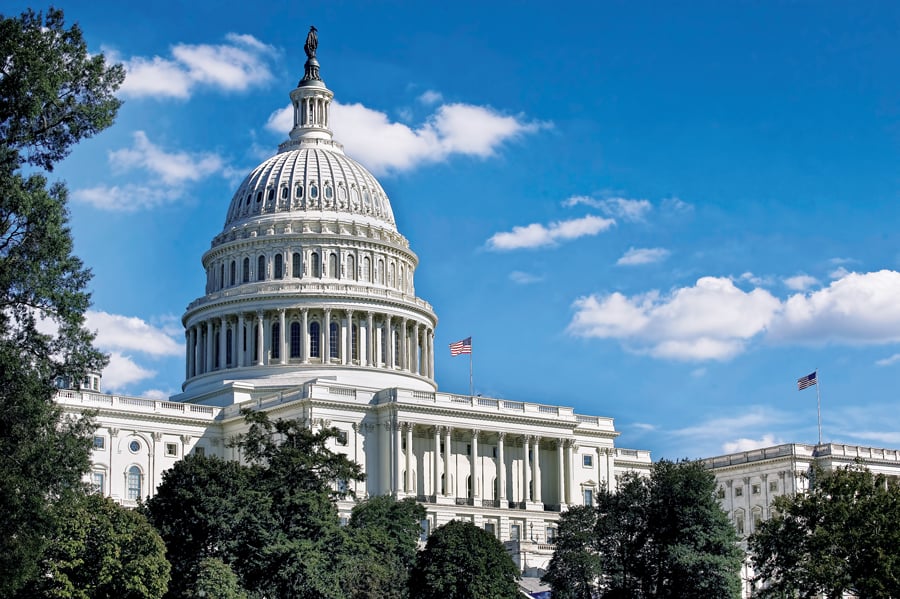
Legislation that could force independent broker-dealers, financial advisers and insurance sales professionals to become employees of affiliated financial firms faces difficult prospects in the Senate following narrow House approval on Tuesday.
The Protecting the Right to Organize Act would amend the National Labor Relations Act to make it easier for workers to unionize. It also would restrict the ability of companies to classify workers as independent contractors.
The House approved the measure mostly along party lines, 225-206. It’s a priority for congressional Democrats, who assert that it will help workers increase their pay and benefits,
The measure has drawn strong opposition from financial industry trade associations. In a March 4 letter to House leaders, 14 groups warned that the bill “would cause significant disruption to the independent financial services and property casualty insurance industries and the customers we serve.”
The bill must navigate difficult terrain in the Senate, where there are 50 Democrats and 50 Republicans. Democrats hold the majority thanks to the tie-breaking vote of Vice President Kamala Harris. But most legislation requires 60 votes under a parliamentary procedure known as a filibuster.
“As long as the legislative filibuster is intact, it’s going to be hard to find 10 Republicans to vote for the bill,” said Jason Rosenstock, a partner at Thorn Run Partners, a government relations consulting firm.
The Financial Services Institute has long made a legislative priority of protecting the classification of its independent broker-dealer and financial adviser members.
The organization sought a carve-out for financial advisers in the House bill, but no such amendment was attached to the measure. It is hopeful that its message will get more traction in the Senate.
“The PRO Act currently faces more opposition in the Senate than it did in the House,” FSI spokesperson Allison Kuehner Mutschler said in a statement. “We are optimistic that the Senate will be more receptive to our concerns about the bill's impact on independent financial advisors who specifically chose to be independent contractors as opposed to employees, as well as the Main Street clients they serve.”
The American Securities Association also has turned its attention to stopping the bill in the Senate.
“It is our hope that senators on both sides of aisle stand up for risk-taking entrepreneurs and small business across the country because they are the engine of the U.S. economy,” American Securities Association Chief Executive Chris Iacovella said in a statement. “While intended to target the gig economy, the Pro Act would reclassify financial professionals who are independent contractors as employees and needlessly interfere with the financial advice millions of working families across America receive.”
The author of the Senate version of the PRO Act urged the chamber to take it up.
“In order to address rising income inequality and build back an economy that works for everyone — not just those on top — we need to safeguard workers’ fundamental right to join a union and demand a fair share of the economic growth they drive,” Sen. Patty Murray, D-Wash. and chairwoman of the Senate Health Education Labor and Pensions Committee, said in a statement.
The bill is one of several the House passed last year that is being put on a fast track for approval in the new Congress. Once the measures cross the Capitol to the Senate, they’re likely to stall due to the filibuster.
The bills are “going to pile up in the Senate and increase pressure to eliminate the filibuster,” Rosenstock said.

Iowa's Greenwood Wealth Partners exits D.M. Kelly as UBS and Ameriprise win Merrill Lynch recruits in California and Florida

Less than 1% of pool funds went to actual trading, CFTC says

Plus, SEIA builds a governed data foundation for its in-house AI and Snappy Kraken debuts a read-only marketing coworker for advisors.

He owes $364 million but pays $100 a month

Broadridge, Wedbush and Alaris Acquisitions have also filled senior wealth management roles with hires from J.P. Morgan, Osaic and SageView.
As AI makes financial information more accessible than ever, Lana Hock explains why human judgment, trust, and empathy remain the qualities clients value most in a financial advisor
Northern Trust’s Ken Lassner shows advisors how to convert volatility into after-tax portfolio gains

