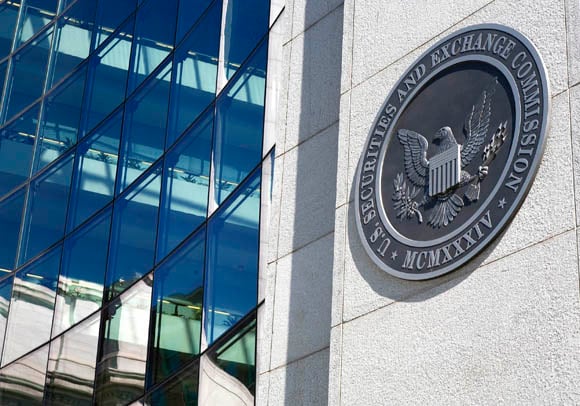
Leaders of the House Financial Services Committee want the head of federal agencies to tell them just how much it will cost to implement the sweeping Dodd-Frank financial reform law.
In a letter sent Friday, Rep. Spencer Bachus, R-Ala., chairman of the House panel, and Rep., Randy Neugebauer, R-Texas, chairman of the oversight and investigations subcommittee, asked several chief regulators — including Securities and Exchange Commission Chairman Mary Schapiro and Treasury Secretary Timothy Geithner — how big a budget boost they’ll need to complete their Dodd-Frank assignments.
Citing an analysis by Davis Polk & Wardwell LLP, the Republican lawmakers said that Dodd-Frank requires 11 agencies to conduct 59 studies and write 22 annual reports, then promulgate 243 regulations.
“Given the number of rules, studies and reports required by the Dodd-Frank Act, we would like to know the costs that will be incurred by your agency for its implementation and annual execution,” Mr. Bachus and Mr. Neugebauer wrote. “It is our responsibility to ensure that federal agencies have the tools they need to carry out congressional mandates. In addition, it is our responsibility to ensure that mandates are not overly burdensome or wasteful of taxpayer money.”
SEC spokesman John Nester declined to comment on the letter.
Even if the agencies say they are falling short of the funding required for Dodd-Frank, legislators are unlikely to respond by providing more money. The GOP majority in the House has made budget cutting its top priority, vowing to roll back federal spending to 2008 levels and trim at least $60 billion out of the fiscal year 2011 budget.
Furthermore, nearly every Republican in Congress voted against Dodd-Frank when it was approved last summer. Although the party doesn’t have the same fervor to scrap the financial law that it does to upend last year’s health care reform measure, the GOP does want to shape the Dodd-Frank implementation.
Last week, Rep. Barney Frank of Massachusetts, the ranking Democrat on the House financial committee, said that the SEC and
Commodity Futures Trading Commission lack the funding they need for Dodd-Frank.
In December, Congress passed a continuing resolution that maintained agency budgets at fiscal year 2010 levels until at least March 4 because it has not approved a federal budget for fiscal year 2011.
The continuing resolution so far has denied the SEC the 18% budget increase that was authorized by Dodd-Frank for fiscal year 2011. Overall, Dodd-Frank nearly doubles the SEC budget to $2.5 billion by 2015.
Republicans in Congress, however, may not want to follow through with the appropriations to fulfill the funding promises.
“A dramatic spending increase to fund the SEC and CFTC, as envisioned by the authors of the Dodd-Frank legislation, would further the mindset that our nation's problems can be solved with more spending, not more efficiency,” Rep. Scott Garrett, R-N.J. and chairman of the House Financial Services Subcommittee on Capital Markets, said in a statement last week.
After the continuing resolution was approved in December, the SEC said that its budget woes are forcing it to curb travel, hiring and contracting.
“We believe a well-funded, effective SEC is essential for investors and the markets,” Mr. Nester said in an e-mail statement at the time. “Operating under the continuing resolution is already forcing the agency to delay or cut back enforcement and market oversight efforts. The longer we operate under significant budgetary restrictions, the greater the impact.”