We could call today's market surge the Boehner rally.
Stock prices are giving a strong positive reaction to congressional approval of legislation on New Year's Day that stopped about $600 billion in automatic tax hikes and spending increases.
After overwhelming approval by the Senate in the early morning hours, the so-called fiscal cliff bill hit substantial turbulence in the House, where conservatives were incensed by what they said was the measure's failure to address the massive federal deficit and debt.
Indeed, even the bill's supporters admitted that the package concentrated almost exclusively on the tax portion of the fiscal cliff. As of Tuesday afternoon, House conservatives were insisting that the bill be amended to include spending cuts.
If successful, such a move would have sent the country crashing over the fiscal cliff at least for days and perhaps for weeks. The Senate passed the bill 89-8 and was not inclined to consider any changes from the House.
Besides, the current Congress ends at noon on Thursday. If the fiscal-cliff bill was not headed to President Barack Obama by then, it would die and the whole legislative process would have to start over on Thursday afternoon.
Much of the credit for averting the cliff dive goes to Senate Minority Leader Mitch McConnell, R-Ky., and Vice President Joe Biden, who wrestled the agreement to the ground during fevered negotiations on Sunday and Monday.
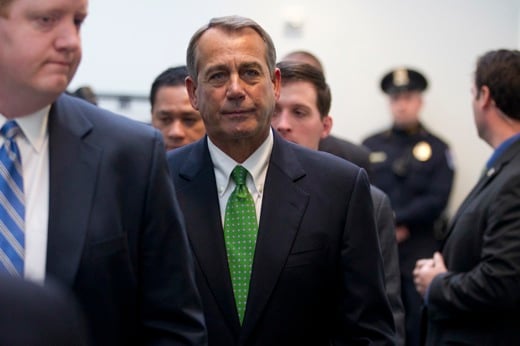
But it was House Speaker John Boehner, R-Ohio, who ultimately saved the nation from going over the cliff. He did so by making a brave political decision.
When confronted with a rebellious caucus, he listened to concerns about spending cuts during hours of meetings on Tuesday and then suggested that the House vote on an amendment only if it was clear that there were enough Republicans to achieve a majority. That would mean that if more than about two dozen Republicans declined to back the amendment, it couldn't come to the floor.
When Mr. Boehner “whipped,” or counted votes, it became clear that the amendment was a loser. At that point, he decided to bring the Senate bill to the floor for a straight up or down vote.
The
result of that ballot was remarkable. It passed with only 85 Republican votes, while 151 GOP members opposed it. It required the support of almost every Democrat – 172 – to get over the finish line. In addition, a couple members of House GOP leadership, including Majority Leader Eric Cantor, R-Va., voted against the bill. In an unusual move, Mr. Boehner cast a vote himself – in favor, of course.
There was so much political turmoil in the House GOP caucus on Tuesday that Mr. Boehner did not speak to the press after the vote nor did he make a statement from the floor. He slipped out of the Capitol and went home.
The standard practice for a Speaker of the House is to ensure that a majority of his or her own party is behind a bill before it is brought to the floor. Operating with a minority of your own party could make a speaker vulnerable to being overthrown.
Mr. Boehner knew that most of his GOP colleagues were against the fiscal cliff measure, but he put it through nonetheless because he thought it was the right thing to do for the country. He didn't keep his troops in line. He let nature take its course.
He is likely to survive a vote on his speakership when the new Congress opens on Thursday. But he certainly took a risk a few days before that ballot. Perhaps the financial markets should thank him.
Now, if Mr. Boehner could only apply his political acumen to Hurricane Sandy relief funding.