
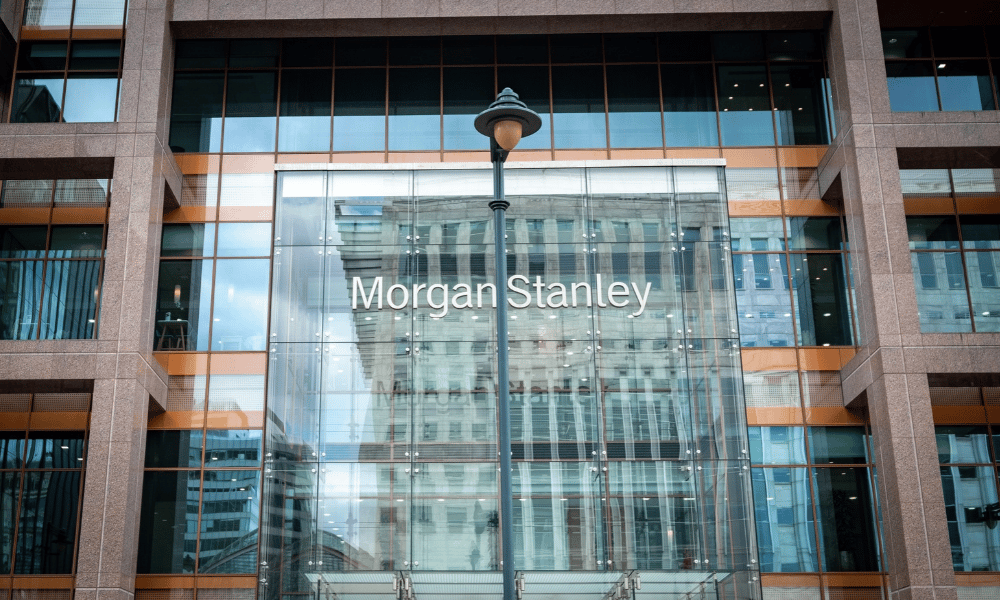
A California appeals court sent elder abuse and fiduciary duty claims against Morgan Stanley back to trial over a 93-year-old client’s options trading.
The client was a barber who taught himself to invest. Starting in the 1980s, he traded options with Morgan Stanley - mainly through a single financial advisor - and built a $19 million fortune. When he died in August 2012, his accounts held approximately $18 million.
His family sued. They said the advisor kept running a high-risk options strategy - including uncovered puts that could produce steep losses - well after the client’s cognitive health had visibly declined. They also said the advisor gave tax and estate-planning advice outside his formal brief, leading to costly mistakes including a split dollar life insurance policy with costs exceeding $700,000.
The trial court dismissed the case at the close of the family’s evidence, before Morgan Stanley even had to present a defense. In a decision filed October 8, 2026 and certified for publication October 29, the California Court of Appeal for the Second Appellate District reversed most of that ruling and remanded for further proceedings.
The decision turned on three issues that go to the heart of how advisors manage aging clients.
The statute of limitations came first. The trial court had found the family filed on time - then applied a second limit. It calculated how much of the four-year period remained and projected it backward to exclude any claims before September 2010. The appellate court called this “error.” There is no legal basis, the court held, for treating the limitations period as an “eroding” damages window. A timely-filed claim entitles the plaintiff to seek recovery for the full course of the alleged wrongful conduct. The court also found that when the family’s claims accrued - the point at which they knew or should have known about the alleged wrongdoing - was a factual question that should have gone to a jury, not been decided by the trial court.
On financial elder abuse, the trial court had concluded that because the client’s account “only grew in value,” there was no harm. The appellate court rejected that reasoning. Under California’s Elder Abuse Act, the test is forward-looking: whether the advisor “knew or should have known” the conduct was “likely to be harmful” at the time - not whether the account ended up profitable. The court held the family’s evidence was sufficient to put the question before a jury.
Morgan Stanley itself had flagged the risk years earlier. In 1998, the firm restricted the client’s account to a conservative strategy because of his age. A September 1999 internal communication stated that “because of [the client’s] age,” the firm “thought it would be prudent to reign in exotic stuff” - a reference to uncovered options. Despite this, the firm carved out an exception for the advisor’s branch.
By late 2010, the advisor had received an email from the family describing the client’s memory lapses, disorientation, and declining health. He testified he was “on notice” of the cognitive impairment by early 2011 but continued to execute trades while the client “was cognitively impaired.” Asked whether those reports should have been escalated to risk management, he answered, “Sure. It should have been.” He was later impeached with deposition testimony indicating he did not forward the information.
The court also pointed to a financial incentive. Unlike stocks, which generate one commission at purchase and are then held, options positions expire and must be replaced - generating “a new commission charge” each time, according to the family’s expert. A more conservative strategy would have produced fewer commissions.
On fiduciary duty, the trial court had ruled that because Morgan Stanley was “not hired . . . nor paid” for tax and estate planning, no fiduciary duty applied to those matters. The appellate court reversed. Whether a broker’s fiduciary obligations extend beyond a formal engagement depends on the full course of dealing - the duration of the relationship, the advisor’s awareness of the client’s vulnerability, and whether the advisor actually rendered the broader advice. The advisor held a Certified Financial Planner designation, communicated with the client “pretty much daily” for decades, and admitted giving tax advice. The appellate court held this evidence was sufficient to let a jury decide whether the duty extended to those matters - it did not rule that it definitively did.
The court affirmed one part of the lower court’s ruling. On the theory that Morgan Stanley engaged in “excessive trading” or “churning,” the family’s own securities expert had disclaimed any opinion on churning. Without expert testimony establishing the commissions were excessive relative to an industry benchmark, that specific claim could not go to a jury, and the trial court properly granted nonsuit on that theory.
The case returns to the Los Angeles County Superior Court. The family originally filed a FINRA arbitration in June 2014, which was dismissed without prejudice in January 2019, before the lawsuit was filed in April 2019.
The decision carries direct implications for advisory practices. The court held that account profitability does not defeat an elder abuse claim when the evidence supports a finding that the advisor knew or should have known the strategy posed foreseeable risk. It held that evidence of a broker’s course of dealing - not just the engagement letter - can be put before a jury to determine whether fiduciary obligations extended beyond the formal scope of the relationship. And it treated the failure to escalate reports of a client’s diminished capacity as part of the evidence supporting the elder abuse claim.

Linda Patel will lead J.P. Morgan Advisors in Florida and Georgia as Bank of America adds nonprofit specialists in New York

The royalty statements looked normal - until someone checked the electronic files.

They allegedly fabricated SEC certificates to dupe investors.

Former Hightower COO and ex-Yieldstreet CTO headline wealth technology hires as advisor platforms push deeper into AI and private markets

Wealthy investors have saved only half of what they say they need, creating a wider retirement savings gap for advisors to address
Knighthead Life entered the market with a competitive MYGA. A strong launch earned advisor confidence and paved the way for FIAs.
As AI makes financial information more accessible than ever, Lana Hock explains why human judgment, trust, and empathy remain the qualities clients value most in a financial advisor
