
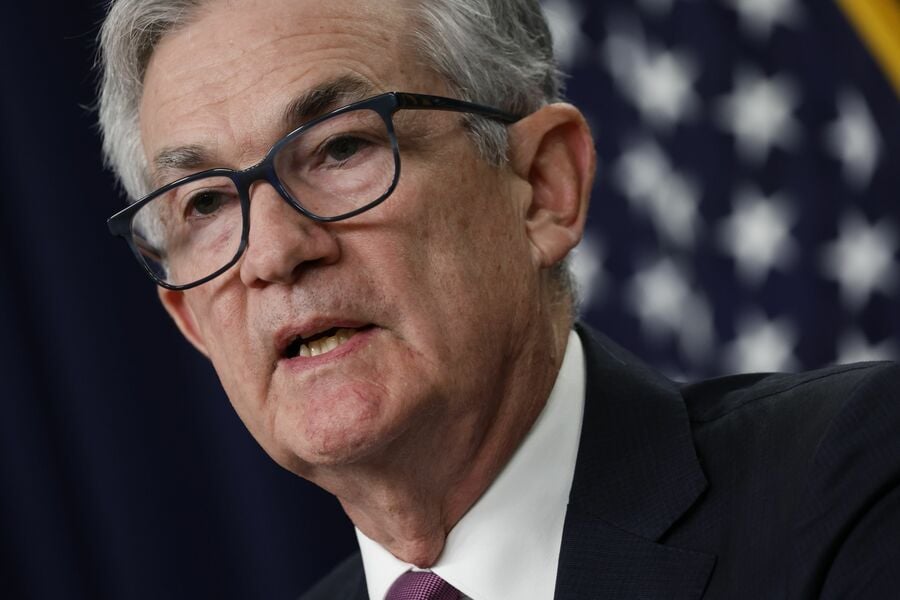
The Justice Department’s decision to abandon a criminal investigation into Federal Reserve chair Jerome Powell removes a political hurdle to confirming his successor and eased, at least on paper, one source of uncertainty hanging over rate‑sensitive markets.
For mortgage professionals, the move turns attention back to the deeper question that has framed the saga: how far political pressure on the central bank might shape the next phase of monetary policy and, by extension, borrowing costs.
Announcing the shift, District of Columbia US Attorney Jeanine Pirro said her office has asked the Fed’s internal watchdog to examine alleged cost overruns tied to the multibillion‑dollar renovation of the central bank’s Washington headquarters.
“This morning the Inspector General for the Federal Reserve has been asked to scrutinize the building costs overruns – in the billions of dollars – that have been borne by taxpayers,” Pirro wrote on X.
“The IG has the authority to hold the Federal Reserve accountable to American taxpayers. I expect a comprehensive report in short order and am confident the outcome will assist in resolving, once and for all, the questions that led this office to issue subpoenas.”
This morning the Inspector General for the Federal Reserve has been asked to scrutinize the building costs overruns – in the billions of dollars – that have been borne by taxpayers.
— US Attorney Pirro (@USAttyPirro) April 24, 2026
The IG has the authority to hold the Federal Reserve accountable to American taxpayers. I…
“Accordingly, I have directed my office to close our investigation as the IG undertakes this inquiry,” she wrote.
“Note well, however, that I will not hesitate to restart a criminal investigation should the facts warrant doing so.”
Earlier in the week, Pirro struck a very different tone, telling reporters, “This investigation continues. I am in the legal lane. There are others who are in the political lane. I don’t intersect those two lanes.”
She added: “We are appealing the decision of Judge Boasberg … and we are continuing in this investigation.”
The criminal inquiry has threatened to delay the confirmation of president Donald Trump’s pick to replace Powell, former Fed governor Kevin Warsh.
Powell’s term is due to end the following month, and he said in March that he would remain in the job until Warsh is confirmed.
Senator Thom Tillis, a North Carolina Republican and member of the Senate Banking Committee, has placed an effective hold on the process.
Tillis first announced in January that he would block Fed nominees “until this legal matter is fully resolved,” arguing that the Powell probe was “weak,” “frivolous” and a “bogus investigation.”
“Appealing the ruling will only delay the confirmation of Kevin Warsh as the next Fed chair.”
In a separate January statement, Tillis warned that efforts by Trump advisers to pressure the central bank underscored a broader threat.
“If there were any remaining doubt whether advisers within the Trump administration are actively pushing to end the independence of the Federal Reserve, there should now be none,” he said.
“It is now the independence and credibility of the Department of Justice that are in question.”
Powell, for his part, has characterized the investigation as an attempt to push him toward lower rates. In a video message in January, he revealed the inquiry and called it an effort by the Trump administration “to put political pressure on the Fed to lower interest rates.”
For housing and mortgage markets, the end of the probe does not resolve the underlying tension between political aims and central bank independence.
Brokers previously told Mortgage Professional America that the “Jerome Powell on the hot seat” narrative has already filtered into borrower conversations, fuelling expectations of aggressive cuts and faster relief than markets are actually pricing in.
Others stressed that while leadership changes at the Fed could eventually lead to lower policy rates, mortgage pricing would still hinge on Treasury yields, investor appetite and risk spreads.

Goldman's president and COO is expected to replace David Solomon as CEO as soon as 2027, ending a near-decade at the firm's helm.

A state-by-state Medicaid report card, federal cuts starting in January and a home-equity cap due in 2028 are pushing a program most affluent families ignore into the planning conversation.

New model blends public and private markets as demand for alternatives among wealthy clients accelerates.

Salespeople at the firm often went beyond the matching algorithm to recommend network advisors on its Zoe Wealth platform, according to the regulator.

The Protect College Sports Act would cap school payments and codify NIL rights, with implications for advisors guiding young athletes.
As AI makes financial information more accessible than ever, Lana Hock explains why human judgment, trust, and empathy remain the qualities clients value most in a financial advisor
Northern Trust’s Ken Lassner shows advisors how to convert volatility into after-tax portfolio gains
