
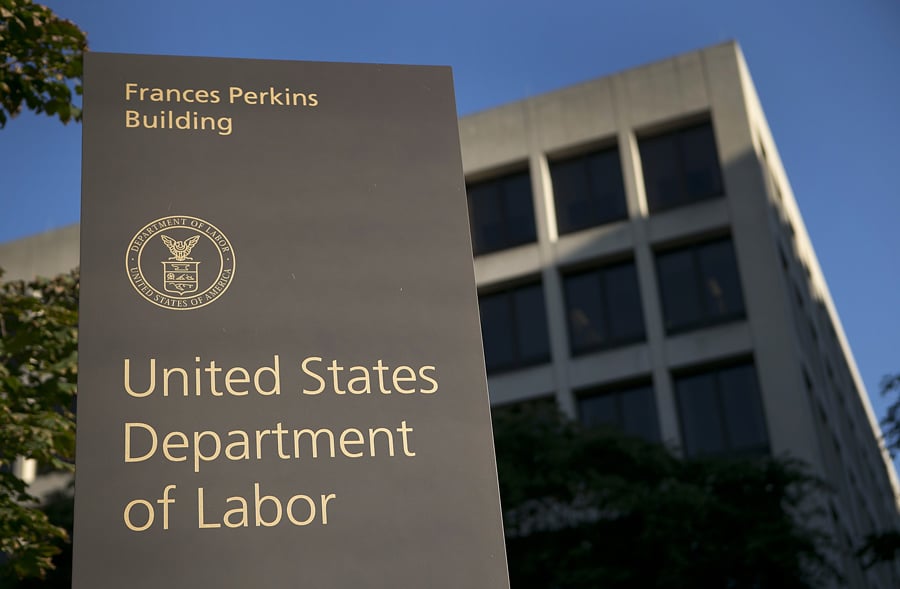
The Department of Labor is moving to roll back its 2024 independent contractor rule, proposing a new framework that could ease some of the anxieties independent financial advisors have harbored about their employment status.
In an announcement Thursday, the department’s Wage and Hour Division unveiled a proposed rule that would scrap the 2024 final rule and revert to an analysis closer to the approach it used in 2021 for determining whether a worker is an employee or an independent contractor under the Fair Labor Standards Act and related federal statutes.
The proposal is meant to clarify when workers qualify as employees entitled to wage and hour protections and when they can be treated as contractors.
The new rule would again center on an “economic reality” test that asks whether a worker is in business for themselves or is economically dependent on a firm for work.
Two “core factors” would carry the most weight: the nature and degree of a firm’s control over the work, and the worker’s opportunity for profit or loss based on their own initiative or investment.
Other considerations would include the skill required, how permanent the relationship is, and whether the work is part of an integrated unit of production.
Labor Secretary Lori Chavez-DeRemer framed the move as an attempt to protect both flexibility and worker protections, saying independent contractors “are helping drive the Golden Age of the American economy” and that the proposal aims to safeguard their “entrepreneurial spirit” while simplifying compliance for employers.
The rule would not be limited to wage and hour law. The department said the same analysis would also apply under the Family and Medical Leave Act and the Migrant and Seasonal Agricultural Worker Protection Act, which rely on the Fair Labor Standards Act’s definition of “employ.”
The DOL's proposal also includes eight fact-specific examples to help firms apply the test and emphasizes that regulators will look to how relationships work in practice, not just what contracts say.
For advisors, the proposal reopens a debate that intensified after the final Biden-era rule landed in 2024. That earlier regulation, which emphasized a broader set of economic relationship factors, sparked fears among independent advisors, brokers, and insurance agents that they could be reclassified as employees.
The Financial Services Institute, which represents independent broker-dealers and advisors, helped lead a legal challenge at the time, arguing the 2024 update was “arbitrary and capricious” and created costly uncertainty for firms and their clients.
Financial Services Institute president and chief executive Dale Brown struck a cautiously optimistic tone in response to the latest proposal. While the group is still digging into the text, he said in a statement that it is “hopeful the Department has meaningfully addressed the serious concerns raised about the prior rule.
"It is crucial that advisors’ ability to choose the business model that best meets their professional goals and their clients’ needs is preserved,” Brown said in a written statement.
The DOL has opened a 60-day public comment window that runs through April 28, giving advisors, RIAs, and broker-dealers a limited but important opportunity to weigh in on how the standard ought to be applied to independent advice businesses.

U.S. seniors lose $28.3 billion annually as a result of financial exploitation, according to a 2023 AARP study.

Cornerstone Capital and Echo Wealth Management add about $1.7 billion as RIA M&A heads for a record year.

As Robinhood and Schwab roll out AI agents and assistants, a new survey finds advisors still edge out chatbots in terms of client trust.

See which platforms and providers earned 5-Star recognition this year

Meanwhile, a multigenerational Cambridge team has hopped to LPL in Michigan, and Cetera's run of Commonwealth recruitment continues in New Jersey.
As AI makes financial information more accessible than ever, Lana Hock explains why human judgment, trust, and empathy remain the qualities clients value most in a financial advisor
Northern Trust’s Ken Lassner shows advisors how to convert volatility into after-tax portfolio gains

