
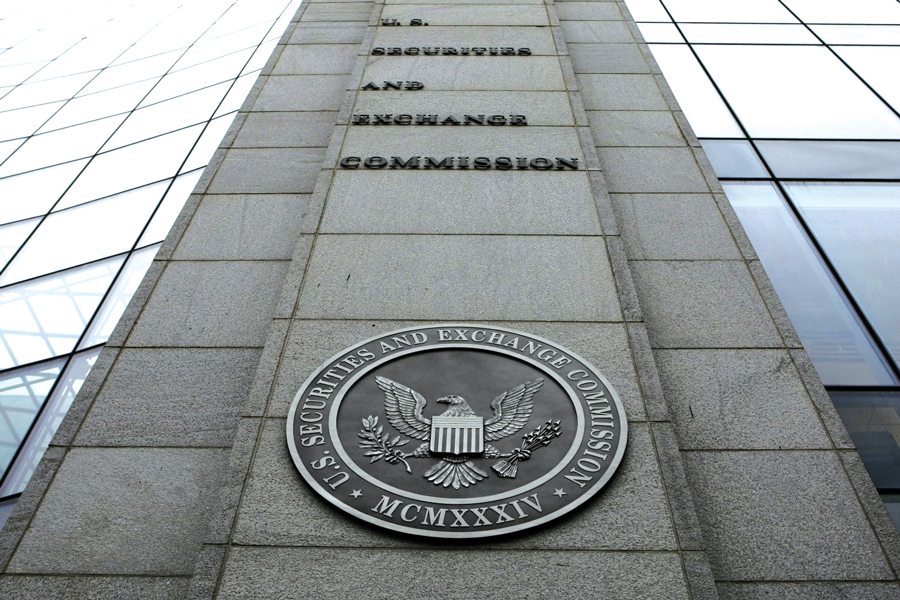
The SEC will zero in on how financial advisers use environmental, social and governance investment strategies and how they are complying with Regulation Best Interest in its examinations this year.
In addition to those two topics, the agency highlighted assessments of private funds, cybersecurity and cryptocurrency as areas of significant focus in the Division of Examinations’ annual examination priorities report posted on Tuesday.
"The Division’s 2022 examination priorities identify key risk areas that we expect registrants to address, manage, and mitigate with vigilance," SEC Chairman Gary Gensler said in a statement. "Investment advisers, broker-dealers, self-regulatory organizations, clearing firms, and other registrants are critical market participants, and examinations against our laws and rules are fundamental to instilling the trust necessary for our markets to thrive."
The SEC’s overall emphasis on ESG investing, which was highlighted recently by a major climate disclosure proposal, is also a prominent examination theme. The regulator said registered investment advisers and funds increasingly are offering investment and strategies that incorporate ESG factors in order to meet client demand.
The surge in ESG investing has the SEC on guard against so-called greenwashing in performance advertising and marketing.
“There is a risk that disclosures regarding portfolio management practices could involve materially false and misleading statements or omissions, which can result in misinformed investors,” the priority document states.
Exams this year also will focus on brokers’ compliance with Reg BI, which went into force in June 2020, and registered investment advisers’ compliance with the Investment Advisers Act. The exams will target how financial advisers consider alternatives, manage conflicts of interest, make disclosures, select accounts and recommend rollovers.
For broker-dealers, probes will revolve around recommendations related to special purpose acquisition companies, structured products, leveraged and inverse exchange-traded products, real estate investment trusts, private placements, annuities, municipal and other fixed-income securities, and microcap securities.
Investment adviser exams will focus on revenue sharing, share class selection involving 12b-1 and other fees, wrap-fee accounts and recommendations of proprietary products.
For financial professionals who are dually registered as brokers and investment advisers, there will be “particular emphasis on potential conflicts of interest present at these firms, including with regard to account recommendations and allocation of investments across different accounts,” the priorities document states.
Exam priorities generally are consistent, a trend that appeared again this year, said Doug Kamin, managing director at Foreside Financial, a compliance consulting firm.
“Overall, it’s not a large change to what we’ve been seeing,” Kamin said.
Exam priorities also wind up being reflected in enforcement cases. For instance, the SEC recently announced an enforcement action against an investment advisory firm for allegedly lacking a compliance system for its ESG strategies. It also is punishing firms for lapses in compliance with investor disclosure aspects of Reg BI.
“They’re continuing to do what they say they’re going to do,” Kamin said.
The SEC examined 2,200 RIAs in fiscal year 2021, or about 16% of the 14,800 advisers registered with the agency. That’s an increase from the 15% level attained in fiscal 2020 and 2019. But the SEC said it won’t be able to maintain the upward trajectory because of the burgeoning number of RIAs, whose ranks have has jumped 20% over the last five years.
“Although there was a slight increase in the coverage percentage in FY21, we will likely soon have to lower our annual coverage target as the growth in the number of RIAs continues to grow at a rate that far outpaces staffing increases,” the exam document states.
The exam priorities report is meant to help brokerages and advisory firms comply with SEC regulations.
“We hope that firms' leadership, including those in compliance, legal, risk, and information security, across the financial services industry will review the priorities and consider their firms' operations and internal controls in these higher-risk areas to avoid potential compliance weaknesses or failures,” the priorities document states.

Also, Summit Wealth Group nabs a Commonwealth advisor in Tennessee, Oxford Financial adds two managing directors, and Verdence draws an ultra-high-net-worth advisor from Fidelity.

When advisors have tech to handle meeting prep and organization, it frees up time they can reinvest more thoughtfully into helping clients.

LPL Financial and Raymond James also add independent advisors from Osaic and Edward Jones in Michigan and Arizona.

The SEC-registered RIA advises on more than $1 billion in client assets, with no advisory fee through 2027 and no human financial advisors.

95.8% of house trades were winners. For clients? The SEC says just 14.9%.
Knighthead Life entered the market with a competitive MYGA. A strong launch earned advisor confidence and paved the way for FIAs.
As AI makes financial information more accessible than ever, Lana Hock explains why human judgment, trust, and empathy remain the qualities clients value most in a financial advisor

