
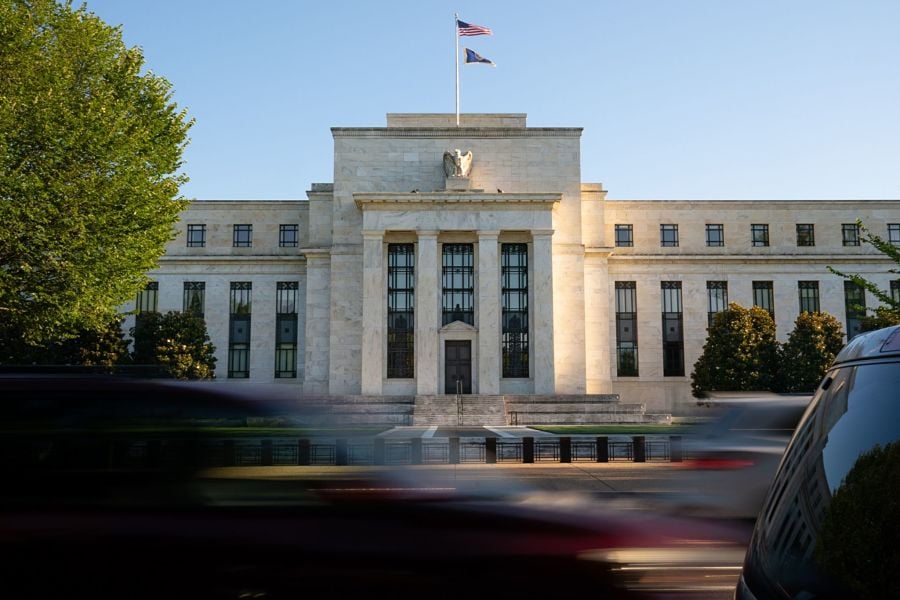
U.S. authorities took extraordinary measures to shore up confidence in the financial system after the collapse of Silicon Valley Bank, introducing a new backstop for banks that Federal Reserve officials said was big enough to protect the entire nation’s deposits.
Sunday's announcement by the Treasury Department, Federal Reserve and Federal Deposit Insurance Corp. followed a frantic weekend that saw the surprise closure of New York’s Signature Bank along with mounting concerns about spillover effects to other regional lenders and the wider economy.
Regulators acted on a number of fronts to contain the potential fallout:
The response helped soothe investors worried about additional bank runs or the risk a fresh financial crisis would trigger a recession. U.S. stock futures climbed on Monday after bank shares plunged last week by the most since the March 2020 pandemic shock.
In the UK, HSBC Holdings began Monday by announcing it was acquiring the UK arm of Silicon Valley Bank, the culmination of a weekend where ministers and bankers explored various ways to avert the SVB unit’s collapse.
Under the new U.S. program, which provides loans of up to one year, collateral will be valued at par, or 100 cents on the dollar. That means banks can get bigger loans than usual for bonds, reducing the pressure to generate cash by selling securities whose prices have tumbled.
There were some concerns that the taxpayer could now be on the hook for covering losses suffered by banks and that questionable management and investments were now being protected by the government.
Banks, for example, now can limit accepting losses or selling assets given they have access to easier funding. U.S. banks were sitting on more than $300 billion of losses on securities they planned to hold to maturity at the end of 2022.
Last Wednesday, SVB’s parent company, SVB Financial Group, revealed it had sold $21 billion of securities from its portfolio at a loss of $1.8 billion. The Fed’s new safety net may have helped it avoid doing so.
“If the Fed is now backstopping anyone facing asset/rates pain, then they are de facto allowing a massive easing of financial conditions as well as soaring moral hazard,” wrote Michael Every and Ben Picton, strategists at Rabobank.
SVB’s meltdown offered an illustration of the costs of the Fed’s most aggressive monetary tightening campaign since the early 1980s. The lender had plowed money into longer-term bonds during the pandemic, the market values of which dropped as yields then soared. Meantime, SVB’s funding costs surged as the Fed kept jacking up its benchmark.
Fed officials said on a briefing call that their new facility was invoked under its emergency authority allowing for the establishment of a broad-based program under “unusual and exigent circumstances,” which requires Treasury approval. It was unanimously approved by the Fed board.
The Treasury will “make available up to $25 billion from the Exchange Stabilization Fund as a backstop” for the bank funding program but the Fed doesn’t expect to draw on the funds, officials said.
With a senior Treasury official cautioning there were other banks that appeared to be in similar situations to SVB and Signature, regulators’ top concern was assuring businesses and households they were made whole on their deposits.
Treasury Secretary Janet Yellen said the actions taken Sunday will protect “all depositors,” signaling aid to those whose accounts exceed the typical $250,000 threshold for FDIC insurance.
Normally, under the Fed’s main lending program, known as the discount window, the Fed typically lends money at a discount against the assets provided as collateral, a practice known as haircuts.
The central bank said the loans under the discount window, which are up to 90 days, will now be subject to the same collateral margins as the new bank funding facility.
The Fed’s emergency lending program is “an admission not only of systemic risk but that the risks are so unusual and exigent that failure to invoke this liquidity could create a financial crisis,” said Peter Conti-Brown, associate professor at the University of Pennsylvania’s Wharton School.
U.S. regulators emphasized that taxpayers won’t be on the hook for protecting SVB and Signature deposits, and Treasury and Fed officials rejected the idea that the banks are being bailed out — showcasing the potential political sensitivities of the weekend moves. The regulators said shareholders and certain unsecured debtholders will be wiped out, while management was fired.
President Joe Biden, in a statement Sunday night, said the solution “protects American workers and small businesses, and keeps our financial system safe.”
For the Fed, the collapse of two powerhouse regional banks will test their resolve as they decide their next move on rates. Chair Jerome Powell just last week opened the door to a re-acceleration to a 50 basis-point hike at the Fed’s March 21-22 meeting.
Financial ructions may raise the bar for such a move, however.
While economists at JPMorgan Chase & Co. retained their forecast for a quarter-point rate hike by the Fed next week, their counterparts at Goldman Sachs Group Inc. said they no longer expect the Fed to raise rates.
“While the Fed wants tighter financial conditions to restrain aggregate demand, they don’t want that to occur in a non-linear fashion that can quickly spiral out of control,” Michael Feroli, chief U.S. economist at JPMorgan Chase, wrote in a note to clients. “If they indeed have used the right tool to address financial contagion risks (time will tell), then they can also use the right tool to continue to address inflation risks — higher interest rates.”

Just over 10% of advisors' wealth clients come from defined contribution plans, as capacity, data and technology gaps block the bridge to wealth

Deal creates a $20B-plus custody platform for private market investing in IRAs, months after Schwab closed its Forge Global purchase

Despite the good times, advisors should tread carefully, said one veteran industry executive.

Cullen marks the fourth firm the New York-based RIA aggregator has bought in 2026 as deal volume heads for a record year.

The quality of AI ROI measurement depends on pre-deployment decisions around business outcomes, leadership alignment, and establishing trusted information, among other factors.
Knighthead Life entered the market with a competitive MYGA. A strong launch earned advisor confidence and paved the way for FIAs.
As AI makes financial information more accessible than ever, Lana Hock explains why human judgment, trust, and empathy remain the qualities clients value most in a financial advisor

