
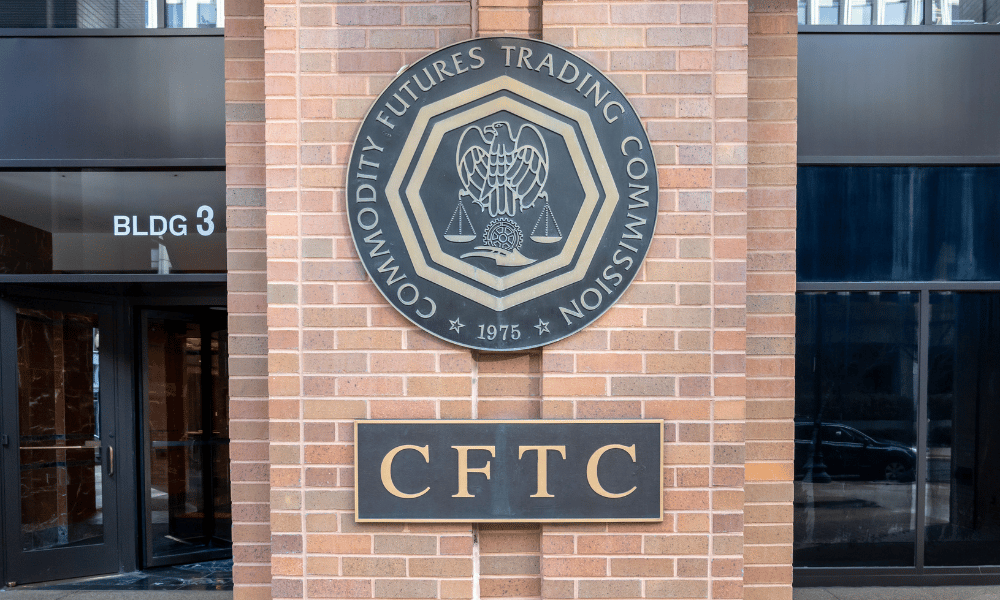
The US government and the CFTC sued Arkansas on November 12, 2026, to stop the state from treating prediction markets as gambling.
The complaint, filed in the US District Court for the Eastern District of Arkansas, takes aim at the state's push to shut down federally regulated exchanges that offer event contracts - financial products that let people trade on real-world outcomes like election results, sports scores, or weather events.
The fight centers on KalshiEX LLC, a New York-based financial services company the CFTC approved as a designated contract market in November 2020, according to the filing. On November 4, 2026, Arkansas filed a state enforcement action against the company, calling it "a straightforward gambling platform," the federal complaint states. The state's filing alleges that "whatever label [Kalshi] attach[es] to these [event] contracts, consumers use them to do what gamblers have always done: risk money on the outcome of an athletic contest in hopes of receiving a greater return," according to the federal complaint.
The federal government disagrees. Event contracts are "swaps" under the Commodity Exchange Act, the complaint argues, and that makes them the CFTC's business - not the state's. The CEA hands the CFTC "exclusive jurisdiction" over commodity futures, options, and swaps traded on federally regulated exchanges. That authority, the complaint says, overrides state law.
Arkansas is far from the only state to test this boundary. The complaint lists preemption actions already filed against Arizona, Connecticut, Illinois, Kentucky, Minnesota, New Mexico, New York, Rhode Island, Wisconsin, and Utah. Courts have entered preliminary injunctions in favor of the federal government in Arizona, Illinois, and Minnesota, blocking those states from enforcing gambling laws against CFTC-regulated exchanges, according to the filing.
The complaint traces over a century of tension between state gambling laws and federal derivatives regulation. Congress created the CFTC in 1974 specifically to replace a "patchwork of state-by-state regulation" that "had impaired the development and functioning of national commodity derivatives markets," the filing states. The 2010 Dodd-Frank Act then extended the CFTC's "exclusive jurisdiction" to swaps traded on designated contract markets and swap execution facilities.
For prediction market operators, the financial exposure from state enforcement is severe. The complaint states Kalshi earns between $0.07 and $2.63 in transaction fees per 100 contracts it facilitates. But Arkansas's Deceptive Trade Practices Act permits civil penalties of up to $10,000 per violation. If the state pursues per-violation penalties, they "would dwarf Kalshi's income from its activities in Arkansas and could reach the hundreds of millions of dollars," according to the complaint.
The CFTC is not just defending prediction markets in court. The filing points to enforcement actions the commission has brought against individuals who traded event contracts using nonpublic information - including a civil action over trades tied to the ouster of Venezuelan President Nicolas Maduro, and a separate action over trades tied to Google's Year in Search list, the complaint states. The Justice Department has also brought criminal charges for insider trading on event contracts, according to the filing.
The CFTC has also been building ties with professional sports leagues. The complaint states the commission signed Memoranda of Understanding with the NBA, MLB, and NHL to share information and protect market integrity in sports-related event contracts. In October 2026, the commission issued an Interim Final Rule that "affirms and codifies the Commission's longstanding position that casino-style gambling products, including sports-wagering contracts entered into on a sportsbook and casino games, are not swaps and do not fall within the CFTC's jurisdiction," according to the filing. That rule drew a clear line between event contracts on regulated exchanges and traditional gambling.
The complaint states that 30 exchanges currently hold active CFTC designations to operate as contract markets, including newer entrants like Kalshi and established operators like the North American Derivatives Exchange (Nadex) and CME Group.
The case raises a single count under the Supremacy Clause. The complaint asks the court to declare Arkansas law preempted and to permanently block the state from enforcing its laws against transactions on CFTC-regulated exchanges.
The complaint represents the federal government's position, and no court has ruled on the merits.

Wells Fargo adds two bank-channel recruits, UBS lands a JPMorgan Chase veteran, and a multi-family office lifts Atlas past $1B

“The state comes down on you in years when you make 40% returns for clients,” said Bill Swayne, the advisor and son of Candace Swayne.

The Independent broker-dealer giant has had “active conversations” with the Claude maker, which is days away from its expected IPO

For Gen X clients entering life after work, answering the financial question isn't enough to solve the entire retirement equation.

Tools from Grantd, Income Lab and Healthspan Wealth aim to keep RIAs involved in clients’ biggest money decisions
Growing wealth, evolving priorities, and untapped opportunities are reshaping how women approach long-term investing.
Knighthead Life entered the market with a competitive MYGA. A strong launch earned advisor confidence and paved the way for FIAs.

