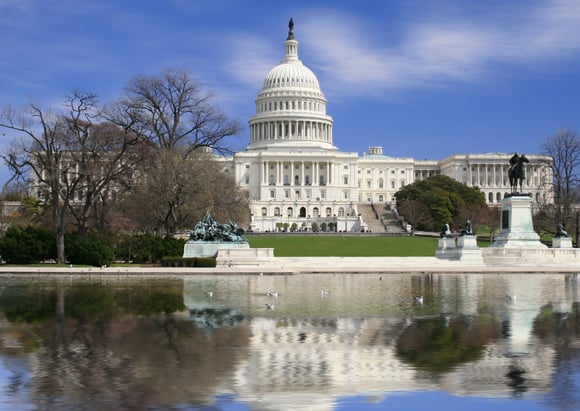
The potential for political upheaval on Capitol Hill following the Nov. 2 election has grabbed the attention of many financial interest groups — and has some preparing to change the targets for their advocacy efforts.
Most political prognosticators are predicting a Republican takeover of the House. But even if they fall short, individual Democrats could lose, ushering in key changes on congressional committees.
“Whatever happens, we can promise you that we'll be prepared for it,” Brian Graff, chief executive of the American Society of Pension Professionals and Actuaries, said at his organization's annual conference in Washington on Oct. 17.
For instance, Rep. Paul Kanjorski, D-Pa., is one official who has a good deal of influence on issues pertaining to financial advisers. Mr. Kanjorski, a champion of the fiduciary standard, is the chairman of the House Financial Services Committee's Subcommittee on Capital Markets, Insurance and Government Sponsored Enterprises.
Mr. Kanjorski, however, may lose his job in November, with several recent polls noting that he's trailing Republican Lou Barletta.
Mr. Kanjorski has won previous re-election campaigns by comfortable margins — although Mr. Barletta garnered 48% of the vote in his 2008 race against Mr. Kanjorski.
Both Mr. Kanjorksi and Mr. Barletta have raised a substantial amount of campaign funds — $1.7 million and $907,584, respectively. In addition, outside groups have had a big impact, spending $1.1 million in support of Mr. Kanjorski and $1.2 million in opposition to him, according to OpenSecrets.org, a website that tracks political spending.
In the retirement business, Mr. Graff noted that another key member of Congress — Rep. Earl Pomeroy, D-N.D. — is in danger of losing his seat in the elections next month.
“He's in a bit of trouble,” Mr. Graff said.
Mr. Pomeroy, who actuaries know well because of his recent work on pension reform, is in a tight race against Republican Rick Berg. The website RealClearPolitics
lists the race as “leans Republican,” while both candidates have raised a substantial amount of money — $2.7 million for Mr. Pomeroy and $1.6 million for Mr. Berg as of Sept. 30.
With the political winds swirling for the next two weeks, it will be impossible to predict the outcome of this race or any other, according to Mr. Graff.
“We have no idea what's going to happen on Nov. 2,” Mr. Graff said. “This is going to be a watershed election. It's going to have a tremendous impact on the climate here in D.C.”
Whether there's a Republican wave that wipes out House and Senate Democratic majorities or just a number of Republican pickups in each chamber, interest groups have to be prepared. Mr. Graff said that the ASPPA has expanded its congressional-affairs staff.
“It's going to present a new challenge,” Mr. Graff said.
Even before voters have cast their ballots, change is already pervasive in Washington, thanks to an abundance of rulemaking at the Department of Labor and the Securities and Exchange Commission, among other agencies.
“I cannot remember a time when there's been such a significant amount of regulatory activity happening all at the same time on different fronts,” Mr. Graff said.
Some of the energy, however, is misdirected, in Mr. Graff's view. He cited several drawbacks in the 401(k) fee disclosure regulation that the Department of Labor promulgated Oct. 14 (View more details here.)
“This is the first disclosure requirement that has become a fiduciary responsibility,” Mr. Graff said. “There's a huge amount of potential liability that didn't exist before.”