
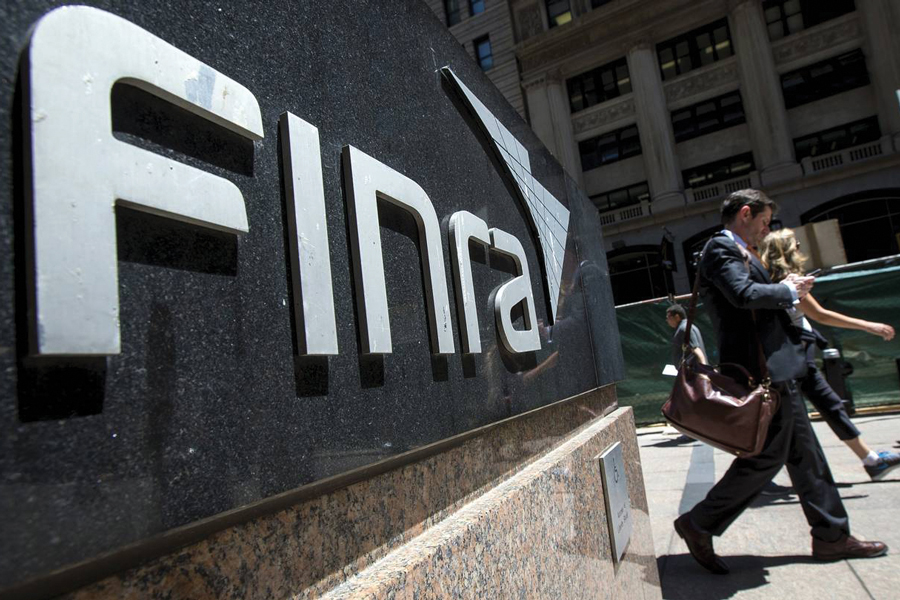
Finra allocated $30 million of the money that it collected last year from a fine imposed on Robinhood to fund an education initiative targeting new investors who are trading on their own online and through mobile apps.
Last June, the Financial Industry Regulatory Authority Inc. ordered Robinhood Financial to pay a record $70 million penalty over alleged investor harm the online brokerage caused through false or misleading information, system outages and inappropriate options trading. Robinhood agreed to pay a $57 million fine and $12.6 million in restitution.
The Finra board approved using $30 million of the Robinhood fine to educate investors such as those who use Robinhood’s app and other online platforms, according to Finra’s report on its use of 2021 fine money posted last Friday.
“Finra solicited input from firms, investors and other stakeholders on effective ways to reach these new investors,” the fine report states. “Although the expenses of this initiative will be incurred over several years, the funding for it was specifically earmarked by the board from fines collected in 2021, and, accordingly, the full amount is included in the usage of 2021 fines set forth” in the report.
Finra issued $90.1 million in fines in 2021, according to the report. The organization combined that amount with another $37.6 million from what it calls “fines-eligible expenditures” that are funded by reserves and excess operating results.
The total $127.7 million was allocated between capital initiatives — $80.4 million — and investor education programs — $47.3 million. The Finra board only authorizes the use of fine money to fund capital and education projects, or to replenish the organization’s reserves.
Capital expenditures funded by fine money included modernizing enforcement technology, improving Finra’s data analytics capabilities, beefing up examinations technology, strengthening market surveillance and modernizing securities industry infrastructure.
Finra also used fine monies to train staff, establish investor education programs and help Finra member firms comply with its rules.
The broker-dealer self-regulator has issued the fine-spending report annually since 2017. It was originally published as part of the Finra 360 initiative to make the organization’s finances more transparent.
Finra always makes a point of emphasizing in the report that it doesn't depend on fine money to fund its budget.
“Finra does not target any minimum amount of fines to be issued,” the report states. “Finra’s operating budget does not include fines, and fine monies are not considered in determining employee compensation and benefits.”

A Nationwide survey finds 47% of GLP-1 users have never discussed the drugs’ financial impact with an advisor, even as many dip into savings.

The hundreds of millions of dollars from a sale of Inspired Healthcare properties does not mean an immediate windfall for investors.

Its SEC filings said one thing - a congressional probe said another.

Sham agreements allegedly padded revenue by 345%.

"Most pre-retirees are uncomfortable making key retirement income decisions without an advisor's help," said Chris Bailey of Cerulli.
Knighthead Life entered the market with a competitive MYGA. A strong launch earned advisor confidence and paved the way for FIAs.
As AI makes financial information more accessible than ever, Lana Hock explains why human judgment, trust, and empathy remain the qualities clients value most in a financial advisor

