
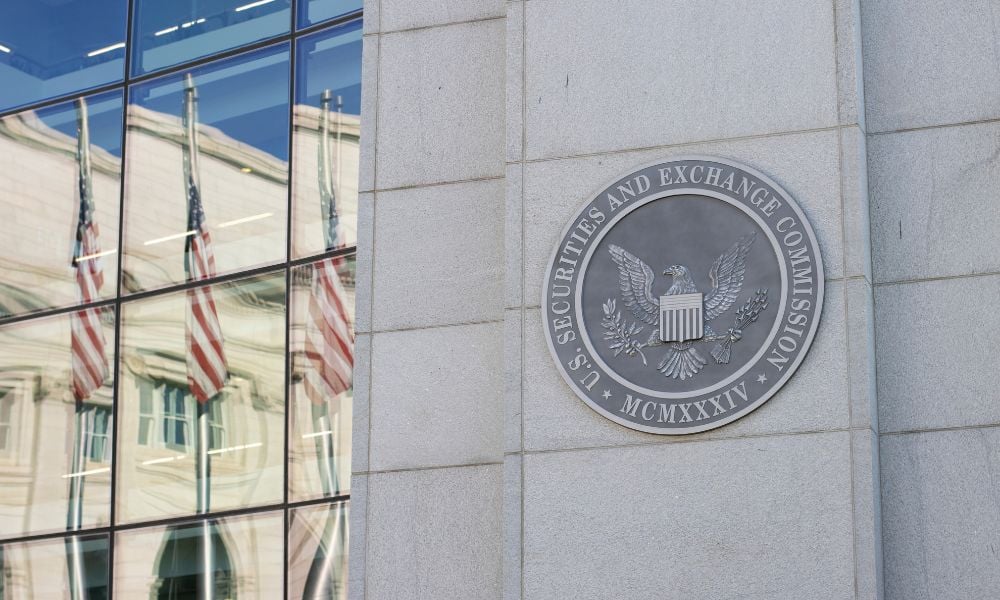
A federal appeals court just underscored the SEC’s tools for attacking long‑running micro‑cap stock schemes.
On February 19, 2026, the U.S. Court of Appeals for the First Circuit largely upheld an SEC civil enforcement win against a group tied to Canadian financial professional Frederick “Fred” Sharp and his Sharp Group. The case does not involve large brokerages or advisory firms, but it does show how regulators and courts respond when they conclude markets have been manipulated over many years.
From 2010 to 2019, Sharp and his associates carried out a series of pump‑and‑dump schemes involving penny stocks in national micro‑cap companies. Certain participants accumulated large blocks of cheap stock, often through shell and nominee entities that concealed who beneficially owned and controlled the shares. Promoters were paid to generate hype and “drum up misleading hype” about these stocks, prices rose, and the group then sold at artificially inflated levels to unwitting investors.
To avoid triggering registration and reporting rules, the group used shell or nominee companies and offshore brokerage accounts, including by splitting holdings so that no recorded owner crossed the 5 percent beneficial‑ownership threshold that would require disclosure under Section 13(d). At the center of the operation was an internal, encrypted accounting platform known as the “Q system,” hosted on servers in Curaçao. The Q system recorded clients’ stock holdings, trades, internal allocations of proceeds, payments and Sharp’s commissions, all coded with nicknames rather than real names.
The SEC filed its civil action on August 5, 2021, in the District of Massachusetts, naming Sharp and multiple associates and clients. It alleged violations of registration requirements under Section 5 of the Securities Act, beneficial‑ownership disclosure rules under Section 13(d) of the Exchange Act, antifraud provisions of the Securities Act and Exchange Act, and aiding‑and‑abetting theories.
Some defendants, including Mike K. Veldhuis, Paul Sexton and Jackson T. Friesen, agreed in consent judgments not to contest liability and litigated only remedies. Two others, Zhiying Yvonne Gasarch and Courtney Kelln, were Sharp Group employees with key internal roles: Gasarch handled wire transfers and related documentation and was described as “the master of finance,” while Kelln collected, allocated and distributed shares among nominee entities so recorded ownership stayed under five percent.
Gasarch and Friesen went to a ten‑day jury trial and were found liable on all claims against them, including Gasarch’s primary violation of Section 17(a)(3) and their roles in the fraudulent scheme. After trial and on the consent judgments, the district court ordered all five appellants to disgorge amounts tied to their Q‑system allocations, holding each jointly and severally liable with Sharp but capping each person’s total at a specific figure. It also imposed civil penalties and permanent injunctions, including conduct‑based bans on participating in penny stock offerings and orders barring future violations of the key statutes and rules at issue.
On appeal, the defendants challenged the Q system evidence as unreliable, unauthenticated hearsay. The First Circuit rejected those arguments. It relied on testimony from the software engineer who built and maintained the Q system, from insiders who used it to record trades and allocations, and from an FBI agent involved in seizing the “Bond”‑labeled servers in Curaçao. The court agreed with the district judge that the Q system could be treated as a business record of the Sharp Group’s internal ledger and noted that its transactional data closely matched independent brokerage records.
The appeals court also upheld the core remedies. It agreed that the SEC had provided a reasonable approximation of ill‑gotten gains based on the Q data and corroborating records, and it held that any remaining uncertainty about exactly when and how money left Sharp’s control should fall on the wrongdoers, not on investors or the SEC. It approved joint and several disgorgement with Sharp because the defendants engaged in “concerted wrongdoing” in a hub‑and‑spoke conspiracy, while emphasizing that each individual’s liability was capped at the amount allocated to that person’s Q account.
On timing, the First Circuit applied a ten‑year statute of limitations for SEC disgorgement in scienter‑based cases, based on a 2021 amendment in the National Defense Authorization Act. That allowed the SEC to seek disgorgement of profits from violations going back up to a decade before the 2021 filing date, rather than only five years.
The court affirmed the jury verdicts, the disgorgement awards, the civil penalties and most of the permanent injunctions. It vacated only one portion of an injunction against Sexton, which addressed beneficial‑ownership reporting under Section 13(d) and Rule 13d‑1, because it referred back to regulatory materials without clearly describing the prohibited conduct. The case was sent back solely for that language to be rewritten.
The decision shows that courts are willing to credit detailed internal ledgers like the Q system when supported by outside records, to use long lookback periods in intentional fraud cases, and to uphold broad, conduct‑based injunctions after a finding of a sustained manipulation scheme.
U.S. seniors lose $28.3 billion annually as a result of financial exploitation, according to a 2023 AARP study.

Cornerstone Capital and Echo Wealth Management add about $1.7 billion as RIA M&A heads for a record year.

As Robinhood and Schwab roll out AI agents and assistants, a new survey finds advisors still edge out chatbots in terms of client trust.

See which platforms and providers earned 5-Star recognition this year

Meanwhile, a multigenerational Cambridge team has hopped to LPL in Michigan, and Cetera's run of Commonwealth recruitment continues in New Jersey.
As AI makes financial information more accessible than ever, Lana Hock explains why human judgment, trust, and empathy remain the qualities clients value most in a financial advisor
Northern Trust’s Ken Lassner shows advisors how to convert volatility into after-tax portfolio gains

