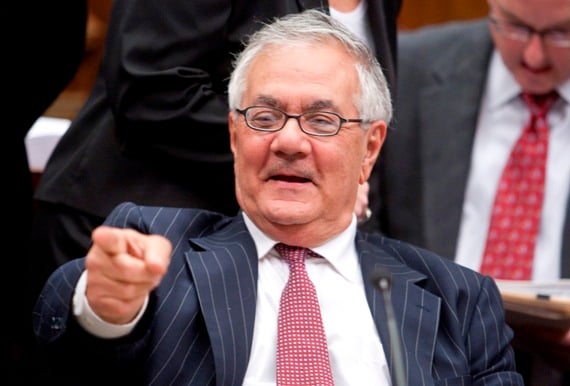

Frank says cutting funds to regulators is 'worst of all worlds'

Frank says cutting funds to regulators is 'worst of all worlds'
Barney Frank says Republican "nickel and diming" of SEC, CFTC "does grave harm."
NOV 28, 2011
U.S. Representative Barney Frank said Republican efforts to cut funding to agencies implementing new Wall Street rules under the Dodd-Frank Act are creating the “worst of all worlds” for regulators. “This nickel and diming the Securities and Exchange Commission and Commodity Futures Trading Commission does grave harm,” said Frank, co-sponsor of the financial-regulation law that bears his name, during testimony at a Senate Banking Committee hearing in Washington today. Frank of Massachusetts, the senior Democrat on the House Financial Services Committee, was the first witness at a hearing marking the one-year anniversary of the law signed by President Barack Obama. Regulators including Federal Reserve Chairman Ben S. Bernanke, SEC Chairman Mary Schapiro and CFTC Chairman Gary Gensler are also testifying at the hearing conducted by Senate Banking Committee Chairman Tim Johnson. House Republicans, who took majority control of the chamber after Dodd-Frank was passed, have pushed to cut the funding of the SEC and CFTC, which are required to write hundreds of rules to implement the law. While Republicans may support less regulation, it is “the worst of all worlds” to have underfunded regulators try to write the rules required by the law, Frank said. Johnson, a South Dakota Democrat, said his panel will continue “rigorous oversight” as regulators draft and implement rules. “Unfortunately, these reforms have been under attack since this bill was signed into law,” Johnson said in his opening statement. Senator Richard Shelby of Alabama, the Banking Committee's senior Republican, said there were “numerous areas where Republicans and Democrats could have easily reached agreement” during negotiations before Dodd-Frank was enacted. “Unfortunately, however, the administration decided early there would be no real compromise,” Shelby said. The law was passed over nearly unanimous Republican opposition in the House and Senate. --Bloomberg News--

Latest News

Osaic executives Kristy Britt and Greg Cornick to leave

The firm's CFO and EVP of Wealth Management Solutions are the latest executives to exit the broker-dealer.

Estate planning becomes a client retention issue for financial advisors, survey finds

Clients are saying they would consider switching advisors if another professional offered estate planning services, according to a new Trust & Will survey.

Candidly adds AI agents for Trump Accounts, workplace benefits

CEO Laurel Taylor says the fintech's composable AI stack helps workers optimize dollars across Trump Accounts, 529s, 401(k)s, and other employee benefits.

BMO adds three advisors in Dallas amid Y'all Street wealth boom

The bank has swiped three private banking veterans from BNY as the city climbs the ranks of America's fastest-growing wealth hubs.

UBS moves toward full-service US bank as plans to extend wealth business

Employee accounts, crypto trials and job cuts frame a pivotal year for the Swiss lender.

SPONSORED Who builds the income when the pension disappears?

Dan Biagini of American Equity says the steady decline of pensions, longer lifespans and a reset in interest rates are rewriting how advisors build retirement income

SPONSORED Why direct indexing stopped being optional

Direct indexing is on pace to outgrow ETFs and mutual funds. Northern Trust's Ken Lassner explains why the advisors who get it wish they had started sooner.