
As the pandemic enters its third year and everyday life takes on some semblance of normalcy, the InvestmentNews team looks back at the most interesting industry developments of 2021.
Democratic control of government this year has resulted in an energetic Securities and Exchange Commission and a Congress that is willing to consider many tax increases targeting the wealthy but is having trouble following through.
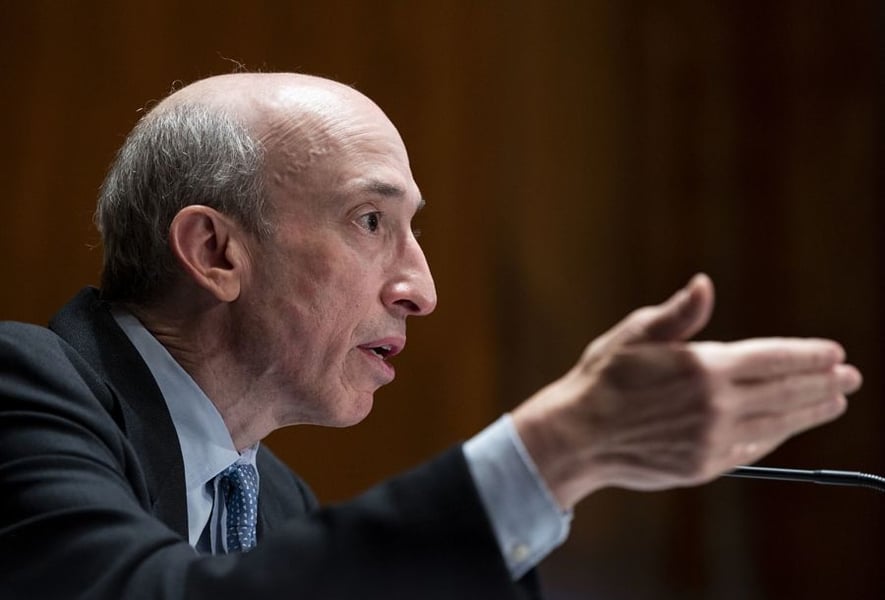
Sworn in in April, SEC Chairman Gary Gensler has set an expansive regulatory agenda that includes pending proposals on climate-risk and workforce disclosures by public companies, cybersecurity risk governance and amendments to investment adviser custody rules and a review of financial advisers’ digital engagement practices.
The difference between Gensler and many of his predecessors is that he’s not a lawyer, “he’s a policy guy,” said Michael Canning, principal and founder of The LXR Group, a public affairs consulting firm.
Gensler made that clear shortly after he took office with appointments to his personal staff, Canning said. For instance, he tapped Heather Slavkin Corzo, former director of capital markets policy at the AFL-CIO, to fill the newly created role of policy director. He later added Barbara Roper, former director of investor protection at the Consumer Federation of America, as senior adviser.
Roper and Corzo were among a vanguard of progressive advocates for fiduciary duty for investment advice. They’re now at the SEC because the agency has a 3-2 Democratic majority led by Gensler.
Under Gensler’s predecessor, Jay Clayton, the SEC’s priorities reflected those of Republicans in Congress, such as expanding access for ordinary investors to private markets. With Gensler at the helm, Democratic priorities, such as promoting environmental, social and governance investing, are at the forefront.
“You’re seeing a similar flow of congressional Democratic priorities to the commission’s agenda, but it’s happening in the first year rather than the fourth year,” Canning said. “Appointing policy people wasn’t an afterthought [for Gensler], it was his first thought. You’re going to see their influence cascade over the SEC’s policy direction over the duration of his term.”
Congressional Democrats can influence the SEC, but it’s proving harder for them to raise taxes.
In January, President Joe Biden took office and Democrats assumed control of the House and Senate promising to make high-earners pay their fair share of taxes. But Democrats have struggled to agree on a nearly $2 trillion bill containing the administration’s social and climate spending priorities and the tax increases to pay for them.
Many of the tax hikes advisers feared the most -- such raising the capital gains rate and taxing unrealized capital gains at death -- have fallen by the wayside. Those remaining hit the ultra-wealthy.
That reflects a centrist attitude in Congress about tax policy, said Jamie Hopkins, director of retirement research at Carson Group.
“Most of the House and most of the Senate are fairly middle ground when it comes to business, taxes and that side of policy,” Hopkins said at the InvestmentNews Retirement Income Summit in November.
It’s one of the lessons of 2021. Full control of Washington will give a party influence but not everything it wants.
To read the rest of this series:

Salespeople at the firm often went beyond the matching algorithm to recommend network advisors on its Zoe Wealth platform, according to the regulator.

The Protect College Sports Act would cap school payments and codify NIL rights, with implications for advisors guiding young athletes.

"I know the number that I want to be able to retire on, and now I just want out," says Wilmington Trust's Marguerite Weese, describing a common refrain among business-owner clients.

Bessemer and Brown Brothers Harriman veteran Robert Ludricks III and private markets specialist Olof Akesson join the ultra-high-net-worth push on the East Coast.

765 investors were promised 260% annual returns on truck leases
As AI makes financial information more accessible than ever, Lana Hock explains why human judgment, trust, and empathy remain the qualities clients value most in a financial advisor
Northern Trust’s Ken Lassner shows advisors how to convert volatility into after-tax portfolio gains

