
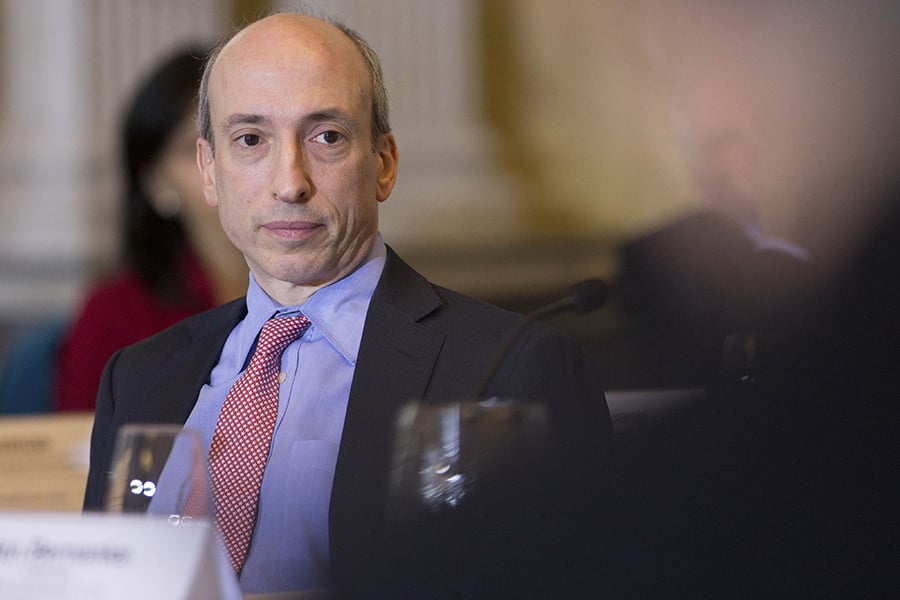
Securities and Exchange Commission Chairman Gary Gensler laid out a laundry list of concerns related to special purpose acquisition companies, delivering his strongest signal yet that he’ll push for much tougher rules for the blank-check firms. Gensler, who’s repeatedly raised issues with SPACs since taking over in April, gave a road map Thursday for areas where the regulator may need to step up regulation.
He said he’s concerned that retail investors putting money in a firm taken public by merging with a blank-check company may be at a disadvantage compared with backing a traditional initial public offering.
“Currently, I believe the investing public may not be getting like protections between traditional IPOs and SPACs,” Gensler said in remarks prepared for the Healthy Markets Association, which represents institutional investors. “Further, are we mitigating the information asymmetries, fraud and conflicts as best we can?”
For more than a year, the SEC has been ringing alarm bells over disclosures around SPACs, which Gensler said now make up more than 60% of U.S. IPOs. The agency has said that it plans to propose new regulations to deal with the booming area as soon as next April, and SEC attorneys have also been stepping up scrutiny of such deals, with Lucid Group Inc. and Digital World Acquisition Corp., which is merging with former President Donald Trump’s media company, disclosing this week that they had received information requests.
In his comments, Gensler said areas of particular concern that he’s asked staff to look into include:

Also, Summit Wealth Group nabs a Commonwealth advisor in Tennessee, Oxford Financial adds two managing directors, and Verdence draws an ultra-high-net-worth advisor from Fidelity.

When advisors have tech to handle meeting prep and organization, it frees up time they can reinvest more thoughtfully into helping clients.

LPL Financial and Raymond James also add independent advisors from Osaic and Edward Jones in Michigan and Arizona.

The SEC-registered RIA advises on more than $1 billion in client assets, with no advisory fee through 2027 and no human financial advisors.

95.8% of house trades were winners. For clients? The SEC says just 14.9%.
Knighthead Life entered the market with a competitive MYGA. A strong launch earned advisor confidence and paved the way for FIAs.
As AI makes financial information more accessible than ever, Lana Hock explains why human judgment, trust, and empathy remain the qualities clients value most in a financial advisor

