The Republican takeover of the House of Representatives could give renewed impetus to a push for a self-regulatory organization for investment advisers, which could turn out to be the
Financial Industry Regulatory Authority Inc..
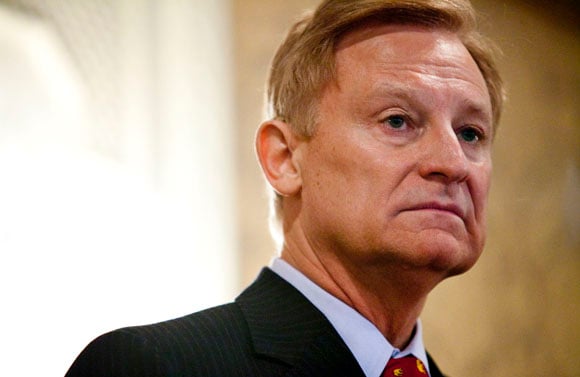
A key supporter of an adviser SRO, Rep. Spencer Bachus of Alabama, the ranking Republican on the powerful House Financial Services Committee, is in line to succeed Rep. Barney Frank (D-Mass.) as chairman of the committee.
Last year, during debate over the final financial reform package in the House, Mr. Bachus proposed an amendment to give Finra oversight of dually registered advisers, including advisory affiliates of broker-dealers and dually licensed individuals.
It was a last-minute amendment that “would have given Finra jurisdiction over one-third” of advisers, said David Tittsworth, executive director of the Investment Adviser Association. The IAA and other groups opposed the amendment, he said, and it was not included in the final Dodd-Frank legislation.
"The majority of proponents of [the amendment] were Republican members of the committee who didn't have the votes to move that forward," said Dave Bellaire, general counsel of the Financial Services Institute Inc., which represents independent broker-dealers.
But the brokerage industry as a whole, and Finra in particular, supports an SRO for advisers as a way to ensure that registered investment advisory firms get regular inspections.
Dodd-Frank calls on the SEC to analyze adviser and broker-dealer regulation, and to recommend whether Congress should authorize an adviser SRO. The SEC's report is due to be sent to Congress in January.
(Click here for an exclusive online special report on the results of the 2010 elections -- and the impact on advisers.)
Finra isn't openly pushing to take over adviser oversight, but few doubt that the regulator wants to expand its turf to cover advisory firms. And no other SROs could take on the broad regulatory role in the investment adviser space.
Finra spokeswoman Nancy Condon declined to comment.
Those opposed to giving Finra oversight of advisers pointed out that legislation would be needed if advisers were to be regulated by an SRO.
“You'd need a majority [in Congress] to pass it, and the president to sign it, or a two-thirds majority” in Congress to override a veto, Mr. Tittsworth said.
The Investment Company Institute, which is also opposed to Finra's regulating advisers, and the IAA say that the Dodd-Frank measure dealt with a lack of adviser oversight by increasing the SEC's budget to help pay for more examinations.
But money authorized by legislation can't be spent unless it is separately appropriated by Congress.
A fiscally conservative Republican-run House may not be willing to appropriate the extra money.
At the same time, financially stressed state regulators are trying to figure out how to take on an estimated 4,000 additional advisers under Dodd-Frank.
The budget woes among government regulators could create another argument for turning regulation over to a private SRO, Mr. Tittsworth said.
"When that study is presented to Congress, it might provide an opportunity to move forward on that issue," Mr. Bellaire said.