
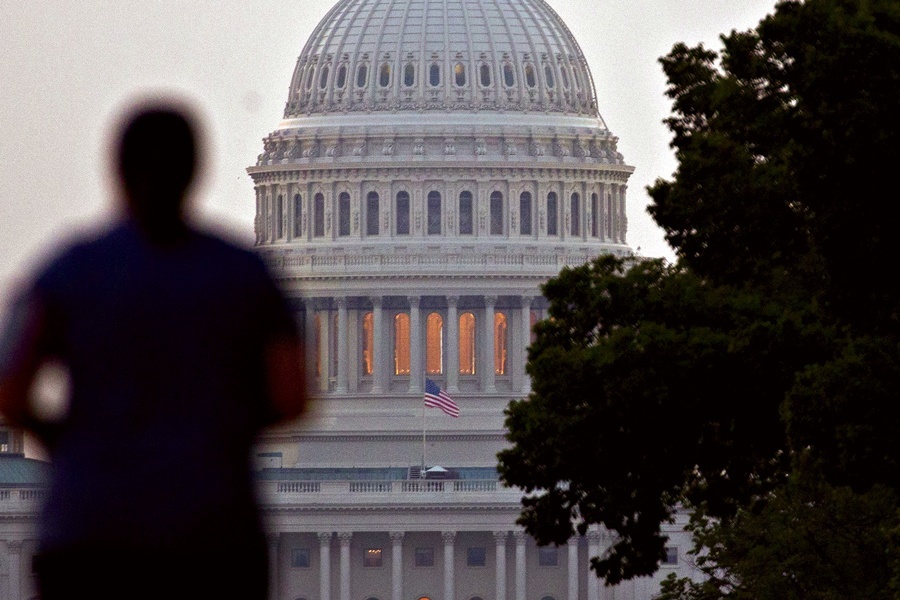
House Judiciary Chairman Jim Jordan and two other House Republicans fired off letters to financial industry giants including BlackRock Inc., Vanguard Group Inc. and State Street, contending that their efforts to combat climate change could violate antitrust law.
The lawmakers warned in the letters on Thursday that agreements to decarbonize their assets “and reduce emissions to zero” could have “potentially harmful effects on Americans’ freedom and economic well-being.”
Jordan, Rep. Thomas Massie of Kentucky and Rep. Dan Bishop of North Carolina signed the letters, which ask for “relevant documents and information” to be produced within two weeks.
Companies that follow environmental, social and governance investing principles have come under increasing attack from Republicans on Capitol Hill, as well as candidates seeking the GOP presidential nomination.
Florida Gov. Ron DeSantis, for example, earlier this year signed legislation that restricts his state’s pension funds from investing based on ESG factors.
The letters highlight the widening schism between much of the modern GOP and Wall Street, long a traditional ally.
The Republican lawmakers also sought information from the Glasgow Financial Alliance for Net Zero and its Net Zero Asset Managers initiative. GFANZ is co-chaired by former Bank of England Governor Mark Carney and Michael R. Bloomberg, the founder of Bloomberg News parent Bloomberg.
BlackRock said in a statement that its “sole focus as a fiduciary is seeking the best financial outcomes for our clients, consistent with their investment objectives. We look forward to engaging with the committee on how we do that.”
Representatives for State Street and Vanguard had no immediate comment on Thursday night.

Parents must still act to get the $1,000 federal seed and employer contributions, giving financial advisors a role in the rollout.

FINRA booted Rudy Anguiano from the industry for “conversion - the intentional and unauthorized taking of another person’s property.”
Notice 2026-62 also flags box spread ETFs and tax-aware fund trades as Treasury opens month-long consultation period.

Heartwood Wealth Advisors deal marks the serial acquirer's 36th-ever transaction as third-quarter RIA M&A volume slips 19%

The AI lab disclosed more than $8 billion in 2025 losses on an operating basis as financial advisors weigh a supersized listing likely to land past the midterms.
As AI makes financial information more accessible than ever, Lana Hock explains why human judgment, trust, and empathy remain the qualities clients value most in a financial advisor
Northern Trust’s Ken Lassner shows advisors how to convert volatility into after-tax portfolio gains

