
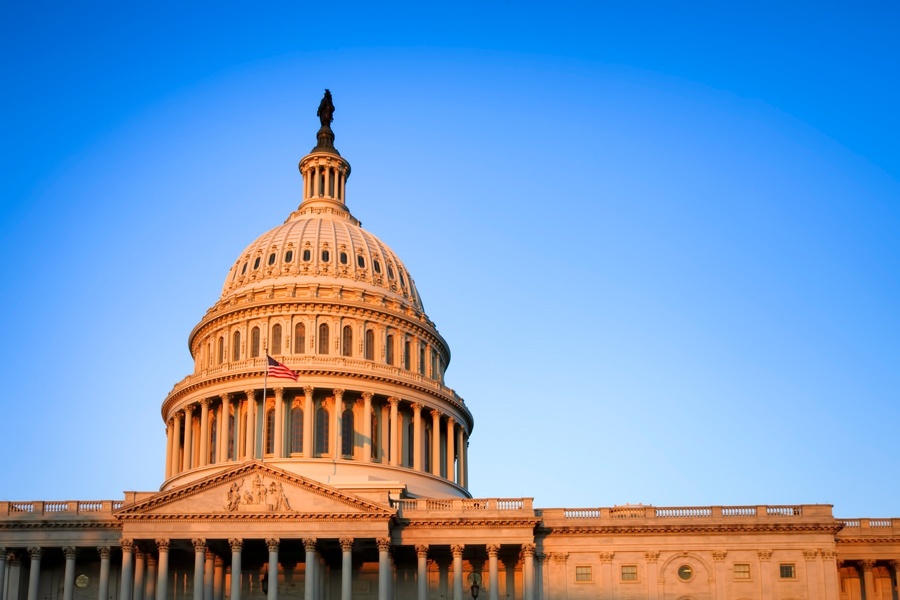
Republicans and Democrats took shots at each other in a heated hearing on ESG Wednesday, with both sides accusing the other of being anti-capitalist on the topic of investing.
They mostly repeated the same talking points made in a handful of prior House hearings on environmental, governance and social investing — whether it is good or bad for investors and public companies. But the session Wednesday included testimony related to 18 separate Republican bills seeking to halt ESG data from being used in public pensions, limit the sway of proxy advisory firms and reverse the SEC’s stance on ESG.
“Under capitalism, the shareholders are entitled to the information they want, even if the Republicans don’t want them to have it,” said Rep. Maxine Waters, D-Calif. “Shareholders should be able to get the investment advice they want, even if it is [about] how to improve the world, rather than earnings per share.” She translated Republicans’ efforts to stymie the SEC’s suite of proposed ESG rules as “socialism” that protects donors, such as the oil and gas industry. “Ronald Reagan would be ashamed,” Waters said.
The parties clearly differed in what they mean by “ESG.” Republicans equated it with sustainable, socially responsible or impact investing, and Democrats pointing to it as a data source most often used to assess material financial risks and opportunities.
Whether ESG is good or bad for financial returns also depends on the time frame. For example, 2022 was bad for funds that excluded fossil fuel holdings, but over the past 12 months, ESG versions of standard indexes have outperformed peers.
“I was an investment advisor. I did the job,” said Rep. Byron Donalds, R-Fla., who according to Finra records was registered with Wells Fargo Clearing Services between 2015 and 2018 and with Wells Fargo Advisors from 2018 to 2020. “I never would have invested my clients in ESG funds, because they are more expensive, and the returns are not there.”
Addressing the issue of risks associated with climate change, Donalds added that he does not think “the science is settled” on human-caused global warming.
That preceded comments from Rep. Jim Himes, D-Conn., who noted that “the seven hottest days in recent history were in the last week ... I can’t breathe in the state of Connecticut, because of fires in Quebec. The state of Florida is going to be underwater in a generation. This is a crisis.”
“There is a free-market reason to intervene here, which is that we are not pricing in the externalities of burning carbon,” Himes said.
Republicans and their witnesses largely took aim at the SEC over its proposed rule that would require public companies that set climate-related goals to disclose the related risks and their carbon footprints, but guidance the regulator delivered on allowing shareholder resolutions was also front and center. For the past two years, the number of shareholder resolutions filed at public companies has increased, with many that successfully go to votes being focused on ESG issues.
Opponents of the SEC’s efforts to get companies to report more climate-related data said that the agency is acting outside of the authority granted to it by Congress. They also pointed to the Supreme Court’s ruling last year that now limits the Environmental Protection Agency’s ability to regulate carbon emissions.
“We believe the SEC as a government institution is abusing the discretion delegated to it,” said Rep. Pete Sessions, R-Texas.
In a letter to the House Financial Services Committee, several sustainable investing groups cited an IBM survey showing that 95% of companies have ESG goals but only 10% have made progress toward them, with a lack of access to data posing an impediment for them.
“There can be real financial costs if ESG-related risks are not well managed,” the letter read, using the example of the recent Norfolk Southern train derailment and questions about the company’s management and practices. “Following the derailment, Norfolk Southern’s stock price dropped 10%, indicating that a lack of oversight of these issues has real consequences for shareholder value.”

Halbert Hargrove senior wealth advisor weighs in on the products' guaranteed income upside, the operational drag and his wish list for carriers.

With 8.6% of advisors set to switch firms in 2026, Cerulli says advisor recruitment hinges on technology, branding and HNW support.

“I’m seeing more disputes like this between advisors and other advisors at the same practice,” said one industry executive.

Longer retirements and steady inflation could drain retiree portfolios before heirs inherit, with 4% net returns running dry by year 34.

A single fintech partner triggered a $68.8M credit hit.
As AI makes financial information more accessible than ever, Lana Hock explains why human judgment, trust, and empathy remain the qualities clients value most in a financial advisor
Northern Trust’s Ken Lassner shows advisors how to convert volatility into after-tax portfolio gains

