
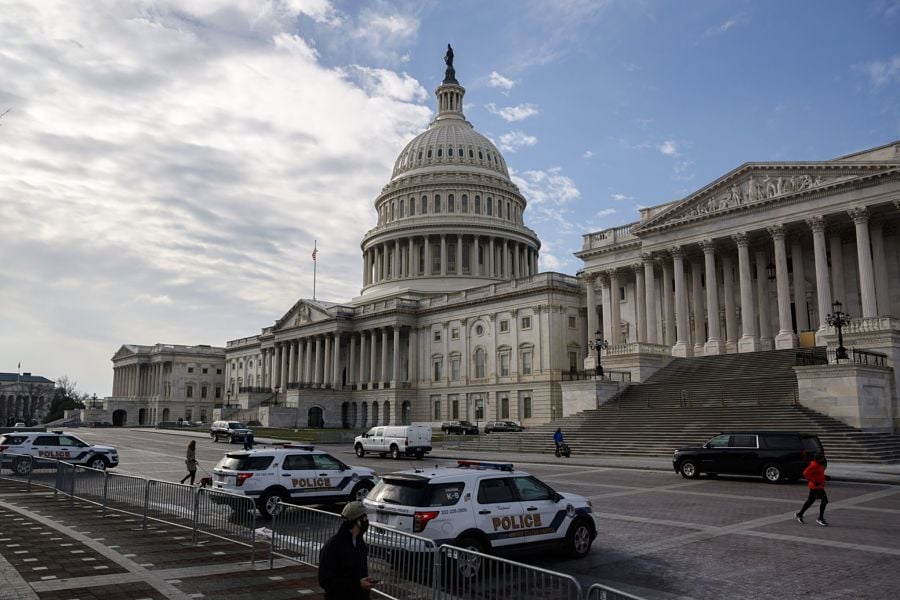
House Republicans added provisions to SEC budget legislation that would kill the agency’s pending rules on climate disclosure, mutual fund reform and investment advisor custody — but the legislative road becomes more difficult in the Senate.
A House Appropriations subcommittee approved funding legislation last week that includes so-called riders that would prohibit the Securities and Exchange Commission from allocating money to finalize, implement or enforce several proposed rules.
They include regulations that would mandate greenhouse gas emissions disclosures by public companies, impose new liquidity requirements on mutual funds, implement new rules for pricing trades, and increase the number of investment advisors who are deemed to have custody of client funds.
The legislation is likely to sail through the House Appropriations Committee because of the Republican majority on the panel. Republican control of the House also may ensure that it receives approval by the entire chamber.
The provisions likely will hit resistance in the Democratic-majority Senate.
“These riders will have a difficult time remaining in a final appropriations bill once they have to reconcile with a Senate version,” said Bryan McGannon, managing director at U.S. SIF The Forum for Sustainable Investment.
The slim Democratic majority, 51-49, makes it tricky to prognosticate what the chamber will do. For instance, two members facing challenging re-elections in 2024 — Sens. Joe Manchin of West Virginia and Jon Tester of Montana — have expressed doubts about the SEC climate proposal.
The House riders are meant to serve as a “placeholder to have a discussion with the Senate,” said Daniel F.C. Crowley, a partner at the law firm K&L Gates.
The fact that some moderate Democrats as well as Republicans have raised concerns about SEC's regulatory agenda could mean there's some hope for the riders.
“The near 50-50 split in the Senate means some of these ideas may get bipartisan traction,” Crowley said. “There’s plenty of room for bipartisan consensus on these SEC rules.”
The legislation Congress approved to raise the debt limit also could affect the riders’ chances. Under the debt-limit measure, lawmakers agreed to impose a 1% across-the-board reduction in discretionary federal spending if all 12 appropriations bills aren't approved by the end of the year.
“This is going to set up a dynamic negotiation with the Senate,” said Jason Rosenstock, a partner at the government relations consulting firm Thorn Run Partners. “There is a belief out there that the 1% cut will incentivize people to come together and pass a [spending] bill. That hypothesis may run into the reality of current congressional politics.”
Typically, however, riders tend to fall by the wayside in negotiations over government spending. McGannon anticipates that will happen again this year despite the potential that Manchin, Tester or others will be wild cards.
“We don’t think that ultimately will stop the Senate from having a clean appropriations bill,” McGannon said.
The SEC’s latest regulatory agenda moved the deadlines for its climate disclosure proposal to October from April. The agency has received thousands of comment letters and gotten a lot of resistance from the financial industry and Republican lawmakers.
“We’re cautiously optimistic,” McGannon said about the SEC meeting its October deadline. “We know they’re working hard. They’re contending with complex issues.”
The House appropriations bill contains $25.3 billion in total funding for the Treasury Department, the SEC and other agencies. The SEC would get $2 billion for operating expenses in fiscal 2024, a $170.4 million reduction from its current budget. President Biden’s proposed budget would increase SEC funding next year by $265 million.

As Goldman Sachs tightens rules on event contract trading, RIAs and hedge funds are weighing their own policies

Meanwhile, Wells Fargo lures defectors from UBS and JPMorgan to expand in the East Coast, while another bank aligns itself with RayJay's financial institutions division.

New research suggests AI-exposed workers over 55 are leaving jobs more often than before ChatGPT’s rise.

Agentic AI is landing in trading, treasury and wealth management roles across major banks, with advisory functions as the next frontier.

Wells Fargo affiliate and women-focused wealth firm both promote leadership as they scale advisor support.
Northern Trust’s Ken Lassner shows advisors how to convert volatility into after-tax portfolio gains
Dan Biagini of American Equity says the steady decline of pensions, longer lifespans and a reset in interest rates are rewriting how advisors build retirement income

