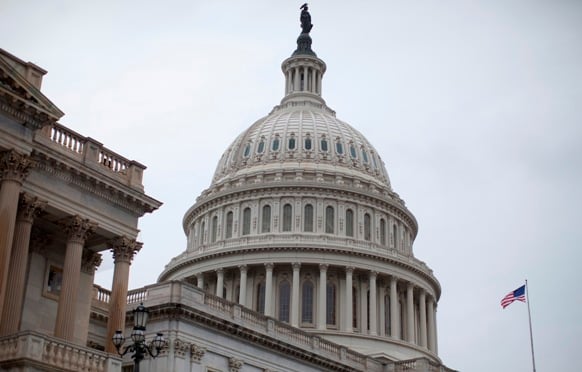
After more than three weeks of debate, the Senate approved a comprehensive overhaul of financial regulations on Thursday night without acting on fiduciary standards amendments. An amendment proposed by Sens. Robert Menendez, D-N.J., and Daniel Akaka, D-Hawaii, that would require broker-dealers and insurance agents to act in the best interests of their clients never came to a vote.
Some in the financial advisory industry were not pleased by the outcome. “We were really hoping that the Senate bill would have the Menendez-Akaka amendment in it, and we're disappointed,” said Marilyn Capelli Dimitroff, president of Capelli Financial Services and past director of the Certified Financial Planner Board of Standards. “But we're still hopeful that in conference, the fiduciary standard will prevail.”
(Read more about how the fiduciary debate will continue.)
At this point, any hope for a universal investment advice rule rests with the conference members who will try to reconcile differences between the House and Senate versions of the bill.
In fact, observers suggested that Mr. Menendez and Mr. Akaka may have backed off a vote because they did not have enough support to ensure approval of their amendment. That tactic might strengthen their position in House-Senate negotiations over a final bill because the Senate would not have gone on record as opposing the proposal.
“Not having a vote actually increases the chances that something more like the House bill could prevail in conference,” said David Tittsworth, executive director of the Investment Adviser Association.
The Menendez-Akaka amendment, which is almost identical to language in the House financial reform bill, has become the focal point of a battle between fiduciary supporters and opponents. The Senate version contains a provision that calls for a Securities and Exchange Commission study of the differences between the fiduciary standard and the suitability standard, which applies to broker-dealers. After the study, the SEC could proceed to rulemaking. By contrast, the House version would direct the SEC to write rules immediately.
Both versions require broker-dealers and insurance agents to act in the best interests of their clients and to disclose conflicts of interest. Under current rules, the Investment Advisers Act of 1940 subjects only advisers to the higher standards of care.
The outgoing consumer representative on the the National Association of Personal Financial Advisors board noted that, if the fiduciary standard is incorporated in the final bill, it will benefit consumers.
“Sometimes we have to do things in little bits, but I'm really hoping that we will have a true fiduciary standard,” said Irene E. Leech, Ph.D., who's also an associate professor at Virginia Tech University. “That's the kind of standard consumers deserve.”
For his part, NAPFA chairman Bill Baldwin said that he takes encouragement from the fact that the fiduciary standard is much more part of the conversation than it had been previously.
“I'm somewhat optimistic,” he said. “The conversation has changed from watering down the fiduciary standard to extending the current 1940 Act standard. That's a much better place to be.”