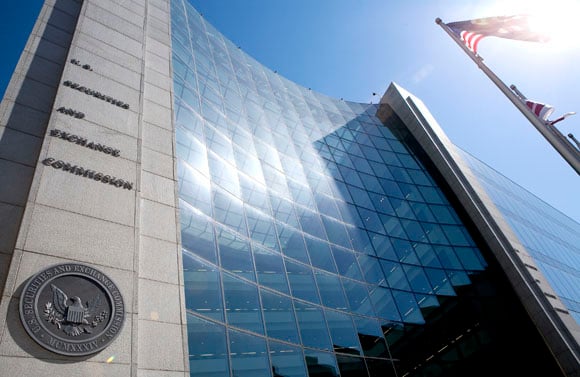
Industry groups want the SEC to review and possibly eliminate many of its regulations — including self-regulatory-organization rules.
The push against unnecessary rules came about in response to a September notice from the Securities and Exchange Commission asking for comment on how it should go about reviewing and repealing out-of-date regulations.
The SEC's notice itself was a response to a July executive order from President Barack Obama that directed federal agencies to review “outmoded, ineffective, insufficient or excessively burdensome” rules.
Financial firms have jumped at the chance to give the SEC an earful over what they view as oppressive regulatory burdens, including SRO rules and less formal interpretations, and no-action letters.
“You have these three levels of rules — the SEC, SROs and then all their unwritten rules that have accumulated over the years,” said James Angel, associate professor of finance at Georgetown University.
“In light of the broad and substantial impact of many SRO rules, staff interpretations and other ‘pronouncements,' we believe a similar review process should be employed for … the various SROs,” James McHale, associate general counsel at the Securities Industry and Financial Markets Association, wrote in a comment letter last month.
SRO rules “can have the practical impact of formal rules that were approved by the SEC,” Mr. McHale wrote.
The Investment Company Institute also called on both the SEC and SROs to re-examine existing rules, “or at least those rules that [the SEC] or industry participants identify as imposing unjustifiable costs or competitive burdens,” wrote ICI general counsel Karrie McMillan.
However, William Galvin, secretary of the Commonwealth of Massachusetts, warned against a strict cost-benefit analysis.
Avoiding unnecessary costs is important, Mr. Galvin wrote. “However,” he wrote, “the benefits provided by many regulations, particularly anti-fraud regulations, are not readily estimable.”
Commenters were generally short of specific rules they want reviewed or repealed. The SEC's release asked only about what process the agency should follow in reviewing regulations.
But the Financial Services Institute Inc., which represents independent broker-dealers, has a few ideas. The group said a proposed registration regime for municipal advisers would be redundant with rules covering broker-dealers. It also suggested that rules covering the
Financial Industry Regulatory Authority Inc.'s bond-trade-reporting system, known as the Trade Reporting And Compliance Engine, or TRACE, should be changed to reduce numerous technical violations.
Onerous disclosure regimes should be reviewed, Ronald Long, director of regulatory affairs at
Wells Fargo Advisors, wrote in a letter.
“Some recent rules will actually require delivery to certain investors of information approaching 850 pages to be received at one time,” he wrote.
Many rules should be redone to fit small firms, said Karen Fischer, a compliance consultant for broker-dealers.
For example, brokerage firms have to do background checks on employees, she said. But duplicating such a check for the owner of a one-person shop is nonsensical given that Finra already has checked out the individual in approving the owner's membership.
“The industry is so diverse, the rules for large firms just don't fit for most,” Ms. Fischer said.
The consumer group Public Citizen questions the need to review rules at this time.
“Public Citizen strongly urges the commission to postpone retrospective reviews of existing regulations until it has met the urgent need for strong financial regulations in wake of the 2008 financial crisis,” the group wrote.
One good reason to review rules is to spur job growth, Mr. Angel said.
“Businesses complain government regulations inhibit their ability to hire more people,” he said.
A spokeswoman for Finra declined to comment.