
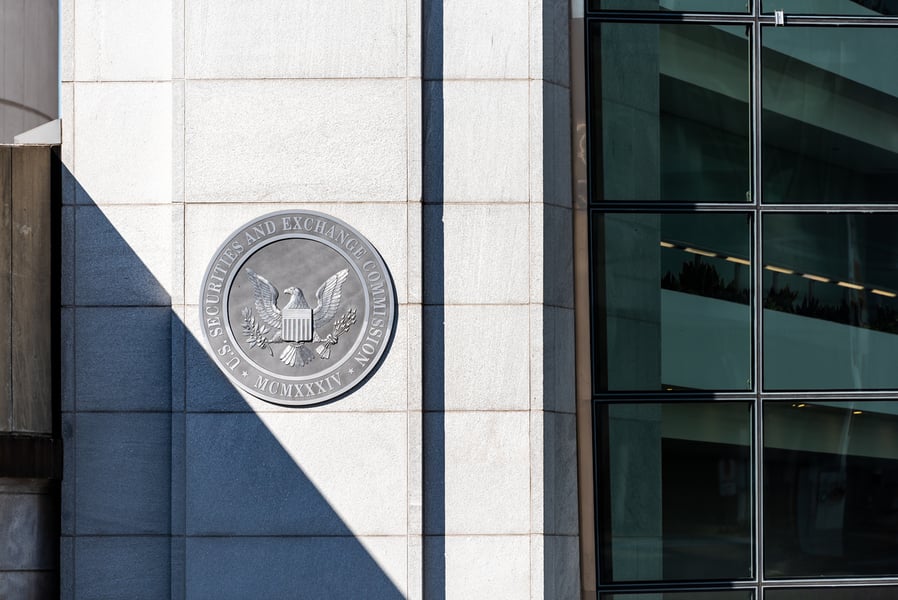
Two JPMorgan Chase affiliates have agreed to pay a combined $151 million in civil penalties and investor payments to resolve multiple enforcement actions by the Securities and Exchange Commission, the regulator announced on Thursday afternoon.
In a statement, the SEC said JPMorgan Securities and JPMorgan Investment Management agreed to the sanctions to settle four actions involving several alleged violations including misleading disclosures, breach of fiduciary duty, and failures to act in clients' best interests. JPMS avoided a civil penalty for a fifth enforcement action, the SEC said, because it cooperated and took remedial action.
“JP Morgan’s conduct across multiple business lines violated various laws designed to protect investors from the risks of self-dealing and conflicts of interest,” said Sanjay Wadhwa, acting director of the SEC’s Division of Enforcement, who took the role after the sudden departure of Gurbir Grewal from the agency earlier this month.
"With today’s settlements, which include multiple self-reports and large voluntary payments to harmed investors, JP Morgan is being held accountable for its regulatory failures," Wadhwa said.
In one case, the SEC found JPMS had provided misleading disclosures to customers investing in its Conduit private funds, which took customers' money to invest in PE and hedge funds; those funds would later distribute shares of companies that went public to the Conduit funds. According to the SEC, a JPMorgan affiliate retained full discretion over the timing and quantity of those stock sales, contrary to disclosures provided for those funds, which effectively exposed investors to market fluctuations and declining values for certain shares that JPMorgan took months to sell. To address this, JPMS will distribute a $90 million payment across over 1,500 Conduit investor accounts and pay a $10 million civil penalty.
Another enforcement action alleged that, from 2017 to 2024, JPMS failed to disclose the fact that it and its financial advisors had a financial incentive to recommend JPMorgan’s proprietary Portfolio Management Program over third-party options. During that time, assets in the program swelled exponentially from $10.5 billion to exceed $30 billion. The SEC imposed a $45 million penalty in this case, citing violations of the Advisers Act.
Separately, the SEC said that between 2020 and 2022, JPMS recommended its higher-cost “Clone Mutual Funds” over more affordable ETFs that offered identical portfolios, which affected over 10,000 customers. Because the firm and its registered repersentatives failed to account for the cost differences and didn't have a reasonable basis their recommendations were otherwise in customers' best interests, the SEC found JPMS in breach of Reg BI. Following a self-report from JPMS, the regulator did not impose a penalty but required the company to return $15.2 million to impacted clients.
Meanwhile, the regulator penalized JPMIM for multiple violations involving prohibited transactions that advantaged affiliated entities at the expense of its US-based clients. In one case, the SEC found that in March 2020, JPMIM conducted $4.3 billion in prohibited joint transactions, favoring an affiliated foreign money market fund over three US-based mutual funds that it advised. That resulted in a $5 million penalty and a cease-and-desist order against JPMIM.
Finally, the SEC said JPMIM engaged in prohibited principal trades involving commercial paper and other short-term fixed-income securities from JPMS on behalf of its advisory clients. These trades, valued at $8.2 billion, were executed between July 2019 and March 2021 and, according to the SEC, did not meet the required disclosures and approval conditions under the Investment Company Act and Advisers Act. Following self-reporting and cooperation from JPMIM, the SEC imposed a $1 million penalty along with a cease-and-desist order.
In a statement, a spokesperson for JPMorgan said the firm "strives to uphold the highest standards in client service around the world.
"When issues are identified, we fix them and engage with our regulators to resolve any concerns," the representative told InvestmentNews by email. "We are pleased to have these matters resolved and remain dedicated to delivering an exceptional experience for our clients."

Meanwhile, DPL Financial Partners adds two annuity executives and Prime Capital Financial hires a Mid-Atlantic retirement plan consultant

Andrew Komarow pleaded guilty Thursday in federal court in Hartford to defrauding three financial services companies of close to $3.3 million.

Elsewhere, Cetera picks up a $210 million Connecticut team from MML, while Wells Fargo FiNet adds a San Diego family practice from LPL

Celebrity endorsements, $500M in claimed assets, and a state regulator stepping in.

“We needed to become a more agile and efficient organization,” said American Express CEO Stephen Squeri.
Knighthead Life entered the market with a competitive MYGA. A strong launch earned advisor confidence and paved the way for FIAs.
As AI makes financial information more accessible than ever, Lana Hock explains why human judgment, trust, and empathy remain the qualities clients value most in a financial advisor

