
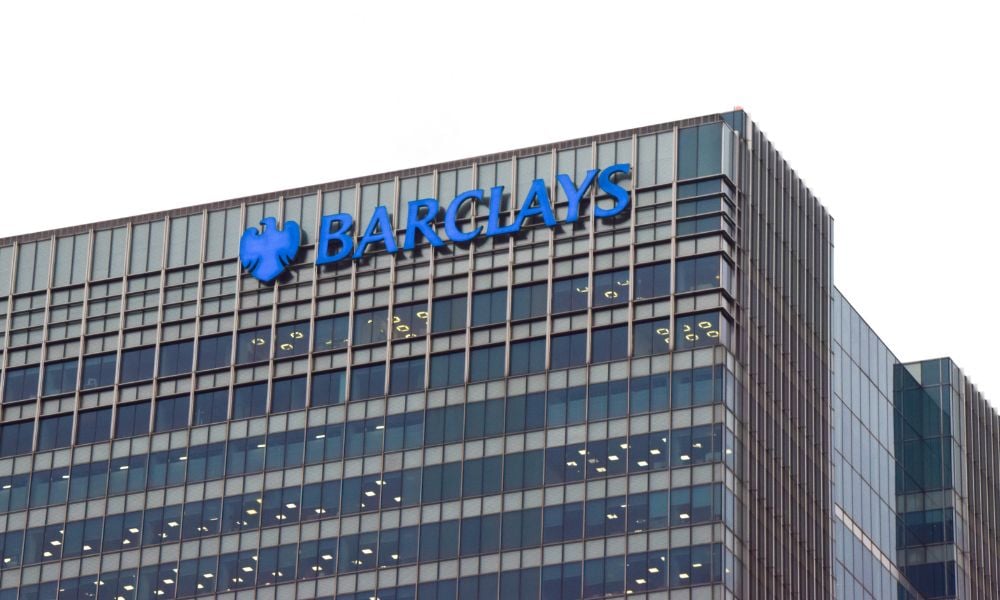
A federal judge has dismissed a proposed class action accusing Barclays PLC and its banking unit of violating federal securities laws through the sale of billions of dollars in unregistered structured products, including its volatility-linked exchange-traded notes.
The lawsuit, brought by a group of individual investors, alleged that Barclays failed to track securities sales after losing its "Well-Known Seasoned Issuer" (WKSI) status, resulting in the sale of unregistered VXX exchange-traded notes (ETNs). But in a comprehensive opinion issued Friday, U.S. District Judge Lewis J. Liman ruled that the plaintiffs lacked standing and failed to show that the bank made any actionable misstatements or omissions.
The case centered on Barclays’ issuance of VXX ETNs—synthetic debt instruments linked to futures on the CBOE Volatility Index (VIX). These ETNs are designed to provide short-term exposure to equity market volatility and are commonly traded by sophisticated investors.
After losing its WKSI status in 2017 due to a regulatory proceeding involving a Barclays affiliate, the bank was required to register and monitor the volume of securities offered through specific shelf registration statements. According to the plaintiffs, Barclays failed to implement controls to track the number of VXX notes issued under its 2018 and 2019 shelves, resulting in the sale of approximately $17.7 billion in unregistered securities.
The over-issuance was discovered internally in March 2022. Barclays voluntarily halted sales, notified regulators, and announced a rescission offer, allowing certain qualifying investors to sell affected securities back to the bank.
Plaintiffs also claimed that a 4:1 reverse split of VXX notes, executed in April 2021, amounted to an unregistered sale of securities under Section 5 of the Securities Act. Judge Liman rejected this argument, holding that the reverse split did not involve a transfer of value and therefore did not constitute a sale.
“Barclays’ exercise of its right to exchange one new share of VXX for every four previously issued shares is indistinguishable from transactions such as stock splits,” the court wrote, noting that no new consideration was exchanged.
The court held that the plaintiffs lacked standing under Sections 11 and 12(a)(1)-(2) of the Securities Act because they failed to show that they purchased unregistered securities directly from Barclays or that their securities were traceable to the allegedly defective registration statements. Instead, the plaintiffs relied on a theory that the reverse split itself triggered liability—an argument the court flatly rejected.
Claims under Section 10(b) of the Exchange Act and Rule 10b-5 also failed. The court concluded that the statements cited by plaintiffs—including Barclays’ descriptions of its internal controls—were non-actionable “corporate puffery” and that no specific misrepresentation was alleged with the particularity required under securities laws.
Judge Liman emphasized that Barclays had made robust disclosures in its VXX pricing supplement, warning investors of substantial risks and potential long-term losses. The supplement included language stating:
“If You Hold Your ETNs as a Long-Term Investment, it is Likely That You Will Lose All or a Substantial Portion of Your Investment.”
The court further held that plaintiffs failed to plead scienter—the intent to deceive—required under Rule 10b-5. It found the more plausible inference to be that Barclays had overlooked the over-issuance due to inadequate controls but acted promptly once the error was discovered. The bank ceased new offerings, reported the issue to regulators, and initiated a rescission offer.
“There is no basis to presume that Barclays knew… that it was aware it had no system for tracking the amount of shares of VXX it had issued,” the court wrote.
Plaintiffs also brought common-law fraud and promissory estoppel claims based on Barclays’ rescission offer, asserting they were misled into holding their securities with the expectation of repayment. Judge Liman rejected those claims, holding that Barclays' rescission materials clearly defined eligibility—requiring proof that a security was acquired in a distribution from the issuer or an underwriter—and that reliance on broader interpretations was not reasonable.
The ruling serves as a significant win for Barclays and clarifies the limited scope of investor standing in cases involving structured product offerings. It also reaffirms that reverse splits and corporate disclosures about risk and controls must meet high legal standards before triggering liability under federal securities laws.
Because no primary violation was found, claims for control person liability under Section 20(a) of the Exchange Act and Section 15 of the Securities Act were also dismissed.
Case Information:

New tool gives RIAs and family offices AI help vetting private market deals, with some users reportedly halving review time.

Investors got projected returns dressed up as real ones, SEC says

Parents must still act to get the $1,000 federal seed and employer contributions, giving financial advisors a role in the rollout.

FINRA booted Rudy Anguiano from the industry for “conversion - the intentional and unauthorized taking of another person’s property.”

Notice 2026-62 also flags box spread ETFs and tax-aware fund trades as Treasury opens month-long consultation period.
As AI makes financial information more accessible than ever, Lana Hock explains why human judgment, trust, and empathy remain the qualities clients value most in a financial advisor
Northern Trust’s Ken Lassner shows advisors how to convert volatility into after-tax portfolio gains

