
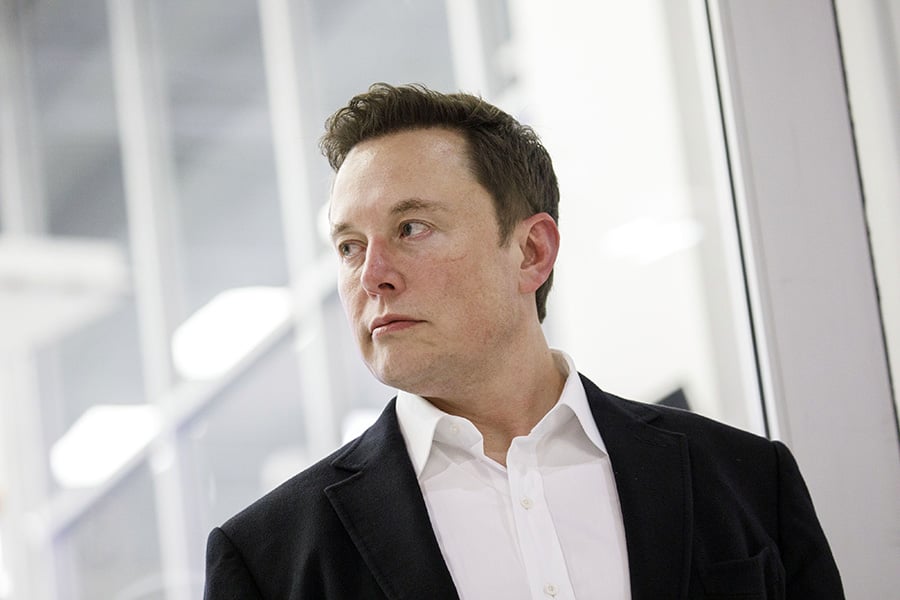
Elon Musk has reached a settlement with the Securities and Exchange Commission over allegations that he failed to promptly disclose his stake in Twitter before completing his $44 billion acquisition of the platform in 2022.
A court filing made public Monday in federal court in Washington, D.C., shows that a revocable trust in Musk's name will pay a $1.5 million civil penalty to resolve the matter. The settlement still requires approval from a federal judge.
The CEO of Tesla, whose reported $839 billion net worth has earned him the distinction of world's richest person, had sought to get the case tossed, but he lost that bid in a decisive federal court ruling in February.
The SEC's original complaint centered on Musk's gradual accumulation of Twitter shares ahead of his buyout. Under federal securities law, any investor who builds a position exceeding 5% in a publicly traded company must disclose those holdings within 10 calendar days of crossing that threshold. Regulators alleged Musk missed that deadline, allowing him to continue purchasing shares at what they described as "artificially low prices" – a dynamic that, the agency argued, put other investors at a disadvantage.
The $1.5 million figure represents a significant reduction from the penalty the SEC had sought when it filed the case in the final days of the Biden administration – shortly before Musk took on a role in President Trump's administration leading the Department of Government Efficiency. The two later had a public falling-out, and Musk ended up stepping back from his Washington role, ostensibly to focus more on his sprawling private interests that include X, Tesla, and SpaceX.
The settlement also allows Musk to avoid admitting wrongdoing and does not require him to return any profits he may have gained from the delayed disclosure.
Neither the SEC nor Alex Spiro, Musk's attorney, immediately responded to media requests for comment on Monday.
The case is not the first time Musk has settled with the regulator. In 2018, Musk and Tesla each paid $20 million to resolve an SEC lawsuit stemming from statements he made on social media about taking the automaker private. As part of that earlier agreement, Musk temporarily stepped down as Tesla's chairman, and a revised consent decree was entered the following year.
In the years since, Musk has been openly critical of the agency, repeatedly stating publicly that he does not respect the SEC.
The resolution also arrives as Musk faces legal pressure on a separate front. In a separate class action trial, a federal jury in California found in March that Musk had misled Twitter investors during the same period covered by the SEC's complaint. His attorneys have indicated they plan to appeal that verdict.
Separately, Musk is currently in trial in Oakland, California, in a lawsuit he filed against OpenAI and its CEO Sam Altman, alleging they abandoned their original commitment to operate the artificial intelligence organization as a nonprofit.

As Robinhood and Schwab roll out AI agents and assistants, a new survey finds advisors still edge out chatbots in terms of client trust.

See which platforms and providers earned 5-Star recognition this year

Meanwhile, a multigenerational Cambridge team has hopped to LPL in Michigan, and Cetera's run of Commonwealth recruitment continues in New Jersey.

TIAA survey finds 53% of Americans worry about running out of money, as AI and medical advances scramble retirement income planning.

Two wirehouse veterans choose advisor-owned model as independents target ultra-high-net-worth clients beyond portfolio management.
As AI makes financial information more accessible than ever, Lana Hock explains why human judgment, trust, and empathy remain the qualities clients value most in a financial advisor
Northern Trust’s Ken Lassner shows advisors how to convert volatility into after-tax portfolio gains

