The new leader of the House Financial Services Committee is not likely to emphasize legislation affecting investment advisers. That, in turn, could further delay a bill that would shift oversight of the sector from the Securities and Exchange Commission to an industry-run group.
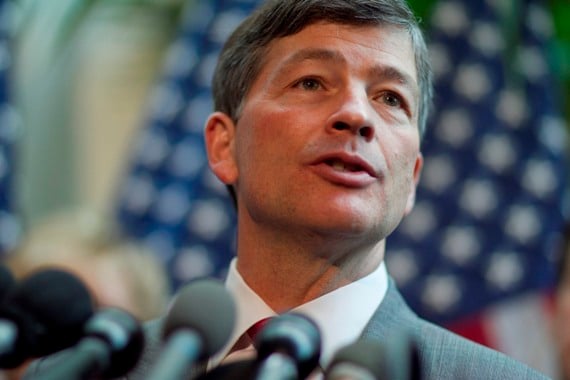
Rep. Jeb Hensarling, R-Texas, was elected chairman of the financial panel by the House Republican caucus on Wednesday. Mr. Hensarling would take control of the gavel in January, when the 113th Congress gets under way.
Currently, Mr. Hensarling serves as vice chairman of the committee and chairman of the House Republican Conference, one of the top leadership positions for the Republican majority. He will succeed Rep. Spencer Bachus, R-Ala., as head of the financial committee. Mr. Bachus had to step down due to term limits.
This year, Mr. Bachus introduced a bill that would establish one or more self-regulatory organizations for investment advisers. He was responding to a 2011 SEC report that said the agency lacks the resources to examine annually more than about 8% of registered advisers, which numbered nearly 12,000 at the time.
The SRO bill stalled when Mr. Bachus failed to generate enough support in the committee for a vote. It was clear at a June 6 hearing that several Republicans had qualms about the legislation. Mr. Hensarling did not appear at the session, nor did he co-sponsor the bill.
Washington observers don't expect Mr. Hensarling to elevate the SRO bill. He's more likely to concentrate on reforming mortgage lenders
Fannie Mae and Freddie Mac, as well as curbing some of aspects of the Dodd-Frank financial reform law, such as reining in the Consumer Financial Protection Bureau.
“It's unlikely [SRO] legislation will be taken up early in the Congress,” said Neil Simon, vice president of government relations at the Investment Adviser Association. “There are issues of higher priority.”
In a statement after his election, Mr. Hensarling highlighted his general goal of reducing regulations.
“I am grateful for the opportunity to lead this committee and I look forward to working alongside my colleagues to foster the deepest, most liquid, competitive, efficient, innovative, and transparent capital markets the world has ever known,” Mr. Hensarling said. “To do this we must end the phenomenon of 'too big to fail' and reinstate market discipline. We must also reduce taxpayer risk in the marketplace and cut the sheer weight, volume, complexity and uncertainty of the federal red tape burden that makes capital more expensive and less available.”
In general, Mr. Hensarling probably won't pursue adviser-related policy as he begins his chairmanship, according to Dan Barry, managing director of government relations and public policy at the Financial Planning Association.
“He's certainly prominent in the party and energetic,” Mr. Barry said. “I would expect him to hit the ground running with a strong agenda. I wouldn't expect the investment adviser issues to be high on his list.”
The FPA and IAA staunchly opposed the SRO bill. They called it a costly additional layer of regulation that would hurt small advisory firms. Instead, they backed a bill introduced by Rep. Maxine Waters, D-Calif., that would keep adviser oversight at the SEC and allow the agency to charge advisers user fees to fund exams.
Observers anticipate that an SRO bill will be re-introduced next year — in part because it has the strong backing of the
Financial Industry Regulatory Authority Inc., the broker SRO that is seeking to expand its reach to investment advisers. Ms. Waters, the favorite to become the highest-ranking Democrat on the House financial panel, also is likely to re-introduce her measure.
Proponents of the SRO bill are gearing up for another battle. In a recent interview, Dale Brown, chief executive of the Financial Services Institute Inc., said that he is not sure where Mr. Hensarling stands on the measure, which the FSI backs. “We've always found Jeb to be very accommodating and open-minded,” Mr. Brown said. “We've enjoyed a good working relationship with him.”
Mr. Hensarling's office did not respond to a request for a comment.
Adviser advocates are hopeful that Mr. Hensarling will ignore the SRO bill. “He's a very thoughtful and committed conservative, and I think his rational skepticism about business regulation reflects that,” Mr. Simon said.
But SRO advocates will try to convince him to back the SRO bill or something similar.
“There's a consensus something needs to be done to make sure more resources are devoted to examining investment advisers,” Mr. Brown said. “The question is which solution will garner enough support.”