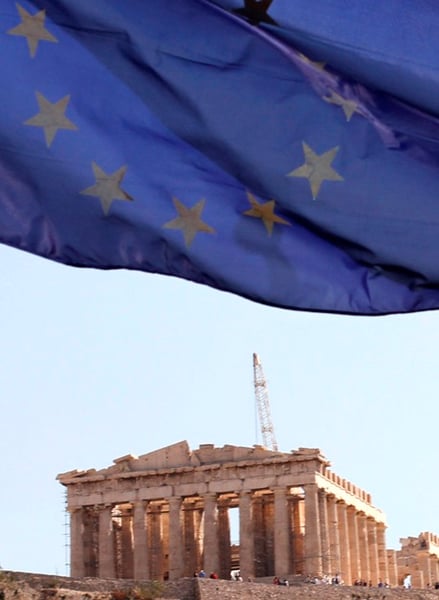
Investors are nervous about the Greek bailout, but they are nervous for the wrong reasons. Yes, it is possible that other debt-ridden European nations may soon beg for bailouts. But that's just a small part of the story.
The fact is, Greece's credit crisis is strong enough to derail the global recovery all by itself.
It's a contagion that will spread in ways few people expect. A 20–30% fall in the euro is a distinct possibility. Investors should be prepared for this to become the defining economic event of 2010.
The key factors are Greece's austerity measures. Greek citizens have violently protested the salary cuts and tax hikes. Investors may soon have reason to protest, too. That's because a look at the big picture reveals the Greek bailout could do more harm than good. Here are three reasons why.
1. Higher taxes and lower government salaries do more than just make taxpayers and workers unhappy.They also make them poorer. As money is removed from the economy, businesses and people have less money to spend. We expect households and private firms to show increasing signs of debt distress. So, in the end, Greece's tax increases will actually hurt Greece's tax revenue.
2. Greeks don't just borrow money from Greek banks. French, German and Swiss banks, in fact, have lent out a lot of cash to people in Greece. The same Greeks who are working for lower wages or paying higher taxes. So there is a real threat these loans will go bad, hurting banks that were just thinking the worst was over. (Of course, if other European nations are forced to take austerity measures, the pain on banks in “good” countries will be compounded)
3. Countries and companies with close business ties to Greece will also take a hit. Greek citizens have less money to spend on foreign goods. Once again, that affects European exporters, notably the Netherlands and Germany. It will be interesting to see how the German people react when they learn that the money their government gave to Greece caused large profit shortfalls.
To put it as plainly as possible, the math of Greece's fiscal balances makes partial default or partial public debt renegotiation is all but inevitable. The eurozone and IMF's bailout plan just extends the wash/rinse/repeat cycle we have seen policymakers turn to one too many times during the recent financial and economic crisis.
It is a colossal mess, and neither policymakers nor investors quite understand the scope and scale of the mess they have helped set into motion. The situation grows even worse if other European nations start crying for fiscal help.
We suspect there are at least a dozen ways to play this slow-motion train wreck. European banks with large exposure to Greek debt (or any of the other periphery eurozone nations) will be attractive shorts. European exporters also have their necks on the line.
And, finally, you can short the euro. Given the complete systemic meltdown Europe faces, it is easy to see the currency falling 20-30% even from today's lower levels.
Click here to read more from the Daily Reckoning.
Rob Parenteau is the editor of The Richebächer Letter, founded by the late Dr. Kurt Richebächer. Previously, he spent 24 years as Chief U.S. Economist and Investment Strategist for RCM Capital Management, an asset management firm. Rob holds a CFA and was appointed a Research Associate at The Levy Economics Institute in 2006.